Power outages are no longer rare inconveniences. They are becoming longer, more frequent, and increasingly costly for homeowners across the country. Whether triggered by severe storms, aging infrastructure, or grid overload, losing power for hours or even days can mean spoiled food, damaged HVAC systems, and serious safety risks for vulnerable family members.
That is exactly why so many homeowners are turning to Generac home generators as a long-term solution. But with a significant upfront investment and ongoing maintenance requirements, the real question is whether these systems actually deliver the value they promise in 2026.
In this comparison, we will break down everything you need to know before making a decision. You will learn how Generac stacks up against competing brands, what standby and portable options are available, how installation and operating costs compare, and which models offer the best performance for different household needs. By the end, you will have a clear, honest picture of whether investing in a Generac generator makes financial and practical sense for your home this year.
Why Generac Leads the Home Standby Generator Market
When it comes to home backup power, no brand comes close to Generac’s level of dominance. Generac holds an estimated 68 to 80% share of the North American residential standby generator market as of 2026, meaning roughly 7 to 8 out of every 10 homeowners who invest in backup power choose Generac. That level of consumer preference is not accidental. It reflects decades of product innovation, unmatched distribution infrastructure, and a brand reputation that electricians, builders, and homeowners trust by default.
A Growing Market Driven by Real Demand
The U.S. home standby gensets market exceeded $3.3 billion in 2025 and is projected to expand at a 7.9% compound annual growth rate through 2035, potentially reaching approximately $7.2 billion. This growth is fueled by increasing outage frequency, climate-related grid stress, and the rising need for uninterrupted power in homes where remote work, medical equipment, and smart technology are now everyday realities. Generac benefits disproportionately from this demand surge as the category leader, and its financial results reflect that position. In Q1 2026 alone, Generac reported approximately $552 million in residential segment sales, with full-year 2026 residential growth projected at roughly 10%, driven by pricing, sustained consumer demand, and normalized outage activity.
Network Scale and Accessibility That Competitors Cannot Replicate
Generac operates the largest authorized dealer and service network in North America, with more than 9,000 authorized dealers. This scale means faster installation timelines, consistent parts availability, certified local installers, and responsive warranty support. For homeowners, this translates to practical peace of mind that a smaller or premium brand simply cannot offer in most regions. Beyond network reach, Generac pairs competitive pricing with factory-backed financing options, making whole-home backup power accessible to a broader range of budgets. That combination of affordability, availability, and proven reliability is why Generac remains the default recommendation among experienced electrical contractors across the country, including the certified team at Mauro Electric Inc. in Bothell, WA.
Power Outages in the Pacific Northwest: The Real Risk for Seattle-Area Homeowners
Living in Greater Seattle means accepting a particular relationship with the weather, and that relationship has real consequences for your home’s power supply. Washington state households average 1 to 1.5 power outages per year, with cumulative annual downtime ranging from roughly 2.4 to 6.4 hours when major storm events are excluded. Factor in the region’s notorious fall and winter storms, and those numbers climb sharply. A single severe windstorm can push a household’s total annual outage time well beyond what the averages suggest, leaving families without heat, lighting, or critical equipment for extended periods.
What makes those annual averages particularly misleading is how much they can obscure the severity of individual events. According to 2025 data, the U.S. average for the longest single power outage reached approximately 12.8 hours, up significantly from 8.1 hours just a few years prior. For a homeowner dependent on electric heat, refrigerated medication, or remote work connectivity, nearly 13 hours without power is far more than an inconvenience. It is a genuine crisis that no amount of averaging can minimize after the fact.
The stakes have risen further with grid-level concerns specific to the Pacific Northwest. A Seattle Times investigation found that the region could face potential energy shortfalls and rolling blackout risks beginning in 2026, particularly under scenarios combining a severe cold snap with low hydro reservoir levels. The projected reliability gap was estimated at roughly 1,300 megawatts in 2026 alone, expanding considerably through 2030 as electrification and data center demand accelerate. This is not a distant hypothetical; it is an identified vulnerability in the grid serving your home.
Puget Sound’s geography intensifies all of these risks compared to drier inland areas. The corridor from Everett through Seattle to Tacoma sits directly in the path of Pacific storm systems, atmospheric rivers, and wind events that routinely knock out power for tens of thousands or even hundreds of thousands of customers at once. In October 2025 alone, a single wind and rain event affected more than 200,000 utility customers across the region. Inland communities shielded by the Cascades rarely face equivalent exposure.
For Greater Seattle homeowners running heat pumps, EV charging stations, home offices, or medical equipment such as CPAP machines and oxygen concentrators, this combination of local weather risk and emerging grid pressure creates a compelling case for automatic standby backup power. A professionally installed Generac home generator activates within seconds of an outage, protecting everything connected to your home without any manual intervention required.
Generac’s Residential Generator Lineup: Guardian, Next Gen, and Protector Series
Generac’s residential standby generator lineup is organized into distinct series, each engineered for a specific range of home sizes and power demands. Understanding where each series fits helps homeowners make a confident, well-matched investment rather than over-buying or under-specifying their backup power system.
Air-Cooled Guardian and Next Gen Series: The Right Fit for Most Homes
The Guardian and Next Generation standby generator series represent Generac’s core residential offering, covering 10 to 28 kW of output capacity. This range addresses the power requirements of the vast majority of single-family homes, delivering enough capacity to run essential circuits or whole-home loads without the oversized footprint or cost of industrial-grade equipment. The Guardian series established this lineup as a proven, cost-effective platform, while the Next Gen models push the ceiling further with a new 28 kW option, currently the most powerful air-cooled home standby generator Generac has produced. For Greater Seattle homeowners weighing their options, this series hits the sweet spot between performance, installation simplicity, and budget.
The Next Gen models introduce several meaningful engineering improvements over their predecessors. Component counts have been reduced by 25% or more in some configurations, which directly translates to fewer potential failure points and simplified maintenance. Fuel economy is improved through EFIC (Electronic Fuel and Ignition Control) engines equipped with an ECU, oxygen sensors, and hydraulic lifters that eliminate routine valve adjustments. The new Power Zone 200 controller replaces the prior Evolution 2.0 unit, offering enhanced diagnostics, LED status indicators, and tighter integration with Generac’s Mobile Link monitoring app. Built-in cellular and Wi-Fi connectivity comes standard on Next Gen units, removing the need for add-on kits that older Guardian models sometimes required.
Protector and XG Liquid-Cooled Series: Built for Heavier Loads
Homes with commercial-grade HVAC systems, high-draw electrical infrastructure, or multi-unit configurations will find the air-cooled series insufficient. The Protector and XG liquid-cooled series fills this gap, handling sustained heavy loads that exceed the practical ceiling of air-cooled technology. These units are purpose-built for demanding residential applications where continuous runtime and thermal management are critical priorities.
Installation, Fuel Connection, and Smart Monitoring
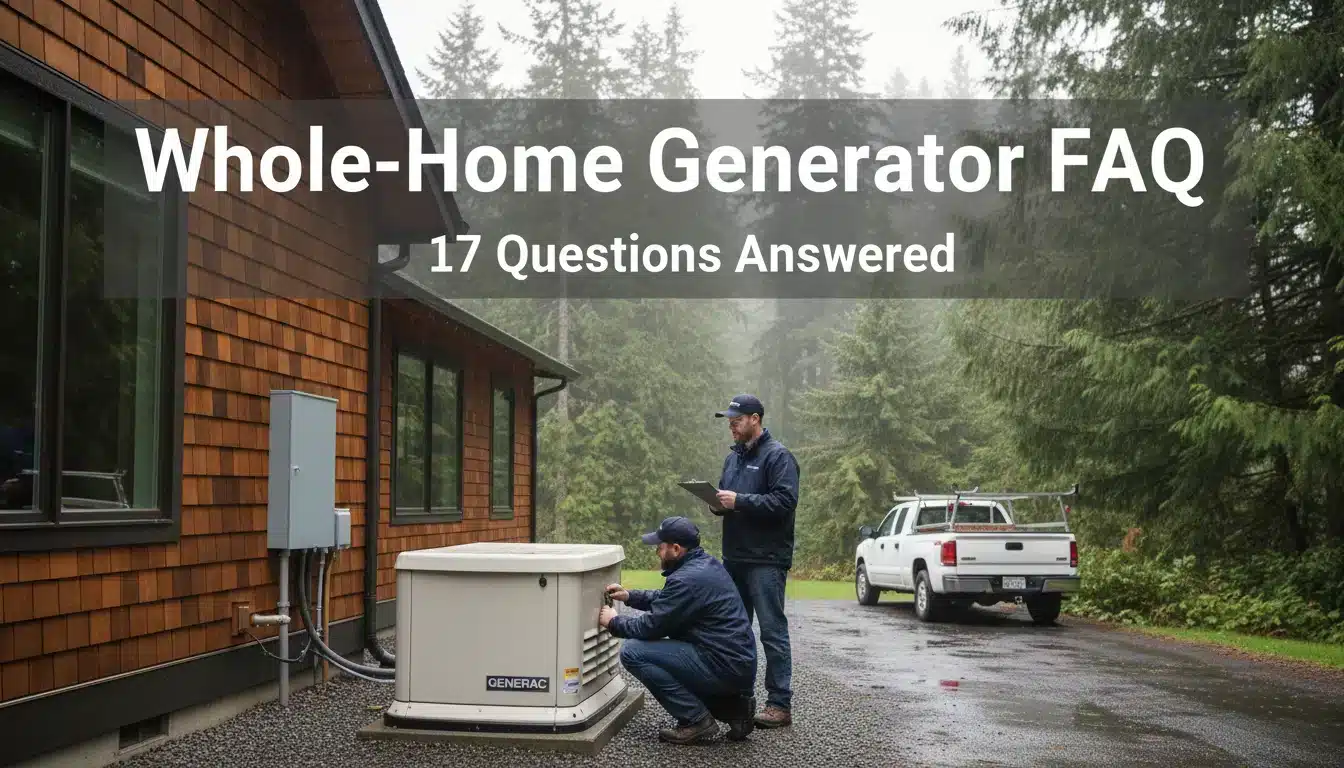
All Generac standby systems share two defining characteristics that separate them from portable alternatives. First, they are engineered for permanent outdoor installation with a footprint comparable to a central air conditioning unit, integrating cleanly into a home’s exterior without requiring dedicated structures or indoor space. Second, they connect directly to existing natural gas or propane utility lines, enabling fully automatic startup within seconds of an outage with zero manual refueling involved.
Generac’s Mobile Link platform layers smart-home capability onto every standby system. Homeowners receive real-time status alerts, runtime tracking, maintenance reminders, and diagnostic data directly through a smartphone app. Next Gen units with the Power Zone 200 controller unlock additional visibility, including oil-level percentages and advanced performance data. This connected functionality represents a fundamental operational advantage over portable generators, offering proactive management rather than reactive troubleshooting during an active outage.
How a Generac Home Standby System Actually Works
Understanding the mechanics behind a Generac standby system clarifies exactly why it outperforms every alternative when Seattle-area storms knock out the grid for hours or days at a stretch.
The Automatic Transfer Switch: Your Home’s Power Watchdog
The automatic transfer switch is the operational core of the entire system. It monitors incoming utility voltage continuously, around the clock, and the moment it detects a drop or complete loss of power, it sends a signal to start the generator. That startup sequence typically completes within 10 to 15 seconds, fast enough that most homeowners notice little more than a brief pause before lights and appliances return to normal. No manual intervention, no extension cords, no fumbling with switches in the dark. The ATS handles everything automatically, which is a critical advantage during nighttime outages or when no one is home.
Fuel Supply and Runtime Advantages
Unlike portable generators that depend on stored gasoline with a limited shelf life, Generac home standby generators connect directly to your home’s existing natural gas or propane supply line. This means the system can run indefinitely as long as fuel flows through the line, which is especially valuable during the extended outages that Pacific Northwest storms regularly produce. There are no refueling trips, no fuel storage hazards, and no risk of carbon monoxide poisoning from improper indoor operation. The generator sits permanently outdoors, similar to a central air conditioning unit, providing safe, continuous power without any of the logistical burdens of portable alternatives.
Choosing Your Coverage Level
Homeowners have genuine flexibility in how much of the home they protect. A partial backup configuration powers only essential circuits such as the refrigerator, lighting, furnace, and medical equipment, keeping installation costs lower while still protecting what matters most. A whole-home configuration routes power to every circuit in the panel, including central HVAC systems, EV chargers, and large appliances. Generac’s residential lineup spans 10 to 28 kW for air-cooled models, giving certified installers like Mauro Electric the ability to match generator capacity precisely to each home’s load requirements and budget.
Automatic Shutdown and Self-Testing
When utility power stabilizes and returns, the ATS detects the restored voltage and seamlessly transfers the load back to the grid, then allows the generator to complete a brief cool-down cycle before shutting down. This protects internal components and extends equipment lifespan. Between outages, the system doesn’t simply sit idle. Generac standby units perform automatic weekly exercise runs, typically lasting several minutes, to verify that the engine starts correctly and all systems function as expected. The Mobile Link remote monitoring platform logs every one of these test results and transmits them to a connected app, allowing both homeowners and their installer to review system health, runtime history, and any fault alerts without requiring a physical visit to the unit. For busy Greater Seattle homeowners, that level of remote visibility transforms generator ownership from a passive investment into an actively managed layer of home resilience.
Generac vs. Kohler, Cummins, and Briggs and Stratton: An Honest Comparison
Choosing a home standby generator is a long-term investment, and the brand you select shapes everything from installation quality to the support you receive years down the road. Here is an honest, side-by-side look at how Generac stacks up against its three most commonly compared competitors.
Kohler: Premium Build, Higher Price Point
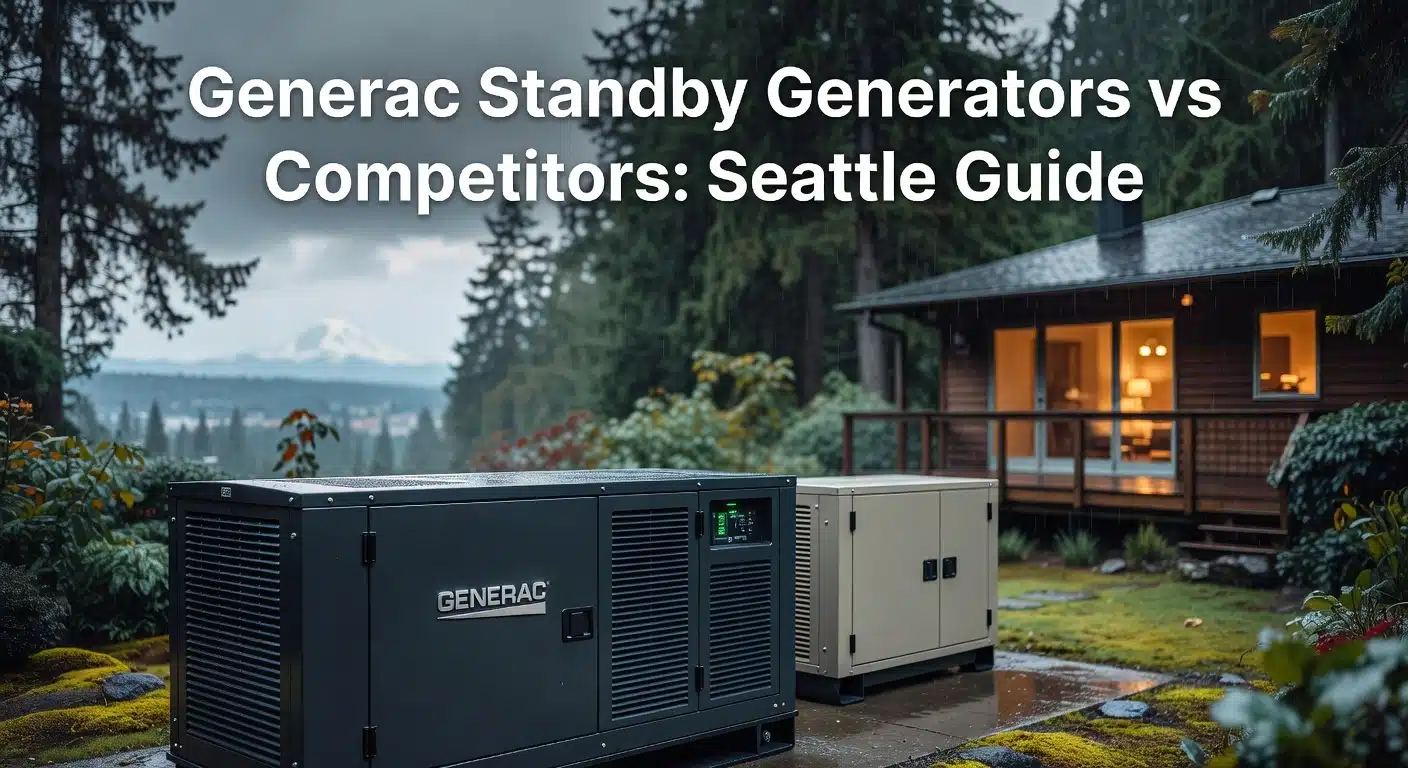
Kohler is Generac’s most credible residential standby rival, and it earns that reputation through genuinely strong engineering. Independent dealer comparisons and user feedback consistently highlight Kohler’s corrosion-resistant enclosures, refined engine design, and relatively quiet operation in many configurations, typically running in the 64 to 69 dB range. Kohler also offers competitive warranty coverage, with extended packages reaching up to 10 years and 2,000 hours under certain dealer-promoted programs, which appeals to buyers who prioritize long-term protection. That said, Kohler units typically cost $500 to $2,000 more than comparable Generac models at equivalent power ratings, and the gap in dealer network breadth is significant. Kohler’s remote monitoring capabilities are functional, but they consistently trail Generac’s Mobile Link platform in user ratings, ease of setup, and feature depth. For buyers who want the highest-tier build quality and are willing to pay a premium, Kohler is a legitimate option; for most residential buyers balancing value, accessibility, and smart-home integration, Generac holds a clear edge.
Cummins: Commercial Strength, Limited Residential Reach
Cummins commands deep respect in industrial and commercial power applications, and its QuietConnect residential series demonstrates real engineering capability. Units often carry strong fuel efficiency ratings and projected lifespans of 20 to 25-plus years under proper maintenance. However, Cummins holds a significantly smaller footprint in the pure residential standby segment compared to either Generac or Kohler. In practical terms, this means finding a local authorized service provider is harder in many suburban and residential markets, including parts of the Greater Seattle area. Higher upfront costs for equivalent residential models and fewer consumer-oriented features, such as streamlined remote monitoring apps, further narrow Cummins’ appeal for typical homeowners. It remains a strong choice for larger properties, farms, or light commercial applications where its commercial-grade durability justifies the trade-offs.
Briggs and Stratton and Champion: Budget Options with Real Limitations
Briggs and Stratton and Champion occupy the entry-level tier of the standby market, where lower equipment costs are the primary draw. For homeowners with modest backup needs, such as protecting a few essential circuits, these brands can serve a functional purpose. However, they trail noticeably on whole-home premium features, dealer network depth, and the kind of brand recognition that signals long-term parts availability and service support. Noise levels, load management sophistication, and remote monitoring capabilities generally lag behind Generac and Kohler. Consumer testing consistently places them below the top two brands for whole-home standby applications, and neither is typically recommended when comprehensive backup protection is the goal.
Where Generac Pulls Ahead Decisively
Generac’s competitive advantages compound in ways that matter most to residential buyers. Its dominant market position of 68 to 80% of the North American residential standby market is supported by the largest factory-authorized dealer and installer network in the industry, which translates directly to faster service, better parts availability, and more certified local technicians. The Mobile Link remote monitoring platform earns consistently high user ratings, approximately 4.8 out of 5, for real-time status alerts, maintenance tracking, and exercise scheduling accessible from any smartphone. Competitive unit pricing and factory-backed financing programs lower the barrier to entry further, and the Next Gen model refresh in 2025 and 2026 added improved fuel economy and a 25-plus percent reduction in components on select models, improving long-term reliability.
Why Local Dealer Density Is the Deciding Factor for Seattle Homeowners
For Greater Seattle homeowners, all of these comparisons ultimately filter through one practical question: who shows up when you need service? Dealer network density matters enormously in a region where permitting requirements, coastal weather conditions, and storm-driven outage patterns demand installers who know the local environment. Mauro Electric Inc., a factory-authorized Generac dealer serving King County and surrounding areas since 1998, represents exactly the kind of service continuity that buyers should weigh seriously when comparing brands. Factory-trained expertise, established local relationships with permitting authorities, and a multi-decade track record in Greater Seattle provide a level of reliability that a thinner competitor dealer network simply cannot match.
How to Size a Generac Generator for Your Greater Seattle Home
Selecting the right output capacity is the single most consequential decision in any generator project, and it is one where general rules of thumb consistently fall short. Greater Seattle homes vary significantly in square footage, heating systems, and electrical loads, which means sizing must reflect your specific home rather than an average.
Essential Circuit Coverage: 10 to 13 kW
For homes in the 1,500 to 2,500 square foot range that need dependable backup without powering every circuit simultaneously, a 10 to 13 kW Generac Guardian or Next Gen unit typically delivers the right balance. This capacity comfortably supports the circuits that matter most during an outage: lighting throughout the home, a refrigerator and freezer, the furnace fan for gas heating systems, a sump pump (a genuine necessity given the Pacific Northwest’s rainfall), and a rotating selection of outlets for phones, computers, and basic appliances. Homeowners who prioritize cost-effective protection over whole-home coverage find this tier delivers strong reliability without unnecessary expense.
Stepping Up for HVAC and High-Draw Appliances: 16 to 28 kW
The calculation changes significantly when central air conditioning, an electric heat pump, or a tankless water heater enters the picture. These systems draw substantial power on startup and sustained operation, and running them alongside other household loads generally requires 16 to 22 kW of capacity. Homes where multiple high-draw systems may operate simultaneously, such as a heat pump running while the water heater cycles and the kitchen appliances are in use, push sizing recommendations toward the 22 to 28 kW range available in Generac’s Next Gen series. Seattle’s increasingly unpredictable winters, with cold snaps capable of extending outages well beyond a few hours, make maintaining HVAC operation a practical priority rather than a luxury.
Accounting for EV Charging Loads
EV chargers represent a load category that many homeowners underestimate during initial planning. A residential Level 2 charger draws between 7.2 and 11.5 kW depending on the amperage rating of the circuit, which is a meaningful addition to any sizing calculation. Ignoring this load at the time of generator installation and adding an EV charger later can push an otherwise adequate system beyond its capacity. Mauro Electric’s expertise across both generator installations and EV charging station installations allows the team to evaluate these loads together during the free consultation, ensuring the sizing decision accounts for how your home will actually operate over the next decade.
Why Certified Load Calculations Are Non-Negotiable
A certified load calculation is the technically correct method for determining generator size, and it goes considerably deeper than estimating based on square footage alone. The process involves inventorying every circuit in the home, documenting both running watts and peak startup surge for each load, identifying which circuits are likely to operate simultaneously, and factoring in the specific HVAC configuration and any planned additions. Generac provides professional sizing tools for factory-trained installers, including the Power Design Pro platform, precisely because the variables involved require systematic analysis rather than approximation.
The consequences of getting sizing wrong cut in both directions. Undersizing results in overload shutdowns that interrupt protection at the worst possible moments and accelerates mechanical wear on components operating beyond their design range. Oversizing drives up the purchase price, increases fuel consumption on every run cycle, and represents capital that could have been allocated elsewhere. Working with a factory-trained installer like the team at Mauro Electric ensures the sizing calculation is performed correctly at the outset, permits are pulled in compliance with local requirements, and the system integrates properly with your existing electrical service from day one.
What Does a Generac Home Generator Actually Cost? Total Ownership Breakdown
Understanding the full cost of a Generac home generator requires looking beyond the sticker price. Every installation involves four distinct cost categories, and each one meaningfully shapes the total investment you are making in your home’s resilience.
Unit Pricing: What the Generator Itself Costs
Air-cooled Guardian and Next Gen models covering the 10 to 28 kW range carry unit prices from approximately $2,000 to $5,500, depending on output capacity and feature set. Wi-Fi-enabled units with Generac’s Mobile Link monitoring platform sit toward the higher end of that range. Liquid-cooled Protector and XG series units, designed for larger homes or heavier loads, start around $6,000 and can exceed $15,000 for top-tier configurations. One important pricing note: Generac implemented a 7 to 8% price adjustment in 2025, driven by tariff pressures and broader supply chain cost increases. Homeowners who received quotes before that adjustment should request updated figures before finalizing any budget.
Installation: The Largest Variable in Your Total Cost
Installation is the figure that varies most dramatically from one property to the next, and it’s also where most of the total cost actually lives. A straightforward installation on a home with an existing natural gas service, a short run to the generator pad, and a standard transfer switch will cost less than a project requiring a new gas line, a whole-home 200-amp transfer switch, trenching across a large yard, or concrete pad work on a sloped lot. Permitting and inspection fees add to the total as well, and these vary across Greater Seattle jurisdictions. Based on what we actually see in the field, a fully installed standby generator — unit, transfer switch, electrical work, gas line, concrete pad, and permitting all included — typically runs $12,000 to $25,000 depending on generator size and what your home’s specific panel and site conditions require. Liquid-cooled systems or technically complex sites land toward the higher end of that range.
Ongoing Maintenance and Fuel Costs
Annual maintenance through a certified service provider typically runs $150 to $400 per year and covers oil changes, filter replacements, spark plug inspection, and coolant checks for liquid-cooled units. Skipping this service voids warranty coverage and accelerates wear on the generator’s engine and control components, turning a manageable annual expense into a costly repair. On the fuel side, a 22 kW Generac operating at half load on natural gas consumes roughly 221 cubic feet per hour, making multi-day outage operation entirely practical on a continuous gas supply without the refueling logistics that complicate diesel alternatives.
Extended Warranties and Service Plans
Generac’s standard factory warranty runs five years, which provides solid baseline coverage. Extended warranty options and structured service plans, available through authorized dealers like Mauro Electric, convert variable maintenance costs into a predictable fixed annual figure while extending parts and labor protection beyond that standard window. For a whole-home installation representing a $10,000-plus total investment, a service plan offers genuine long-term value by keeping the system performing at spec, maintaining warranty compliance, and ensuring priority response when the system is called on during an actual outage.
Generac Generators as Part of a Whole-Home Energy Resilience Strategy
The conversation around home backup power has shifted considerably over the past few years. Homeowners are no longer asking simply whether they need a generator; they are asking how a generator fits alongside solar panels, battery storage, EV charging stations, and heat pump HVAC systems as part of a coherent, whole-home energy strategy. This shift is reflected in market data: the U.S. home standby gensets market is projected to grow at a 7.9% CAGR through 2035, driven in significant part by demand for integrated, multi-layered resilience rather than standalone backup solutions alone.
The Case for a Generator as the Foundation
Battery storage systems offer real advantages for shorter outages and daily energy optimization, but they carry a fundamental limitation that becomes critical during extended grid failures. A fully charged battery bank can deplete within several hours under high-draw conditions, particularly in homes running HVAC systems, refrigerators, and EV chargers simultaneously. A Generac standby generator connected to a piped natural gas or propane supply faces no such ceiling. It runs as long as fuel flows, making it the only technology capable of providing truly indefinite backup power. In a hybrid setup, batteries handle initial loads and shorter events while the generator activates automatically when reserves run low, recharging the battery bank and sustaining the home through multi-day outages without interruption.
Protecting High-Value Electrical Investments
For homeowners who have already installed EV charging stations or heat pump HVAC systems, the stakes during an outage are higher than average. These are high-draw systems that require both adequate capacity and proper circuit integration to function during a grid failure. Correctly sizing a Generac generator to support these loads, and integrating it through an automatic transfer switch and load management controls, ensures those investments remain fully operational precisely when conditions make them most necessary. This is not a detail to leave to guesswork; it requires a thorough load analysis from an installer who understands both the generator and the downstream electrical infrastructure.
The Advantage of a Single Certified Contractor
Working with a contractor who handles generator installation, EV charging station setup, HVAC electrical work, and home rewiring under one roof eliminates the coordination gaps that arise when multiple specialty trades work independently. Mauro Electric provides exactly this capability for Greater Seattle homeowners, designing each element of the energy resilience picture with full visibility into how the components interact. That unified perspective directly affects system sizing, transfer switch configuration, and long-term reliability.
Generac’s Mobile Link platform extends that ongoing visibility into daily operations. Homeowners receive real-time status updates, outage alerts, and exercise cycle notifications through a mobile app, while service providers can access operational data remotely to schedule proactive maintenance before small issues become costly failures. For homeowners who already monitor their home through smart thermostats or connected security systems, Mobile Link integrates naturally into that ecosystem, adding generator oversight without requiring a separate management layer.
Why Greater Seattle Homeowners Choose Mauro Electric for Generac Installation
Mauro Electric Inc. has served Greater Seattle homeowners as an authorized Generac dealer and installer since 1998, building more than 25 years of hands-on experience across the region’s specific electrical environments. The company’s factory-trained, certified technicians handle installations throughout Seattle, Bellevue, Kirkland, Mercer Island, Issaquah, Snoqualmie, Bothell, Mukilteo, Edmonds, and Everett, meaning the crew arriving at your property understands local utility infrastructure, soil conditions, and code requirements firsthand. That depth of local knowledge translates directly into cleaner installations, fewer surprises, and code-compliant work that passes inspection on the first attempt. When a contractor has completed generator projects across King County and Snohomish County for decades, the institutional knowledge they bring is simply not replicable by a generalist who dabbles in generator work occasionally.
Documented Trust at a Significant Investment Scale
For most homeowners, a whole-home Generac standby system represents an investment that regularly exceeds $10,000 once equipment, labor, permitting, and site preparation are factored in. At that price point, contractor vetting becomes a serious exercise, and social proof carries real weight. Mauro Electric has built a 4.9-star rating across 200+ Google reviews, with consistent praise for professionalism, punctual completion, and generator systems that perform exactly as described during the sales process. That volume of documented feedback, built across more than two decades of local work, provides a level of accountability that a homeowner simply cannot get from an unlicensed installer or a contractor with a thin review history.
One Contractor, One Relationship, Zero Coordination Gaps
Mauro Electric’s multi-service model is a practical advantage that becomes clear when you consider how interdependent modern home energy systems are. The company handles Generac generator installation alongside EV charging station installations, home rewiring, panel upgrades, HVAC electrical work, and energy-efficient lighting. Rather than coordinating between separate contractors who may schedule conflicting work or make incompatible decisions about load capacity, homeowners work with a single team that sees the full picture. This integrated approach directly supports whole-home energy resilience without the communication gaps that routinely inflate timelines and costs.
Project Management Handled End to End
Mauro Electric removes the administrative burden from the homeowner by offering free, no-obligation quotes, managing all permitting and inspection coordination, and providing extended warranty support after installation. Permitting timelines in King County municipalities have specific procedural requirements, and navigating them efficiently requires contractor familiarity that comes only from repeated local experience. Every job is approached with a clear focus on efficiency and on-time completion, which matters practically when work must be scheduled around a home’s existing electrical infrastructure. That operational reliability, consistent across projects large and small, is the foundation of what Mauro Electric has built over more than 25 years in Greater Seattle.
Ready to Protect Your Home? Key Takeaways and Next Steps
Generac’s 68 to 80% market share is not a coincidence. It reflects a combination of unmatched dealer coverage, competitive pricing across the 10 to 28 kW range, and smart features like Mobile Link remote monitoring that competing brands simply have not replicated at scale. For most Greater Seattle homeowners, Generac represents the most practical, well-supported whole-home standby choice available today.
The urgency is real. Pacific Northwest grid stress, storm-driven outages, and the documented risk of rolling blackouts under extreme cold-and-low-hydro conditions make 2026 a more time-sensitive moment than prior years to act. Waiting adds both cost risk and exposure.
Right-sizing your system is non-negotiable. A certified installer should always perform a formal load calculation before recommending a unit, particularly if your home includes a heat pump, EV charger, or other high-draw equipment. An undersized generator creates more problems than it solves.
Total cost of ownership, when budgeted across unit price, installation, annual maintenance, and an extended warranty, becomes a predictable, manageable investment that also adds measurable home value.
Mauro Electric Inc. has served Seattle, Bellevue, Kirkland, Mercer Island, Issaquah, Snoqualmie, Bothell, Mukilteo, Edmonds, Everett, and the surrounding Snohomish and King County communities since 1998. Contact Mauro Electric today for a free, no-obligation quote and put certified local expertise behind your backup power investment.
Conclusion
Power outages are no longer a matter of “if” but “when,” and Generac home generators remain one of the most reliable solutions available in 2026. Here are the key takeaways to keep in mind. First, Generac offers proven performance across both standby and portable options, making them suitable for a wide range of household needs. Second, while upfront costs are significant, the long-term protection against food loss, equipment damage, and safety risks delivers real financial value. Third, no competing brand currently matches Generac’s combination of automatic transfer technology, fuel flexibility, and nationwide service support.
If you are ready to stop leaving your family’s comfort and safety to chance, now is the time to act. Get a free quote from a certified Generac installer today and take the first step toward a home that never loses power.
Frequently Asked Questions
Is a Generac generator worth the investment?
For most homeowners in outage-prone areas, yes — but the right answer depends on your home’s specific needs, budget, and how much backup coverage you actually want. A sizing and needs assessment is the best way to know for sure.
What’s included in a professional installation?
A proper installation includes a load calculation, an evaluation of your electrical panel’s capacity, permitting, and the actual gas and electrical hookup — all handled by a licensed electrician, not pieced together as a DIY project.
Does Mauro Electric only install Generac generators?
Generac is who we’re an authorized dealer for, but a licensed electrician can evaluate, install, and service other major brands as well — the safety and code requirements are handled the same way regardless of badge.