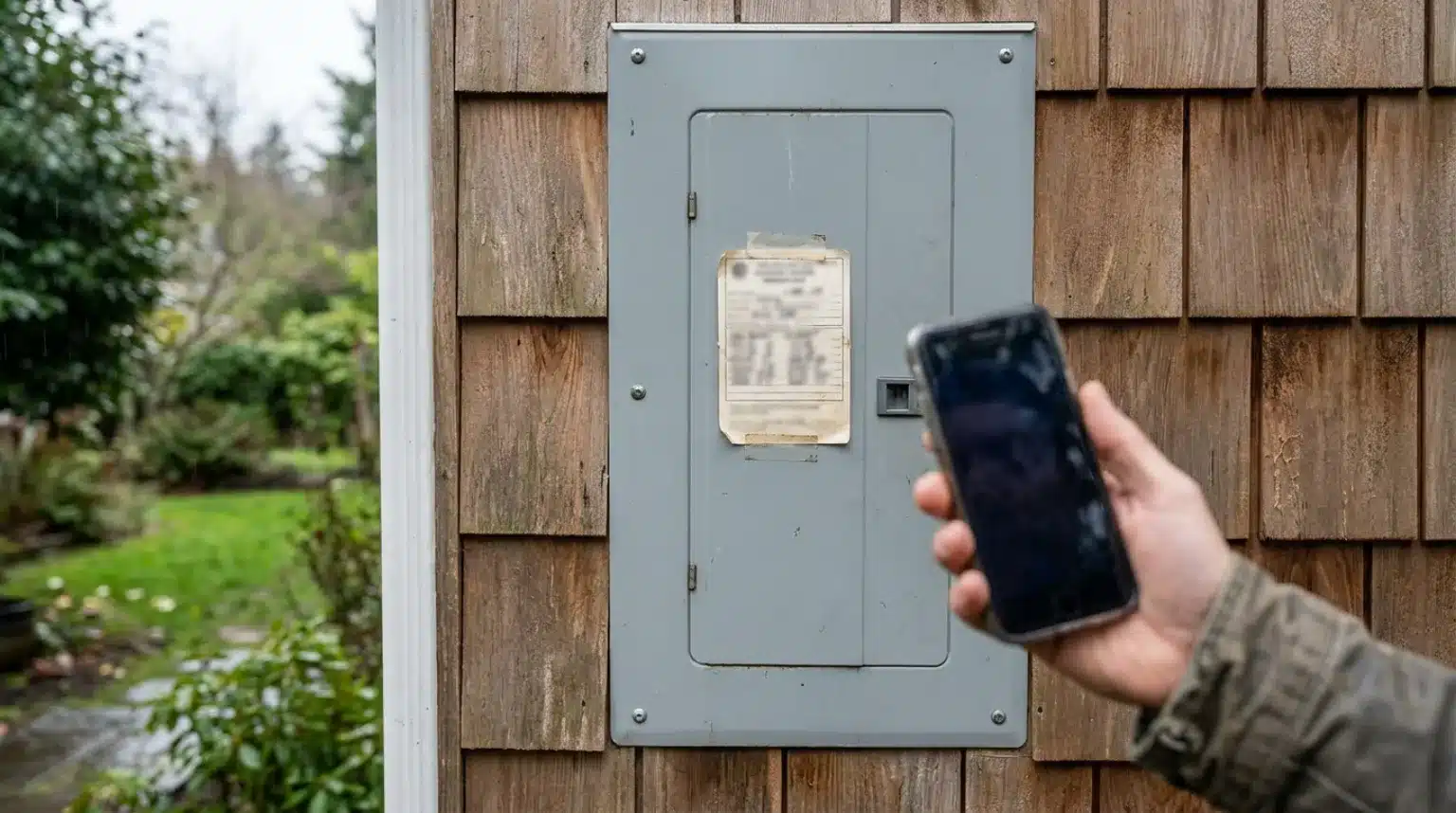
If your home still has a fuse box instead of a breaker panel, you’re not alone — plenty of homes built before the 1960s in the Bothell and Greater Seattle area still have their original system. Fuse boxes aren’t necessarily an emergency, but they do have real limitations, and there are good reasons most homeowners eventually upgrade to a modern breaker panel.
How Fuse Boxes and Breaker Panels Differ
A fuse box protects your circuits with replaceable fuses — when a circuit overloads, the fuse’s metal filament melts, cutting power. To restore it, you have to physically replace the fuse. A breaker panel does the same job with switches instead: when a circuit trips, you just flip the breaker back once the issue is resolved. Beyond convenience, modern breaker panels also support additional safety features like arc-fault and ground-fault protection that most old fuse boxes simply don’t have.
Signs It’s Time to Upgrade
You’re blowing fuses regularly, even on normal days. This usually means your panel’s overall capacity — often just 60 amps in older homes — can no longer keep up with how much your household actually uses.
You’re planning to add an EV charger, a heat pump, or other higher-demand equipment. These typically need dedicated circuits that a small, older fuse box often can’t accommodate without a full panel upgrade.
You’re seeing flickering lights, buzzing sounds, warm spots on the panel, or a burning smell. These are signs worth having evaluated regardless of your panel type, but they show up more often in aging fuse systems as components wear out.
You’re having trouble with insurance. Some insurers are cautious about older electrical systems and may ask about your panel type during underwriting.
Why This Is Licensed Electrician Work
Replacing a fuse box with a breaker panel means working on your home’s main electrical service — coordinating a temporary shutdown with the utility, safely disconnecting and removing the old panel, and installing and grounding the new one to current code. In Washington, this work requires a licensed electrician and a permit with inspection. It’s not a project to take on yourself, both for safety reasons and because unpermitted panel work can create real problems at resale or with insurance later.
What to Expect From a Professional Upgrade
A typical panel replacement is completed in a single day. Your electrician will evaluate your current setup and actual power needs, coordinate the utility shutoff, safely remove the old fuse box, install and ground the new panel, label every circuit, and have the work inspected before it’s energized. If your home has aluminum wiring or other older wiring types, that’s worth flagging during the evaluation too, since it can affect the scope of the job.
Thinking About an Upgrade?
If your home still runs on a fuse box, or you’re noticing any of the signs above, it’s worth having a licensed electrician take a look. Mauro Electric Inc. has served Bothell and the greater Seattle area since 1998 — contact us for an evaluation, or call 360-653-5300.