319 169th St. SW., Bothell, WA. 98012

Analyzing HVAC Services for Heating & Air Conditioning

Imagine stepping into a home where the summer heat feels unbearable or the winter chill seeps through every room. These discomforts often stem from faulty heating or air conditioning systems. For beginners navigating home maintenance, understanding HVAC services for heating & air conditioning is essential. Reliable systems keep your living spaces comfortable year-round, improve energy efficiency, and protect your health.

In this in-depth analysis, we examine the core components of HVAC services for heating & air conditioning. You will learn the fundamentals of installation, routine maintenance, and emergency repairs. We break down key factors to evaluate service providers, such as licensing, experience, and customer reviews. Expect clear insights into common issues like refrigerant leaks, thermostat malfunctions, and ductwork problems. We also highlight cost-saving tips and red flags to avoid subpar services.

By the end, you will gain the confidence to make informed decisions. Whether upgrading your current setup or selecting a new provider, this guide equips you with authoritative knowledge to ensure optimal performance and longevity for your HVAC system. Stay tuned for practical advice tailored for beginners.

The State of HVAC Services in 2026

The U.S. HVAC services market for heating and air conditioning is poised for significant expansion in 2026, projected to reach $165 billion nationally, according to insights from BDR Co.’s HVAC industry trends report. This growth reflects robust demand driven by aging residential systems, stricter energy codes, and a push toward sustainable solutions. Within this, the residential segment stands out, valued at $109.7 billion in 2025 and expanding at a 7% compound annual growth rate (CAGR) toward $201.7 billion by 2034, as detailed by MarketResearch.com. Homeowners are increasingly investing in efficient upgrades like heat pumps and smart systems to cut energy bills and meet decarbonization goals. For beginners, this means replacement cycles are peaking, creating opportunities for timely maintenance to avoid costly emergencies.

Search data underscores the urgency: Americans conduct 135,000 monthly U.S. searches for “HVAC services” and 110,000 for “HVAC installation,” per SEO analyses, signaling widespread need for reliable heating and air conditioning support (ServiceTitan HVAC statistics). Nationally, households spend $14 billion annually on these services, fueled by efficiency demands and electrification trends. Heat pumps, for instance, outsold gas furnaces by 12% in 2025, with over 60% of consumers willing to pay premiums for electric options amid rebates like Washington’s up to $8,000 HEAR program.

Key drivers include rising IAQ concerns from wildfire smoke and AI-integrated thermostats for predictive maintenance. In regions like Greater Seattle, marine climates amplify needs for versatile systems. Homeowners should prioritize licensed pros for electrical-integrated HVAC work to ensure efficiency and compliance, positioning 2026 as a pivotal year for smart investments.

Key Trends Shaping Heating and Air Conditioning

Heat Pump Dominance and Electrification Surge

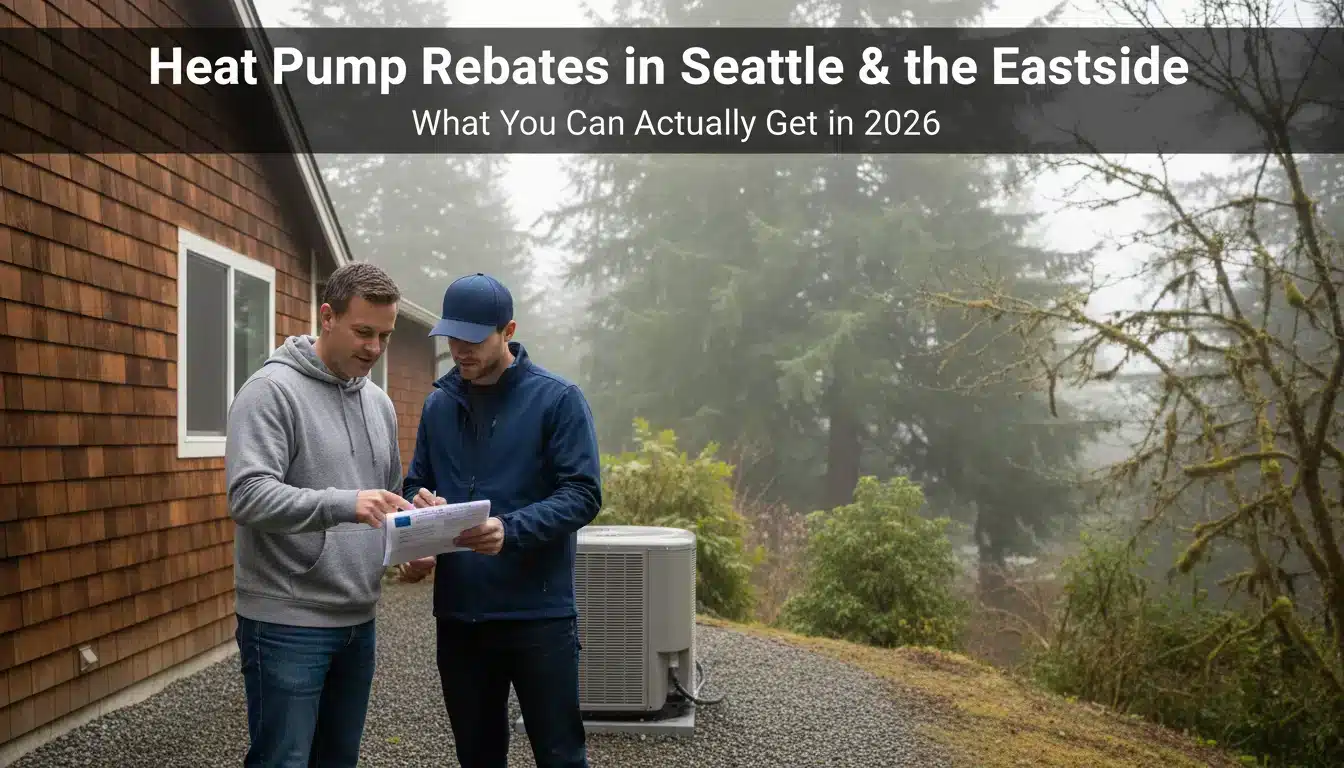
Heat pumps are reshaping the landscape of HVAC services for heating and air conditioning, outselling gas furnaces by 12% in 2025 according to data from the Air-Conditioning, Heating, and Refrigeration Institute (AHRI). Manufacturers shipped 3.6 million air-source heat pump units compared to 3.2 million gas furnaces, marking the fourth straight year of this trend despite economic headwinds like higher interest rates. This shift reflects over 60% of consumers preferring electrification for its dual heating and cooling efficiency, which is two to four times greater than gas systems, plus lower operating costs and alignment with decarbonization goals. In Seattle’s marine climate, with wet winters and dry summers, heat pumps excel by extracting ambient heat efficiently. Homeowners can leverage Washington state rebates up to $8,000 through programs like HEAR, making upgrades accessible. For Bothell and Greater Seattle residents, partnering with trusted providers like Mauro Electric Inc. ensures seamless installation, including electrical wiring for optimal performance.

Smart Tech and IAQ Upgrades for Seattle Homes

Smart technologies are revolutionizing HVAC controls, with AI-powered thermostats learning user habits, weather patterns, and occupancy to optimize energy use and reduce bills by up to 25%. Devices compatible with Apple HomeKit, Google, or Alexa offer app-based remote adjustments, zoning, and predictive maintenance alerts, minimizing breakdowns. In wildfire-prone Seattle, indoor air quality (IAQ) enhancements are critical; HEPA filters capture 99.97% of smoke particles, while UV purifiers and ventilation systems combat allergens and mold in damp conditions. Whole-home sensors monitor VOCs, CO2, and particulates in real-time, auto-adjusting for healthier air. These integrations, detailed in 2026 HVAC trends from ARS, provide actionable peace of mind. Beginners should start with a professional assessment to match systems to their home’s needs.

Low-GWP Refrigerants and Ductless Mini-Splits

The 2026 HVAC Horizons Report emphasizes the transition to low-global warming potential (GWP) refrigerants like R-32 and R-454B, mandated by the EPA’s AIM Act for all new systems from January 1, 2026. These replace high-GWP R-410A, boosting efficiency under new 17 SEER2 standards and supporting decarbonization by avoiding significant future warming. Ductless mini-splits thrive in retrofits, offering zoned control, IAQ features, and no ductwork, ideal for Seattle’s older homes and smoke challenges. Variable-speed compressors cut energy use by 10-20%, with paybacks of 1.5-4 years via incentives. As noted in heat pump sales analysis, this trend accelerates electrification.

Global Heat Pump Market Outlook

Globally, the heat pump market will grow from $61.7 billion in 2026 to $167.4 billion by 2036 at a 10.5% CAGR, driven by mandates, AI integration, and renewables. For U.S. homeowners, this signals reliable, future-proof HVAC services focused on efficiency and timeliness.

Seattle’s Climate Demands Specialized HVAC Solutions

Seattle’s marine west coast climate, classified as Köppen Csb, presents unique demands for HVAC services in heating & air conditioning. With mild temperatures moderated by the Pacific Ocean and Puget Sound, the region sees average annual precipitation of 39 inches, mostly during wet winters from November to March, where highs hover around 47-55°F and frequent drizzle totals up to 7.5 inches in November alone. This persistent moisture fosters mold growth, damp chill, and accelerates corrosion on HVAC components like coils and electrical connections due to salt-laden marine air. Homeowners need reliable heating systems to maintain comfort and prevent efficiency losses. Summers shift to drier conditions with July highs reaching 77°F, but intensifying heat waves, such as the 108°F record in 2021, have boosted air conditioning needs, raising household AC penetration from 31% pre-2021 to 53%. Efficient cooling combats dry heat while addressing lingering corrosion from winter exposure. For detailed climate data, see the Climate of Seattle and WeatherSpark averages.

Wildfire smoke from Pacific Northwest blazes further strains systems, infiltrating homes with PM2.5 particulates that exacerbate respiratory issues. This trend has spiked demand for indoor air quality (IAQ) upgrades, with experts noting more filtration redesigns in recent years than the past decade. Actionable solutions include MERV 13+ or HEPA filters capturing 99.97% of particles, paired with energy recovery ventilators (ERVs) that manage Seattle’s humidity while cutting indoor PM by 40-95%. Bi-annual maintenance, including corrosion-resistant coatings, ensures longevity, as highlighted in Seattle’s marine air impacts.

Variable-Speed Systems and Heat Pumps for Efficiency

Variable-speed (inverter) systems and heat pumps thrive in these moderate temperatures, modulating output for steady comfort without energy waste. Heat pumps transfer heat efficiently, delivering 3-5 times the efficiency of resistance heating and reducing CO2 emissions by 38-53% compared to gas or oil. In winters rarely dipping below 30°F, they lower bills significantly, with 15-20 year lifespans via proper care.

Mandates Driving Oil-to-Electric Transitions

Local policies accelerate change: Seattle targets oil-free heating by 2030, offering $2,000-$6,000 Clean Heat rebates for heat pump conversions, plus up to $8,000 in WA HEAR incentives. Over 300 swaps occurred by 2025, with state codes mandating heat pumps in new builds since 2023. These shifts promise long-term savings and reliability for Greater Seattle homes.

Maximizing Savings Through 2026 Rebates and Incentives

Washington homeowners upgrading their HVAC services for heating and air conditioning can unlock substantial savings through targeted 2026 rebates and incentives, especially amid the heat pump surge outselling gas furnaces by 12% last year. These programs align perfectly with Seattle’s push for electrification, reducing costs on installations averaging $8,000 to $11,000 while enhancing efficiency in our mild marine climate. Stacking incentives often covers 50% or more of expenses, delivering ROI in 3 to 7 years via lower energy bills and added home value.

WA HEAR Program: Up to $8,000 for Heat Pump Installs

The Washington Home Electrification and Appliance Rebates (HEAR) program, funded by the Climate Commitment Act and Inflation Reduction Act, provides point-of-sale rebates for high-efficiency heat pumps. Low-income households (under 80% area median income) qualify for up to $8,000 on ducted or ductless air-source systems; moderate-income (80-150% AMI) get $4,000, stackable with $1,750 for water heaters or $4,000 for panels, totaling $14,000 per home. Administered by nonprofits and utilities with $30.1 million allocated through 2027, it prioritizes single-family homes like those in Bothell. For details, visit the WA Commerce HEAR page. Mauro Electric Inc. ensures seamless integration with electrical upgrades for compliance.

Seattle Clean Heat: $2,000 Instant Rebate

Seattle’s Clean Heat program accelerates oil-to-electric switches, offering $2,000 instant rebates for qualifying heat pumps, plus $4,000 bonuses for moderate-income homes toward a 2030 oil-free goal. Over 2,000 conversions completed by early 2026 target remaining oil-heated properties.

Federal 25C and PSE Rebates

Though the federal 25C tax credit (up to $2,000) ends for 2026 installs, it applies to 2025 claims; PSE offers $1,500 for resistance-to-heat-pump conversions, up to $4,000 for gas switches, with income add-ons.

Claiming Tips

Verify AMI eligibility via HUD tools, select AHRI-certified pros, and stack via pre-approved contractors. Document everything; contact programs early as funds are limited. Partner with experts like Mauro Electric for efficient, on-time service. See the full 2026 WA rebates guide and PNW HVAC stats.

Electrical Integration in Modern HVAC Systems

In modern HVAC services for heating and air conditioning, electrical integration forms the backbone of system efficiency and reliability, especially as heat pumps and smart technologies dominate 2026 trends. Proper wiring ensures stable power delivery to components like variable-speed compressors, preventing short cycling that spikes energy bills by up to 20%. For instance, low-voltage wiring with terminals such as R for power, C for common, Y for compressor, G for fan, and W for heat is essential; missing the C-wire in smart thermostat setups can disable Wi-Fi features and force inefficient on/off operation. Electrical panels must support high loads from 5-10 ton units, often requiring 200-amp upgrades with dedicated breakers to handle zoning and avoid overloads alongside appliances. Smart thermostat installations unlock AI-driven savings of 10-20% through learning algorithms and app controls, yet only 50% succeed without expert wiring adjustments, per industry data. The smart thermostat market alone hits $5.02 billion in 2026, growing at 20.1% CAGR, underscoring their role in Seattle’s electrification push.

Dual Electrical-HVAC Expertise for Code-Compliant Setups

Professionals with combined electrical and HVAC skills deliver seamless, National Electrical Code (NEC)-compliant installations, reducing outages caused by electrical failures in 23% of cases. They assess panel capacity, integrate IAQ sensors for wildfire smoke protection, and ensure grounding to prevent hazards like fires or shocks. This expertise cuts service calls by 70% via predictive maintenance, vital in Bothell’s marine climate.

Mauro Electric Inc.’s One-Stop Efficiency

Since 1998, Mauro Electric Inc. leverages 25+ years in Bothell, WA, mastering HVAC alongside EV charger installs for greater Seattle homes. Their dual licensing (MAUROEH750JW) handles wiring, panels, and smart thermostats in one visit, optimizing for heat pumps and Level 2 chargers without multiple contractors.

Minimizing Disruptions with On-Time Service

Mauro prioritizes virtual consults and rapid execution, limiting downtime amid 42% of failures from poor maintenance. Homeowners enjoy efficient upgrades with rebates like Seattle’s $2,000 Clean Heat instant rebate. For reliable smart thermostat integration and wiring best practices, trust proven dual expertise.

Selecting Reliable HVAC Service Providers

When selecting reliable providers for HVAC services heating & air conditioning in the Greater Seattle area, prioritize NATE-certified technicians, who undergo rigorous exams to ensure expertise in installations and repairs. These professionals minimize errors, extend system life by up to 15 years, and optimize efficiency amid 2026’s technician shortages, where job growth lags at just 8%. Demand 24/7 emergency response for Seattle’s sudden failures during wet winters or smoky summers, paired with robust warranties covering parts, labor, and workmanship for 5-10 years typically.

Seek companies with deep local knowledge of Seattle’s marine climate, including mild temperatures, high humidity, and wildfire impacts. They recommend cold-climate heat pumps (HSPF 10+) suited to rarely dipping below 20°F, while expertly navigating rebates like Seattle’s Clean Heat Program ($2,000 instant for oil-to-electric switches) and WA HEAR incentives up to $8,000. This ensures maximum savings on electrification upgrades.

Value providers offering maintenance plans that cut energy use 10-20% and boost IAQ via HEPA filters or ERVs, alongside convenient online scheduling. Mauro Electric Inc., serving Bothell and Greater Seattle since 1998, excels in integrated electrical-HVAC solutions, handling wiring, panels, thermostats, heat pumps, furnaces, and mini-splits with efficient, on-time service.

Beginner Checklist for Evaluation:

  1. Verify NATE certification, licensing, and insurance.
  2. Confirm 24/7 emergencies, warranties, and 100+ positive reviews.
  3. Request 3 detailed quotes with Manual J load calculations.
  4. Check for maintenance plans, IAQ options, rebate help, and online booking.
  5. Ensure written contracts detail timelines and ENERGY STAR equipment. Contact Mauro Electric Inc. for seamless, one-stop expertise.

Conclusion: Actionable Takeaways for Homeowners

As the HVAC services heating & air conditioning market surges to $165 billion in 2026, with heat pumps outselling gas furnaces by 12% and over 60% of consumers favoring electrification, Seattle-area homeowners face a prime window for upgrades. Local incentives amplify this: Washington state’s HEAR program offers up to $8,000 in rebates, while Seattle’s Clean Heat initiative provides $2,000 instant rebates for oil-to-electric switches, tackling our marine climate’s wet winters and smoky summers.

Take these steps today: First, assess your system’s age; units over 10-15 years drain efficiency and hike bills. Next, verify eligibility for PSE rebates and federal 25C credits. Then, schedule an electrical-inclusive HVAC service to handle wiring, panels, and smart thermostats seamlessly.

Contact Mauro Electric Inc. for a free consultation on heat pumps or repairs; our experts, serving Bothell and Greater Seattle since 1998, deliver efficient, on-time solutions for unmatched comfort and energy savings. Visit mauroelectricinc.com/hvac now for tailored Bothell-Seattle HVAC excellence.

Author
Ricky Mauro

Ricky Mauro is a licensed Washington master electrician and owner of Mauro Electric Inc. He has been serving the north Seattle and Snohomish community for over 20 years, and specializes in Generac generators and breaker box upgrades.

SHARE THIS POST: