If you’ve recently had electrical work done on your home — a panel upgrade, a new circuit, an EV charger install — there’s a good chance a permit and inspection are part of that project. For a lot of homeowners, that’s the part that feels the most opaque: you know the work happened, but you’re not always sure what’s supposed to happen next, or how to tell if everything actually passed.
Here’s a plain-language walkthrough of how electrical permitting and inspection works in the Seattle area, how to check on where your project stands, and why the contractor you hire has more influence over how smoothly this goes than most homeowners realize.
Why the Permit and Inspection Step Exists
An electrical permit isn’t paperwork for its own sake. It’s the mechanism that gets a qualified inspector to physically verify that new or modified wiring meets code — correct wire sizing, proper grounding and bonding, safe overcurrent protection, and so on. That matters for obvious safety reasons, but it also matters later: unpermitted electrical work is a common snag in home sales and can complicate an insurance claim if something ever goes wrong.
In Seattle, permits and inspections for this kind of work are handled by the Seattle Department of Construction and Inspections (SDCI). Depending on the scope of the job, an electrical permit may involve more than one inspection — a rough-in inspection before walls are closed up, and a final inspection once everything is complete and the space is finished.
How to Check Where Your Permit Stands
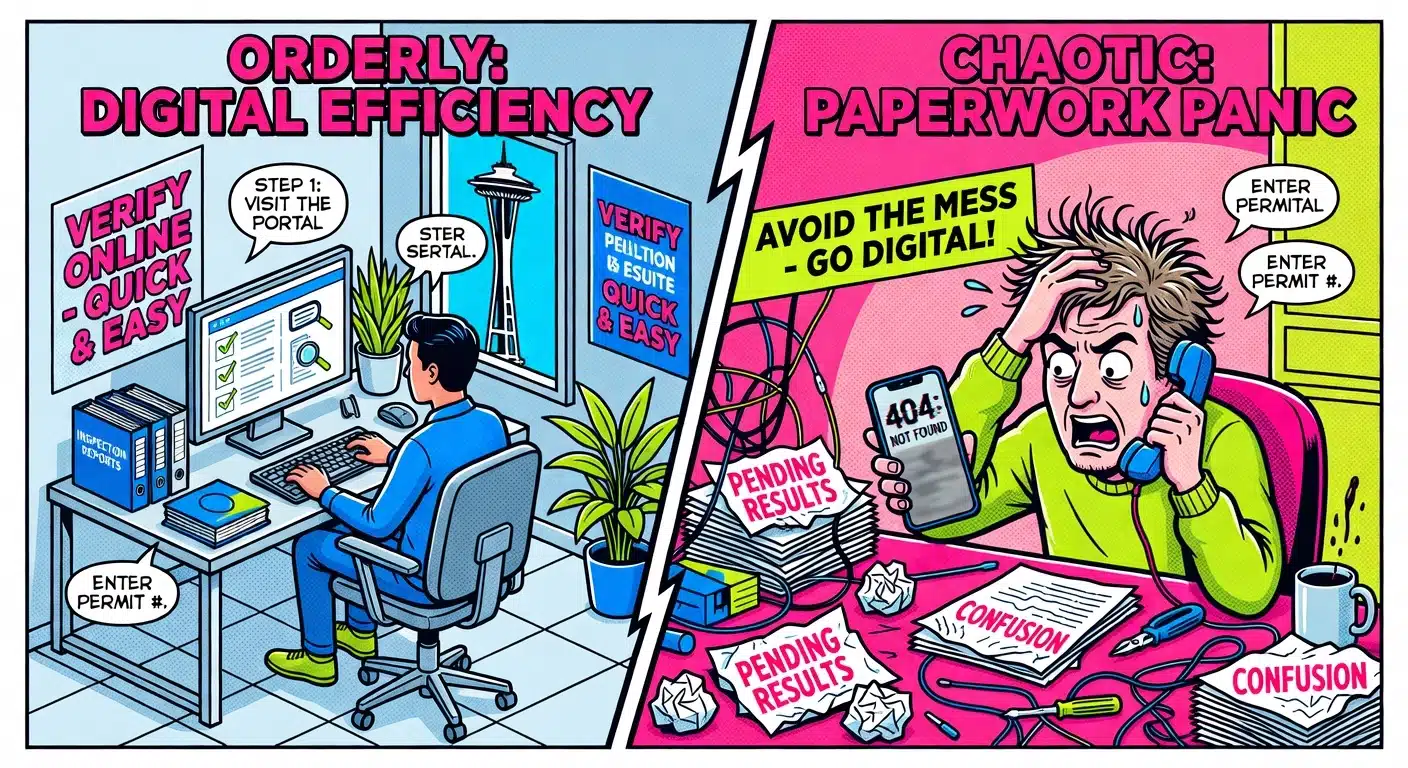
SDCI’s public-facing permitting portal lets you look up the status of a permit or schedule an inspection using your permit or record number. You can find it through SDCI’s electrical inspections page, which links out to the current online portal. If you’re not sure of your record number, your contractor should have it on hand — it’s tied to the permit that was pulled before work began.
If you have questions about scheduling that the portal doesn’t answer, SDCI’s inspection scheduling line is available weekday mornings; the number is listed on their site since staffing hours can change. The main thing to know is that a permit isn’t “done” until it shows a passed final inspection — a rough-in pass alone doesn’t mean the job is closed out.
Why an Inspection Doesn’t Always Pass the First Time
It’s more common than people expect for an inspector to flag something on a first visit, and it doesn’t necessarily mean the work was done carelessly. Some of the more frequent reasons include:
Access issues. If a panel, junction box, or new wiring isn’t fully accessible for the inspector to view and test, that alone can hold things up.
Documentation gaps. Missing labels on a panel schedule, or work that goes slightly beyond what the original permit scope covered, can trigger a correction notice even when the electrical work itself is sound.
Code details. Electrical code gets updated periodically, and a detail that was standard practice a few years ago — a grounding method, a required AFCI or GFCI location — can be exactly what an inspector is checking for today.
None of this is a reason to worry if it happens. A correction notice is a normal part of the process, and most are resolved with a follow-up visit once the noted item is addressed.
Why This Goes Smoother With the Right Contractor
This is really where the biggest difference shows up. A contractor who pulls permits routinely, knows current code, and builds the work to pass inspection the first time will save you the back-and-forth almost entirely. That’s a big part of what you’re actually paying for when you hire a licensed, experienced electrician instead of going the cheapest route.
Mauro Electric has been doing electrical work in the Seattle area since 1998 — we’re a family-owned, licensed and bonded contractor (WA license MAUROEI971BA), and we handle the permitting and inspection process as a standard part of every job that requires it, not an afterthought. It’s one of the reasons we’ve built up a 4.9-star rating across 200+ Google reviews from homeowners across Seattle, Bellevue, Kirkland, Bothell, and the rest of our Snohomish and King County service area.
Frequently Asked Questions
How do I find my Seattle electrical permit number?
Your contractor should have it on hand — it’s tied to the permit that was pulled before work began, and you’ll need it to look up your inspection status.
What happens if my electrical inspection doesn’t pass the first time?
You’ll get a correction notice explaining what needs to be addressed, then a follow-up inspection once it’s fixed. This is a normal part of the process, not a sign anything went seriously wrong.
Do I need a permit for minor electrical repairs?
It depends on the scope of the work — some minor fixes don’t require one, while most new circuits, panel work, or added wiring do. A licensed contractor can tell you exactly what your specific project needs.
If you’re planning electrical work and want it done right — permitted, inspected, and built to actually pass — you can read more about what a permit inspection actually looks like on one of our project pages, or reach out to our team directly. Give us a call at (360) 653-5300 and we’ll walk you through what your specific project needs.