If you own a home in the Seattle area — especially anything built before the 1990s — there’s a good chance you’ll need electrical repair work at some point that has nothing to do with anything you did wrong. It’s just what happens when older wiring, modern power demands, and Pacific Northwest weather all meet in the same house.
Here’s what actually drives most of the electrical repair calls we get, and what’s worth knowing before you pick up the phone.
Older Homes Weren’t Built for How We Use Power Today
A lot of homes in Seattle, Bellevue, and the surrounding suburbs were wired decades ago, when a household might run a few lamps, a refrigerator, and a window unit air conditioner. Today that same panel is asked to handle central HVAC, multiple computers and entertainment systems, a home office, maybe an EV charger, and a kitchen full of higher-draw appliances.
That gap between what a panel was designed for and what it’s actually asked to do is one of the most common reasons we get called out — not because something is broken yet, but because it’s close to being overloaded. Warning signs include breakers that trip more often than they used to, warm outlet covers, flickering lights when something like a microwave or AC kicks on, or a panel that’s already full of double-tapped breakers with no room to grow.
If any of that sounds familiar, it’s worth having a licensed electrician actually look at your panel’s capacity before you add anything else to it — not just patch the symptom.
Weather Takes a Real Toll Here
Windstorms and heavy winter weather are a normal part of living in this region, and they’re hard on electrical systems in ways that aren’t always obvious. Power surges during outages and restoration, moisture intrusion around outdoor outlets and service entrances, and tree limb damage to service lines are all things we see repeatedly after a rough stretch of weather.
Some of this damage shows up right away — a dead outlet, a breaker that won’t reset. Some of it is slower, like corrosion inside a connection that only becomes a problem months later. After any significant storm, it’s worth having exterior electrical connections and GFCI outlets checked, especially if you noticed flickering or a brief outage even if the power came back on its own.
Knob-and-Tube and Early Aluminum Wiring Are Still Out There
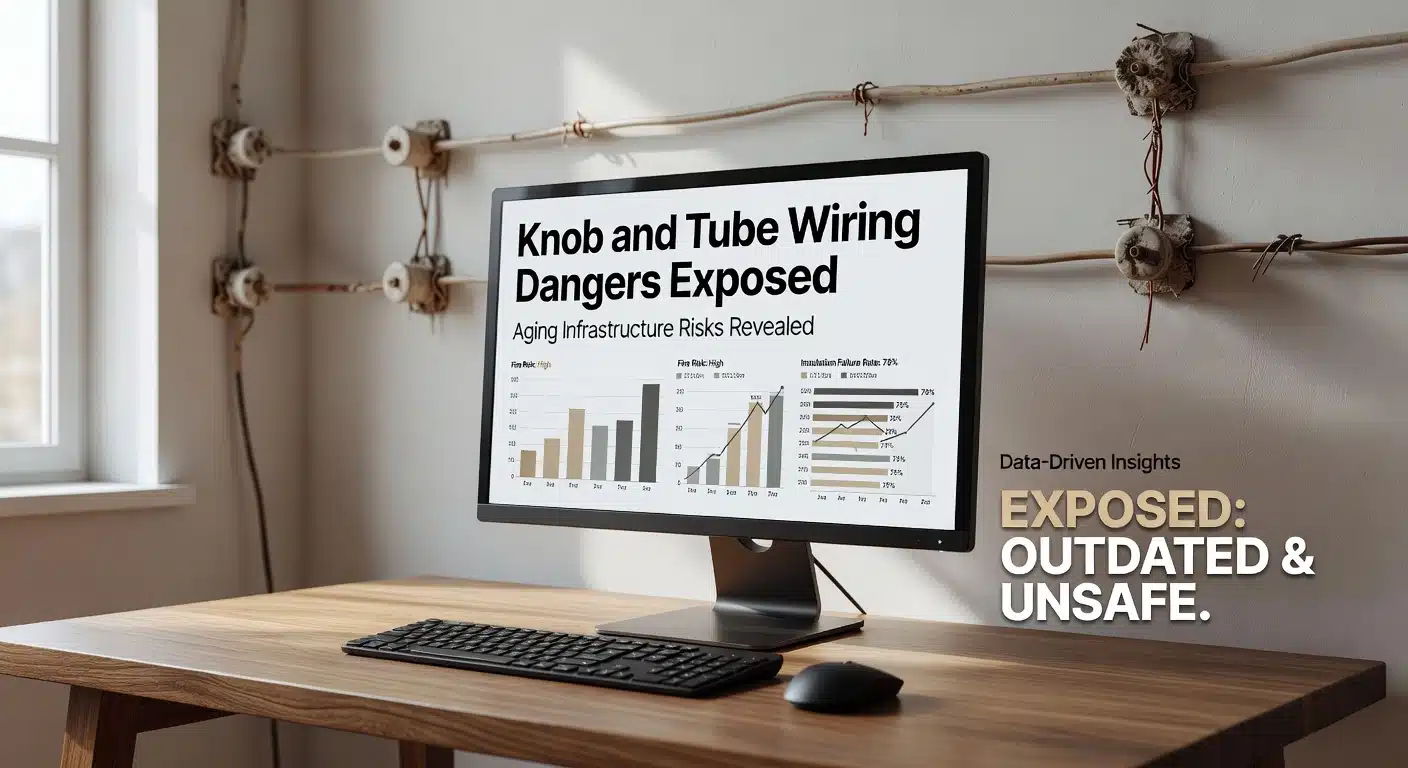
A meaningful number of homes in this area, particularly in older Seattle neighborhoods, still have some original knob-and-tube wiring or aluminum branch wiring from decades past. Neither was unsafe by the standards of its time, but neither was designed for modern loads, modern insulation practices, or the number of devices we plug in today. Insurance companies have also gotten stricter about covering homes that still have active knob-and-tube wiring, which is often what prompts a homeowner to finally deal with it — either during a refinance, an insurance renewal, or a renovation that opens up the walls.
This isn’t a repair you want handled piecemeal. A proper evaluation looks at the whole circuit, not just the outlet that stopped working.
What Actually Separates a Good Electrical Repair From a Bad One
The difference usually isn’t the brand of parts used — it’s whether the person doing the work actually diagnosed the root cause or just fixed the symptom in front of them. A tripped breaker, a dead outlet, or a flickering light can all have several different underlying causes, and the fastest fix isn’t always the right one. A licensed electrician should be able to explain what they found, why it happened, and whether it’s isolated or part of a bigger pattern in your home’s wiring.
It’s also worth confirming that whoever you hire is actually licensed and pulls permits when the work requires it. Permitted work gets inspected, which protects you at resale and keeps your homeowner’s insurance valid if something ever does go wrong down the line.
When to Call Someone
You don’t need to wait for something to fail completely. Breakers tripping more than occasionally, outlets that feel warm, a persistent burning smell, flickering lights that track with when a large appliance turns on, or a panel that’s simply old and hasn’t been evaluated in years are all good reasons to get a professional opinion now rather than after an outage or, worse, a real hazard.
Frequently Asked Questions
How do I know if my electrical panel needs to be upgraded?
Common signs include breakers that trip more than occasionally, a panel that’s already full of double-tapped breakers, or one that hasn’t been evaluated in years. A licensed electrician can check its actual capacity against what your home needs.
Is it normal for an outlet to feel warm?
No — a warm outlet or cover plate is worth having checked promptly, not written off as normal.
How do I find an electrician I can actually trust?
Confirm they’re licensed, ask whether they pull permits for work that requires it, and look for a track record of reviews from real customers in your area — not just a polished website.
Mauro Electric has been doing electrical work in the Bothell, Seattle, and greater Snohomish and King County area since 1998 — licensed, bonded, and insured, with a 4.9-star rating across 200+ Google reviews. If something about your home’s electrical system has been nagging at you, reach out or call us at (360) 653-5300 and we’ll help you figure out what’s actually going on.