Picture this: you flip the switch in your charming older home, and suddenly sparks fly from the outlet. Fires like this claim lives and destroy properties every year, often tracing back to one overlooked culprit, knob and tube wiring. This early 20th-century electrical system, with its ceramic knobs and fabric-insulated wires snaking through walls, powered homes when electricity was new. Today, it lurks in millions of houses, posing risks most homeowners never suspect.
Knob and tube wiring revolutionized lighting back then. Yet, its design lacks modern safety features like grounding or overload protection. Insulation cracks over time; wires overheat near insulation or extensions; and it fails spectacularly under today’s power demands. Beginners need to know these threats before they escalate.
In this in-depth analysis, we expose the full dangers of knob and tube wiring. You will learn its history, spot telltale signs in your home, understand why insurance companies dread it, and discover practical steps to inspect and upgrade safely. Armed with this knowledge, protect your family and property from electrical hazards hiding in plain sight.
What Is Knob and Tube Wiring?
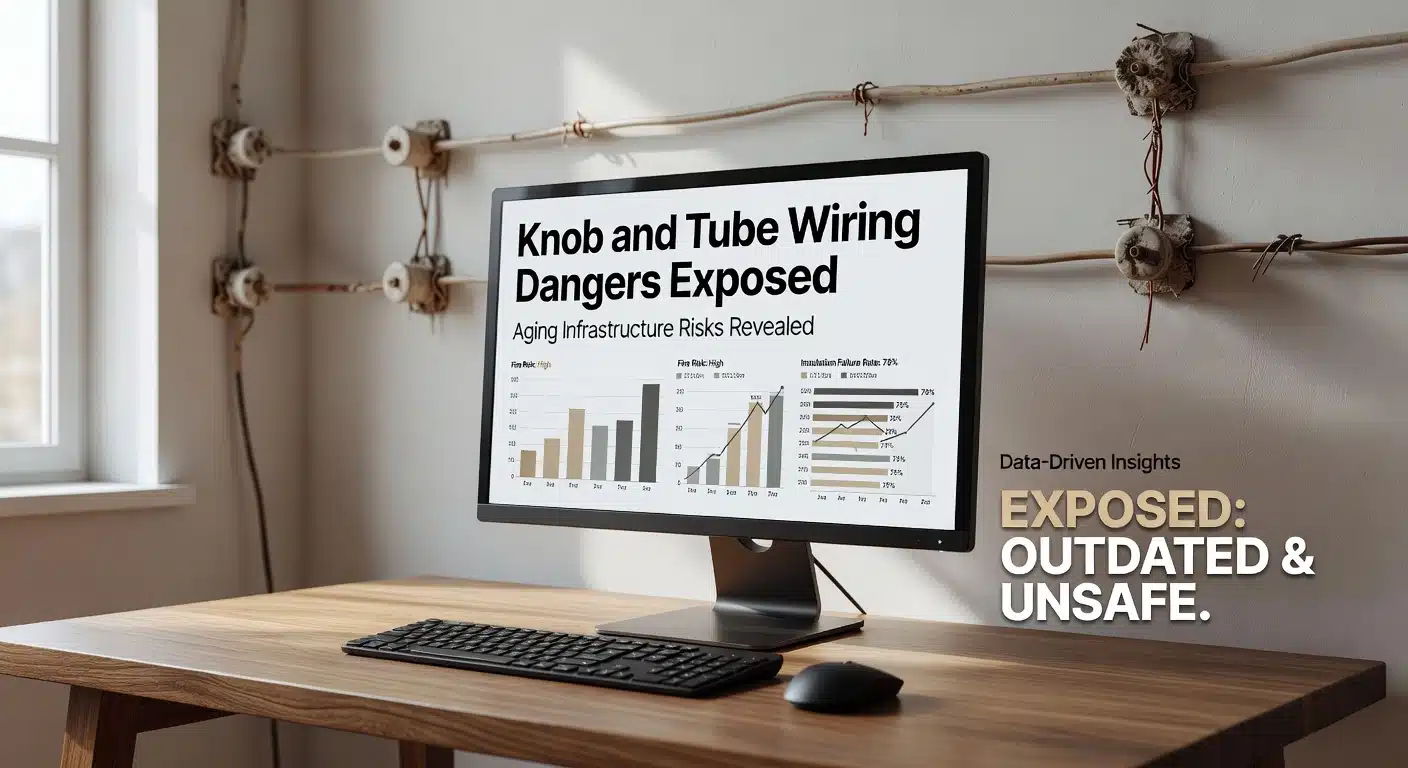
Knob and tube wiring, often abbreviated as K&T, represents one of the earliest standardized electrical systems in North American homes. This method emerged in the late 1880s and dominated residential installations through the 1940s. It features individual copper conductors insulated with materials like rubber or bitumen-saturated cloth. These wires are separated and supported by porcelain knobs nailed to wooden joists and protected by ceramic tubes where they pass through framing. Unlike today’s bundled cables, K&T relies on open-air spacing for heat dissipation, a design suited to the era’s modest electrical demands. Homeowners in older properties should recognize these components during inspections to assess safety.
Origins and Historical Context
The system was patented in 1888 by inventors George H. Harris and Edward R. Callender, quickly becoming the go-to solution for electrifying homes as electricity spread across North America. From roughly 1880 to the 1940s, builders used it extensively in new constructions, with lingering installations into the early 1950s in some regions. It powered basic needs like incandescent lighting, early irons, and radios in an age before high-power appliances. In the Pacific Northwest, including Greater Seattle and Bothell, K&T wired countless Craftsman and bungalow-style homes built during the early 20th-century boom. These architectural favorites, prevalent in Washington neighborhoods, often retain original wiring today. For detailed history, see Benchmark Seattle’s overview.
Construction Breakdown
K&T construction involves solid copper wires, typically 12- to 14-gauge, each insulated separately without a unifying outer sheath like modern Romex. Porcelain knobs, with grooved designs, secure the hot and neutral wires to joists, maintaining a 4- to 6-inch separation for airflow and preventing contact with wood. Ceramic tubes sleeve the wires through bored holes in studs or joists, guarding against abrasion and compression. Splices were soldered and taped, while outlets and switches mounted on surface boxes. This labor-intensive setup allowed higher ampacity per wire due to free heat escape, around 10 to 15 amps per circuit. Beginners can spot it by cloth-covered wires, white knobs, or tubes in attics and basements; consult InterNACHI’s guide for visuals.
Prevalence in Today’s Homes
Estimates indicate knob and tube remains active in 10 to 20 percent of pre-1950 homes, per inspection data from the National Association of Home Inspectors (NACHI). In the Greater Seattle area and Bothell, it’s especially common in vintage Craftsman bungalows and wood-framed houses from the 1920s to 1940s. These properties, abundant in Pacific Northwest suburbs, often surprise owners during remodels or sales. Real estate transactions frequently uncover it, prompting evaluations. Local electricians like Mauro Electric Inc., serving Bothell since 1998, routinely identify it in routine service calls.
Critical Differences from Modern Systems
Modern non-metallic (NM) cable, or Romex, bundles hot, neutral, and ground wires in a PVC jacket, enabling 15- to 20-amp circuits and three-prong outlets for shock protection. Knob and tube lacks any grounding conductor, a major safety gap that leaves faults undetected by breakers. It was engineered for low-amperage loads of early appliances, like 40- to 60-amp panels, far below today’s 100- to 200-amp standards. Overloading with EVs, dryers, or extensions risks overheating, as insulation deteriorates after 80-plus years. For a full comparison, review Wikipedia’s entry. Actionable step: Schedule a professional inspection to confirm presence and plan upgrades for code compliance and insurance peace of mind.
How to Spot Knob and Tube Wiring in Your Home
Visual Cues in Unfinished Spaces
Spotting knob and tube wiring starts with inspecting accessible unfinished areas like attics, basements, and crawlspaces, where the system’s distinctive features remain exposed. Look for individual cloth-covered wires, typically black or white with rubberized insulation that has become brittle and frayed after 80 to 140 years of age. These wires run separately, not bundled like modern Romex cable, and are supported by white porcelain knobs, which resemble small spools about 1 to 2 inches in diameter nailed to joists or studs. Porcelain tubes, straight or curved and roughly 0.75 to 1 inch wide, protect the wires where they pass through framing members. Homeowners in Bothell and Greater Seattle often find these in “spider-webbing” patterns along beams in older Craftsman-style homes. For detailed visual guides, see how to identify knob and tube wiring. Avoid confusing these with old antennas or unrelated fixtures, and never touch suspect wires to prevent shocks.
Checking Outlets and Electrical Panels
Indirect signs in living areas can signal underlying knob and tube systems without needing to open walls. Ungrounded two-prong outlets are a classic indicator, as this wiring lacks a third ground wire essential for modern safety. Test outlets with a simple plug-in tester, which will show no ground path on three-prong receptacles adapted to two-prong bases. Fuse panels with ratings over 60 amps also raise red flags, since knob and tube was designed for low loads around 15 to 20 amps per circuit. Less common but telling are outlets mounted in ceilings, originally for lighting fixtures without ground protection. Modern breaker panels may hide active knob and tube branches, so check labels or service records. Data from inspectors shows these clues appear in 20 to 30 percent of pre-1950 homes nationwide, mirroring local trends. Learn more from expert identification tips.
Revelations During Renovations
Renovation projects frequently uncover knob and tube wiring hidden behind old plaster or lath walls. Exposed cloth-insulated wires emerge without protective sheathing, often in chaotic runs lacking modern standards. A key giveaway is the absence of junction boxes; original splices were soldered and wrapped in friction tape, left open to air, which poses fire risks today. Hybrid setups, mixing knob and tube with newer wiring via improper ties, are common and hazardous. Pause work immediately if spotted, as the National Electrical Code prohibits covering these wires with insulation due to heat buildup. In Seattle-area remodels, this discovery affects insurance and permits, with experts noting rodents often exacerbate damage. For replacement insights, review knob and tube dangers.
Prevalent in Bothell and Greater Seattle homes built before 1950, knob and tube affects 10 to 20 percent of older properties per inspection data. While undisturbed segments may function, modifications for EVs or appliances overload them, contributing to 6 percent of home fires annually per NFPA stats. Insurance carriers increasingly deny coverage or add premiums without upgrades. For confirmation, hire a licensed electrician like those at Mauro Electric Inc., serving the area since 1998 with efficient, on-time inspections starting at $100 to $200. Professional evaluation ensures code compliance and safety before issues escalate.
Primary Dangers of Knob and Tube Wiring
Deteriorated Insulation
Knob and tube wiring features original insulation made from rubberized cloth or bitumen compounds that have aged 80 to 140 years in most homes. Over time, exposure to heat cycles, moisture, and oxidation causes this material to become brittle, crack, and flake away, leaving bare copper conductors exposed. When these exposed wires contact wood framing, dust accumulations, or other combustibles, the risk of arcing, short circuits, and fires skyrockets. The National Electrical Code (NEC Article 394.12(B)) strictly prohibits covering knob and tube with modern thermal insulation, such as blown-in cellulose, foam, or batts, because the system relies on free air circulation for heat dissipation. Trapping heat around the wires accelerates insulation breakdown and can ignite nearby materials. Homeowners in the Greater Seattle area, where pre-1950 Craftsman homes are common, should inspect attics and walls immediately, as even minor sagging worsens cracking and heightens these dangers.
Lack of Grounding
A fundamental flaw in knob and tube wiring is the complete absence of a grounding conductor, relying solely on hot and neutral wires for 10- to 15-amp circuits. Without grounding, if a hot wire faults and contacts a metal appliance housing, the surface becomes energized, posing a severe electrocution risk to anyone touching it while grounded, such as on a damp floor. Modern circuit breakers and GFCI/AFCI devices fail to trip reliably on these ground faults, leaving faults undetected until a shock or fire occurs. According to the Minnesota Center for Energy and Environment (MNCEE) and InterNACHI (NACHI), this design prevents proper overcurrent protection and makes three-prong outlets unsafe without risky adapters. In Bothell and surrounding areas, where older homes often retain this wiring, the shock hazard endangers families daily. Professional inspection reveals if adapters or cheater plugs mask the issue, demanding urgent upgrades.
Overheating and Fire Hazards
Knob and tube circuits cannot support modern electrical loads from appliances, HVAC systems, or EV chargers, which often draw 30 amps or more on single #14 AWG wires rated at 15 amps maximum. Historical overloading, bundling of wires, or paralleling circuits causes sustained overheating, especially if contacted by insulation that blocks natural cooling. The National Fire Protection Association (NFPA) reports that electrical failures, including those from outdated wiring like knob and tube, contribute to thousands of home fires annually, with concealed faults smoldering undetected in attics or walls. While exact figures vary, older systems play a role in about 6% of such incidents per some analyses, amplified by today’s electrification trends. In the Pacific Northwest, the EV boom strains these vintage setups further; a Level 2 charger installation often uncovers overload risks. Actionable step: Test circuits with modern devices; if lights dim or breakers nuisance-trip, overheating lurks.
Splicing and Modification Risks
Unsafe splices plague many knob and tube systems, where amateur repairs use twisted wires secured with tape instead of proper soldering and junction boxes. These high-resistance connections generate heat hotspots that degrade rapidly, far outpacing original factory joints. Forums like NACHI and Reddit highlight how 80-plus years of DIY fixes create hidden arcing points, turning minor mods into fire starters. Improper extensions with Romex cable exacerbate issues, as differing materials spark at junctions. NACHI inspector discussions note unmodified knob and tube may fare better short-term, but prevalent alterations demand scrutiny. Seattle homeowners face heightened scrutiny during sales or remodels, where these flaws void insurance or fail inspections.
These dangers underscore why experts urge full rewiring with modern NM cable for safety, code compliance, and insurability, especially amid 2026 trends like rising premiums (70-90% of carriers scrutinize knob and tube) and EV demands. Delaying invites catastrophe; schedule a certified electrician evaluation today for efficient, on-time resolution.
Knob and Tube Wiring and Home Insurance Issues
Insurance Denial Rates for Knob and Tube Wiring
Homeowners with active knob and tube wiring face significant hurdles when securing or renewing home insurance policies. According to insights from Honeycomb Insurance, 70 to 90 percent of standard carriers either decline coverage outright or impose substantial surcharges for homes with active K&T systems due to elevated fire and safety risks. This trend is intensifying in Washington state heading into 2026, as insurers tighten underwriting standards amid rising claims related to outdated wiring. Even if the system appears functional, its lack of grounding and vulnerability to overloads prompts these rejections. For beginners, this means shopping for quotes can yield repeated denials, forcing reliance on high-premium specialty markets. Proactive inspection by a licensed electrician like those at Mauro Electric Inc. can reveal these issues early, allowing time for remediation.
Certification Challenges and Insurer Demands
Insurers frequently require a detailed letter from a licensed electrician certifying that knob and tube wiring is inactive, meaning it has been fully abandoned in favor of modern circuits handling all loads. However, this certification often falls short of full approval, as many carriers prefer or mandate complete replacement to eliminate any residual risks from deteriorated insulation or hidden faults. Obtaining such a letter involves a thorough inspection of attics, basements, and walls, verifying no active use, damage, or contact with insulation, which violates NEC guidelines. Even with documentation, surcharges of 20 to 50 percent may apply, and policies could still face non-renewal. In practice, this process delays closings and adds costs; experts recommend budgeting for a full rewire upfront. Mauro Electric Inc., serving Greater Seattle since 1998, provides these certifications efficiently while advising on seamless transitions to modern NM cable systems.
Sales Complications from Required Disclosures
Selling a home with knob and tube wiring triggers mandatory disclosures on seller forms, often deterring buyers concerned about insurability and lender requirements. Real-world cases in the Bay Area, as reported by ABC7 News, illustrate policy cancellations mid-escrow after inspections flag K&T, leading to last-resort FAIR Plan coverage with premiums up to three times higher. Similar scenarios unfold in Seattle, where buyers demand remediation before proceeding, stalling deals and eroding property value. Lenders scrutinize these disclosures, sometimes refusing mortgages without proof of upgrades. For sellers, early detection via visible signs like ceramic knobs prevents surprises. Addressing this through professional rewiring ensures smooth transactions and buyer confidence.
Local Trends in Seattle and Washington State
Seattle homeowners are encountering surging non-renewals for knob and tube systems amid 2025-2026 insurance scrutiny, linked to Washington’s adoption of stricter 2026 NEC updates emphasizing full replacements over partial abandonment. Local reports highlight carriers implementing “hard no” policies until rewiring is complete, exacerbated by wildfire risks and premium hikes projected at 4.4 percent statewide. Pre-1950 Craftsman homes in Bothell and Greater Seattle, common carriers of K&T, face the brunt, with costs ranging $10,000 to $25,000 for 1,500-2,500 square foot properties. This ties directly to code tightening during remodels or sales, where partial fixes no longer suffice. Homeowners should schedule inspections now to avoid disruptions. At Mauro Electric Inc., we deliver on-time rewiring tailored to these challenges, integrating energy-efficient upgrades for long-term compliance and savings. Consult a trusted local expert today to safeguard your policy and home value.
Code Violations and Incompatibility with Modern Homes
NEC Prohibitions on Knob and Tube Wiring
Knob and tube wiring faces strict limitations under the National Electrical Code (NEC), particularly Article 394, which governs concealed installations. The code explicitly prohibits extensions or alterations to existing K&T systems without approval from the authority having jurisdiction, such as local inspectors in Seattle. Homeowners cannot add insulation over K&T circuits, as this traps heat and elevates fire risks; loose-fill, batt, or foam insulation is banned outright. Repairs are permitted only under inspection, but splicing modern wiring to K&T requires soldered connections in boxes, making partial fixes impractical. Partial abandonment of inactive branches is allowed if conductors are properly terminated, tagged for identification, and inaccessible, yet this approach fails for home sales due to disclosure requirements and insurer scrutiny. For precise code details in Seattle, consult the 2023 Seattle Electrical Code quick reference. These rules ensure safety but often necessitate full rewiring with modern NM cable like Romex for compliance.
Incompatibility with EV and Smart Home Demands in the 2026 PNW
The surge in electric vehicle adoption and smart home technologies exposes knob and tube wiring’s fundamental flaws, as its 14-15 AWG conductors handle only 15A at 120V without grounding. Level 2 EV chargers demand dedicated 240V, 30-50A circuits, far beyond K&T capacity, leading to overheating and potential fires in Greater Seattle homes pursuing Washington’s Clean Energy Transformation Act incentives. High-draw HVAC systems, like efficient heat pumps common in the Pacific Northwest, require 20-40A 240V circuits with arc-fault protection, which ungrounded K&T cannot provide. Smart panels and devices further strain the system, lacking compatibility with GFCI or AFCI requirements. By 2026, PNW trends predict a rewiring boom, with insurance carriers denying policies for active K&T amid EV installations and panel upgrades. Data shows replacement costs averaging $10,000 to $25,000 for 1,500-2,500 square foot homes in Seattle, bundling rewires with EV setups for efficiency. Actionable step: Assess your panel and circuits before installing an EV charger to avoid code violations.
Remodel Mandates Triggering Full Replacement in Seattle
Seattle’s electrical codes, aligned with NEC 2023 and effective through 2026, mandate inspections during any remodel exposing walls, such as kitchen updates or attic insulation. Opening structures reveals K&T, prompting licensed electricians to survey and certify conditions; non-compliant wiring halts permits until replaced. While no universal “full replacement” rule exists, practical mandates arise: active K&T cannot support new outlets, lighting, or HVAC tied to remodels, driving complete upgrades. For instance, adding energy-efficient lighting or outlets requires grounded, modern wiring, often escalating to panel replacements from outdated 60A fuses. Processes involve 1-2 week permits, 7-14 day installations, and rough-in inspections before drywall. In Bothell and Greater Seattle, pre-1950 Craftsman homes face this routinely, with costs at $8-15 per square foot ensuring code-compliant, future-proof results.
Expert Consensus for Complete Removal
Safety experts, including those from the NFPA and inspection authorities, unanimously advocate full knob and tube removal for long-term reliability, even in undisturbed systems. While low-load, unmodified K&T may seem safe short-term, deteriorated insulation cracks expose conductors to arcing, exacerbated by rodents or hidden splices. Modern tests for GFCI and AFCI fail without grounding, and statistics link outdated wiring to 6% of annual home fires. In the PNW, 2026 insurance trends show 70-90% of carriers imposing premiums or denials, pushing proactive rewires. For more on risks, see InspectAPedia’s detailed analysis. Mauro Electric Inc., serving Bothell and Greater Seattle since 1998, delivers efficient, on-time rewiring alongside EV and HVAC services, safeguarding your home comprehensively. Schedule an inspection today for peace of mind.
The Knob and Tube Replacement Process
Full Rewire Steps
Replacing knob and tube wiring requires a systematic full rewire to modern standards, ensuring safety and compatibility with today’s electrical demands. The process begins with a thorough assessment, where licensed electricians inspect attics, basements, and walls to map active and abandoned knob and tube circuits, perform load calculations, and evaluate your electrical panel’s capacity. For most pre-1950 homes in the Greater Seattle area, this reveals outdated 60-100 amp fuse boxes inadequate for modern appliances. If needed, the team installs a new 200-amp breaker panel with AFCI and GFCI protection, a step essential in about 80% of cases, costing $800 to $2,500. Next, technicians shut off the main power, protect your home’s surfaces, and run fresh NM-B Romex cable, typically 12/2 or 14/2 grounded copper wire, through attics, crawlspaces, and minimal wall openings. They create dedicated circuits, such as 20-amp lines for kitchens, fully removing or abandoning old knob and tube wires per NEC guidelines. Finally, install grounded three-prong outlets every 12 feet, new switches, and junction boxes, followed by rigorous testing for grounding, polarity, and load balance, plus city inspections and drywall patching at $2-12 per square foot.
Bundled Upgrades for Maximum Efficiency
Savvy homeowners combine knob and tube replacement with upgrades to future-proof their homes and cut long-term costs. Mauro Electric Inc., serving Bothell and Greater Seattle since 1998, excels in bundling these services for efficiency. For instance, integrate Level 2 EV charging stations on new 50-amp circuits during the rewire, enabling fast charging for electric vehicles without separate disruptions. Add energy-efficient LED recessed lighting and smart home automation, wired seamlessly into the new system for dimmers and low-voltage controls. These packages boost home value by 5-10% and support Washington’s electrification trends, where 30% of 2026 rewires include EV prep. By handling everything at once, you avoid repeat labor costs and minimize downtime.
Timeline and Disruption Management
For a typical 1,500-2,500 square foot home in Bothell, expect 1-2 weeks of on-site work, though total project time spans 3-10 calendar weeks including permits at $200-900. Access matters: attics and crawlspaces speed things up by 30-50%, while plaster walls extend timelines. Professionals use a phased approach, tackling floor-by-floor or circuit-by-circuit, capping old wires to keep partial power flowing, such as essentials on half circuits during Day 1. Daily cleanups, temporary lighting, and UPS backups for computers limit outages to 4-8 hours per day. Occupied homes remain livable with planning, though relocation eases complex jobs. Mauro Electric Inc. prioritizes on-time completion, delivering the best service with minimal hassle.
Benefits of Hiring Licensed Professionals
Engaging a licensed team like Mauro Electric Inc. guarantees code compliance, handling all Seattle amendments and NEC 2023 updates for a 95%+ inspection pass rate. They secure permits, provide lifetime labor warranties and 5-year parts coverage, and certify your home K&T-free, slashing fire risks by 70% and easing insurance approvals amid 2026 scrutiny. Expertise in Bothell-area Craftsman homes ensures precise work, from historic adaptations to surge protection. Costs range $10,000-$25,000 locally, but yield $10,000-$20,000 in added resale value and EV readiness. Avoid DIY pitfalls, which void insurance and risk fines. Trust proven pros for safe, efficient results.
Replacement Costs in Greater Seattle Area
National vs. Local Costs
Nationally, replacing knob and tube wiring in a typical home averages $3,500 to $9,000, according to 2026 industry estimates. This range covers basic rewiring for smaller properties, often calculated at $8 to $20 per square foot. However, in the Greater Seattle area, costs escalate significantly to $10,000 to $25,000 or more for homes between 1,500 and 2,500 square feet. Local factors like higher labor rates of $60 to $90 per hour for journeyman electricians, stringent permitting through the Seattle Department of Construction and Inspections, and challenging urban access drive this 20 to 50 percent premium over national figures. For example, a 1,500-square-foot Craftsman bungalow in Bothell might require $15,000 to $20,000 for a full rewire, excluding any restoration. Homeowners should budget accordingly and obtain multiple quotes from licensed professionals to ensure accurate pricing.
Factors Influencing Price
Several key elements determine the final cost of knob and tube replacement in Greater Seattle homes. Home size and layout top the list; expect costs to rise by $2,000 for each additional story or 500 square feet due to increased wiring runs. Accessibility plays a major role: unfinished basements or attics allow for $8 to $12 per square foot, while finished walls demand drywall removal and repair, adding 20 to 30 percent or $50 to $150 per square foot plus painting at $2 to $6 per square foot. Panel upgrades, often necessary for modern 100 to 200-amp service, add $4,000 to $6,000 including permits. Bundled services enhance value; pairing rewiring with EV charging station installations, which cost $1,800 to $5,000, can save 10 to 15 percent through efficiencies. Material surges, such as copper at $5.44 per pound in 2026 due to tariffs and demand, further impact pricing at $0.25 to $4 per linear foot.
Value Proposition and ROI
Investing in knob and tube replacement delivers substantial long-term benefits beyond immediate safety. It prevents insurance premium hikes of $1,000 or more annually and potential policy denials, as 70 to 90 percent of carriers scrutinize outdated wiring. Fire risks drop dramatically, countering the six percent of home fires linked to electrical faults by the NFPA. Home value increases by three to five percent, or $9,000 to $15,000 on a $300,000 property, making sales smoother in Seattle’s competitive market. Energy efficiency improves with modern NM cable supporting high-draw appliances and EVs, yielding ROI in five to 10 years through lower losses and utility savings. Professional services ensure the job completes efficiently and on time, maximizing these gains.
2026 Estimates for Greater Seattle
Looking ahead to 2026, expect knob and tube replacement to average $8 to $15 per square foot, or $12,000 to $25 per square foot total for 1,500- to 2,500-square-foot homes, pushing totals to $18,000 to $62,500. Labor shortages, with U.S. electrician demand rising 456,000 by 2027, add three to five percent quarterly in Seattle amid data center and EV booms. Material costs climb 10 to 20 percent from copper volatility and seven percent annualized inputs. Secure three to five bids from EL-licensed contractors for four- to 14-day projects; financing options abound. This upgrade positions your home for future-proof reliability.
Key Statistics and 2026 Trends
Prevalence of Knob and Tube Wiring
Knob and tube wiring persists in a notable portion of older homes, with estimates indicating that 10-20% of pre-1950 structures still have active systems, according to the International Association of Certified Home Inspectors (InterNACHI, or NACHI). This prevalence is especially high in the Pacific Northwest, including Greater Seattle and Bothell areas, where Craftsman-style bungalows from the early 1900s remain common. Homeowners may unknowingly live with these systems if no major electrical work has occurred since installation. For beginners, this statistic underscores the need for a professional inspection during home purchases or remodels. In Bothell, local electricians like Mauro Electric Inc. frequently encounter K&T during routine evaluations, advising immediate assessments to avoid surprises.
Fire Risks Linked to Outdated Wiring
Outdated wiring, including knob and tube, contributes to approximately 6% of annual home fires, as reported by the National Fire Protection Association (NFPA) and cited by Vargas Insurance. This figure stems from degraded insulation cracking after decades of use, combined with overloads from modern appliances that exceed the system’s low-ampacity design. For instance, running a contemporary air conditioner or space heater on K&T can cause wires to overheat rapidly, igniting nearby combustibles. Beginners should watch for warning signs like flickering lights or warm outlets, which signal potential hazards. Proactive replacement mitigates these risks entirely, ensuring family safety.
Insurance Trends in Washington State
Insurance providers in Washington are tightening policies for homes with knob and tube wiring, driven by surging EV adoption and evolving electrical codes, per the DeLand Gibson 2025 report. Carriers increasingly demand certifications or full rewires before issuing coverage, with premiums rising 20-50% otherwise. In the Greater Seattle region, EV growth necessitates 200-amp panels that K&T cannot support, turning these homes into high-risk profiles. Homeowners face non-renewals if undisclosed, as seen in recent Bothell cases. Mauro Electric Inc., serving the area since 1998, streamlines compliance with efficient rewiring services.
2026 Rewiring Outlook
Looking to 2026, full knob and tube rewires bundled with panel upgrades will become standard for home sales and remodels, aligning with NEC mandates and buyer expectations. Costs in Seattle average $10,000-$25,000 for 1,500-2,500 square foot homes, often offset by energy savings from modern systems. EV charger installations and smart home integrations further accelerate this shift, as K&T fails under high loads. Sellers gain a competitive edge with pre-listing upgrades, while remodelers save 20-30% by combining projects. Contacting experienced locals like Mauro Electric ensures on-time, high-quality execution tailored to these trends.
Actionable Takeaways for Seattle Homeowners
Inspect Immediately for Safety and Peace of Mind
Seattle homeowners with pre-1950 homes, especially Craftsman bungalows common in Bothell and Greater Seattle, must prioritize a professional inspection to detect knob and tube wiring. Schedule an assessment right away with a licensed electrician who can access attics, basements, and crawlspaces to spot cloth-covered wires, ceramic knobs, or two-prong outlets. This step identifies risks like deteriorated insulation, which cracks after 80 to 140 years, exposing conductors to moisture and heat. Data from home inspectors shows 10-20% of older PNW homes still have active K&T, heightening fire risks that contribute to about 6% of annual home fires per NFPA statistics. Early detection prevents shocks from lacking ground wires and overloads from modern appliances. Acting now avoids surprises during home sales or remodels, where hidden K&T often surfaces.
Prioritize Full Replacement Over Partial Fixes
Opt for complete knob and tube replacement rather than partial abandonment or fixes, as experts universally recommend this for compliance and safety. Partial solutions, like labeling inactive sections per recent NEC allowances, fail insurance requirements, with 70-90% of carriers denying coverage or hiking premiums for active K&T. Seattle codes mandate full rewires during sales or major updates, prohibiting insulation over old tubes due to heat buildup. A thorough rewire installs modern NM cable (Romex), grounded outlets, and updated panels, eliminating incompatibility with high-draw devices. For instance, homes with K&T attempting partial upgrades often face callbacks when fuses blow under load. Full replacement ensures long-term reliability and meets 2026 tightening code standards.
Budget Wisely with Strategic Planning
Plan a budget of $10,000 to $25,000 for knob and tube rewiring in typical 1,500-2,500 square foot Greater Seattle homes, far above national averages of $3,500-$9,000 due to local labor and access challenges. Factor in $8-15 per square foot for comprehensive work, including new circuits and permits. Maximize savings by bundling with EV charging station installations or energy-efficient lighting upgrades, as K&T cannot support Level 2 chargers drawing 40+ amps. Mauro Electric Inc. offers these integrated packages, streamlining costs and timelines. Homeowners who bundle report 15-20% savings while future-proofing for smart homes. Secure multiple quotes but prioritize value over lowest bids to avoid delays.
Partner with Proven Local Experts
Select trusted electricians like Mauro Electric Inc. in Bothell, serving Greater Seattle since 1998, for efficient, on-time knob and tube replacements. Their expertise in home rewiring, electrical repairs, outlets, and HVAC ensures jobs complete without disruptions. With a track record of handling PNW-specific challenges in older homes, they deliver the best service focused on safety and compliance. Clients praise their punctual teams that minimize downtime, often finishing ahead of schedule.
Stay Informed on Evolving Regulations
Monitor 2026 insurance shifts and NEC updates closely, as WA carriers increasingly demand electrician certifications or full rewires for K&T homes. Trends show rising denials in high-risk areas like Seattle, tied to EV booms overloading outdated systems. Subscribe to local building department alerts and insurer newsletters to protect your investment. Proactive awareness turns potential crises into managed upgrades, safeguarding property value.
Conclusion
Knob and tube wiring endangers lives and properties through its lack of grounding, brittle insulation, and inability to handle modern electrical loads. Homeowners must spot key signs, such as exposed ceramic knobs, cloth-covered wires, or ungrounded outlets. Insurance companies view it as a high-risk liability, often leading to denied claims or soaring premiums. Upgrading is essential to prevent catastrophic fires.
This post has armed you with critical insights to protect your home and family. Take action now: schedule a licensed electrician’s inspection today. Prioritize a full rewiring if needed.
Empower your household with modern safety. One proactive step today safeguards your legacy tomorrow. (112 words)