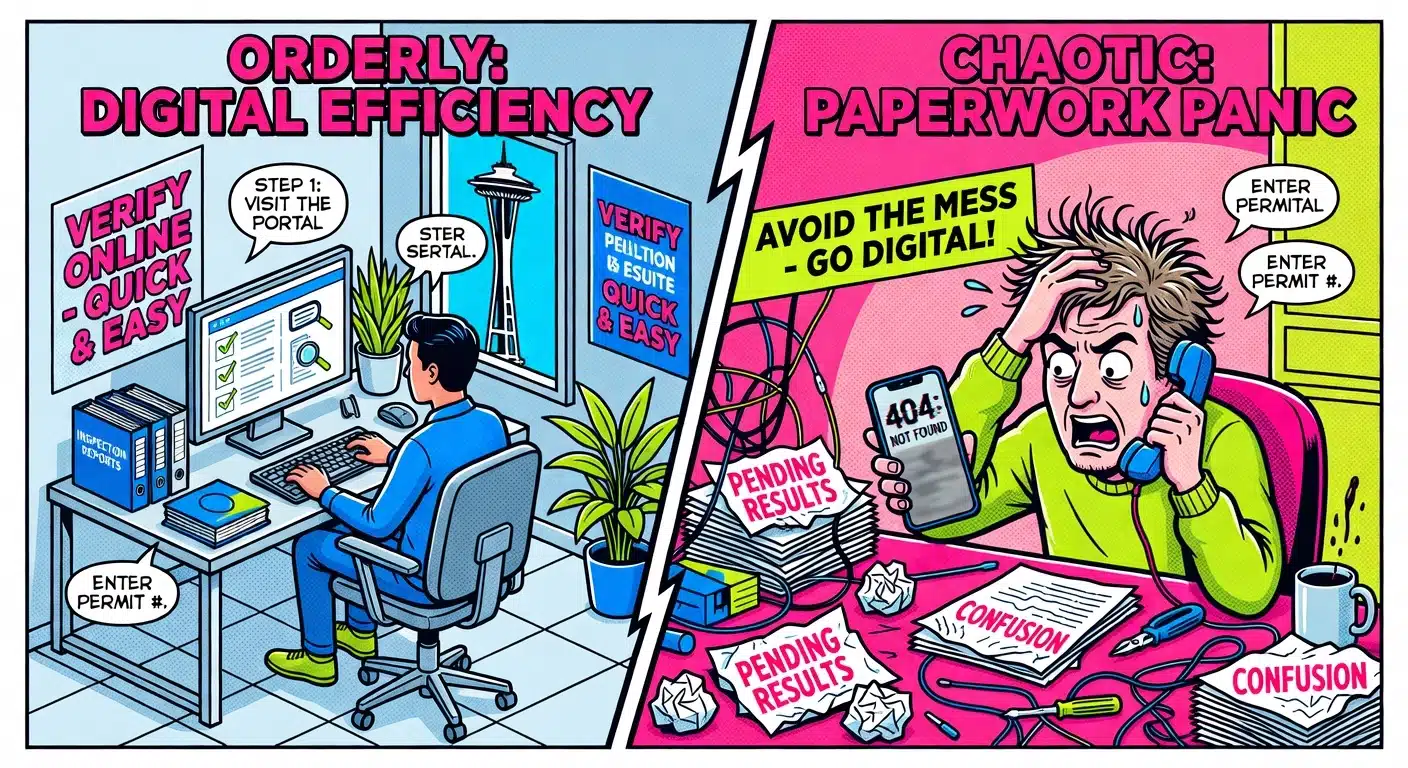
Most homeowners have heard the word “permit” thrown around when discussing electrical work, but few actually understand what happens behind that word. It’s easy to think of it as a bureaucratic formality — a form that gets filed and forgotten. In reality, a permit inspection is one of the most important safeguards you have as a homeowner, and skipping it is one of the clearest signs a contractor is cutting corners.

Step 1: The Permit Is Submitted Before Work Begins
Legitimate electrical work that meets the threshold for permitting — panel upgrades, new circuits, generator installations, and more — requires the contractor to file for a permit with the local jurisdiction before the work starts. This isn’t optional paperwork; in most cases, it’s the law, and it establishes an official record of the work being done.
Step 2: The Jurisdiction Schedules an Inspector
Once the permit is filed, the local building or electrical department schedules an inspection at the appropriate point in the project. Depending on the scope of work, there may be a rough-in inspection (before walls are closed up) and a final inspection (once everything is complete and operational).
Step 3: The Inspector Reviews the Work
This is the heart of the process. A qualified inspector — someone independent of the contractor doing the work — checks wiring methods, connections, grounding, panel labeling, and overall code compliance. They’re looking for anything that could pose a fire risk, a shock hazard, or a future problem for the homeowner. If something doesn’t meet code, it gets flagged and corrected before the job can be signed off.
Step 4: Final Sign-Off
Once everything passes, the inspector issues a final approval, and that record becomes part of the permanent history tied to your property. This matters more than most people realize — it protects you at resale, it supports insurance claims if something goes wrong later, and it gives you documented proof that the work was done to code.
Why Some Contractors Skip This Step
Permits cost money and take time. A contractor trying to underbid the competition or move faster than they should might skip the permit process entirely, especially on projects a homeowner might not realize require one. The problem is that the homeowner bears all the downstream risk: an uninspected job that later causes a fire, an insurance claim that gets denied because the work wasn’t permitted, or a home sale that gets held up because of undocumented electrical changes.
How Mauro Electric Handles Permitting
We treat permitting and inspection as a standard part of the process, not an optional add-on. Whether it’s a full electrical inspection for a Bothell property or a smaller job that still requires sign-off, we handle the filing, scheduling, and inspection coordination as part of the work — not something the homeowner has to chase down separately.
What You Can Ask Before Hiring Anyone
If you’re getting quotes for electrical repair or any other work, ask directly whether the job requires a permit and whether the contractor will be pulling one. If the answer is vague, or if they suggest it “isn’t necessary” for work that clearly involves new circuits or panel changes, treat that as a warning sign rather than a convenience.
A permit inspection isn’t red tape — it’s an independent check that protects your home, your family, and your investment. It’s worth insisting on every time.
Keywords: