Seattle’s rainy, mild climate might make you think heating and cooling systems are an afterthought, but the truth is that proper HVAC installation can make or break your home’s comfort and energy efficiency year-round. Whether you’re replacing an aging system or installing one for the first time, the decisions you make during this process will affect your monthly utility bills, indoor air quality, and overall home value for years to come.
The good news is that you don’t need to be an expert to make smart choices. You just need the right information before signing any contracts or making any purchases. HVAC installation is a significant investment, and Seattle homeowners face unique considerations that homeowners in other regions simply don’t deal with, from local building codes to the specific humidity and temperature patterns of the Pacific Northwest.
In this guide, we’ve broken down the most important things every Seattle homeowner should know before starting an HVAC installation project. From choosing the right system size to understanding permit requirements, these key points will help you feel confident and informed every step of the way.
Why HVAC Installation in Greater Seattle Is Uniquely Challenging
Installing HVAC in Greater Seattle is a fundamentally different challenge than it is in most other U.S. markets, and generic guides rarely account for the specific conditions homeowners here face.
Seattle’s Marine Climate Demands Specialized Systems
The Pacific Northwest’s unique marine climate considerations mean your home experiences roughly 150 rainy days per year, sustained indoor humidity often exceeding 60%, and increasingly severe wildfire smoke events drifting in from eastern Washington, Oregon, and British Columbia. Standard HVAC equipment sized for continental climates frequently short-cycles here, leading to poor humidity control and accelerated wear. Modern installations must integrate MERV-13+ filtration, energy recovery ventilators, and dedicated dehumidification to genuinely protect indoor air quality. These are features most national HVAC guides overlook entirely. For a deeper look at how local conditions affect your system, this resource on Seattle HVAC indoor air quality is worth reviewing.
Aging Housing Stock Adds Electrical Complexity
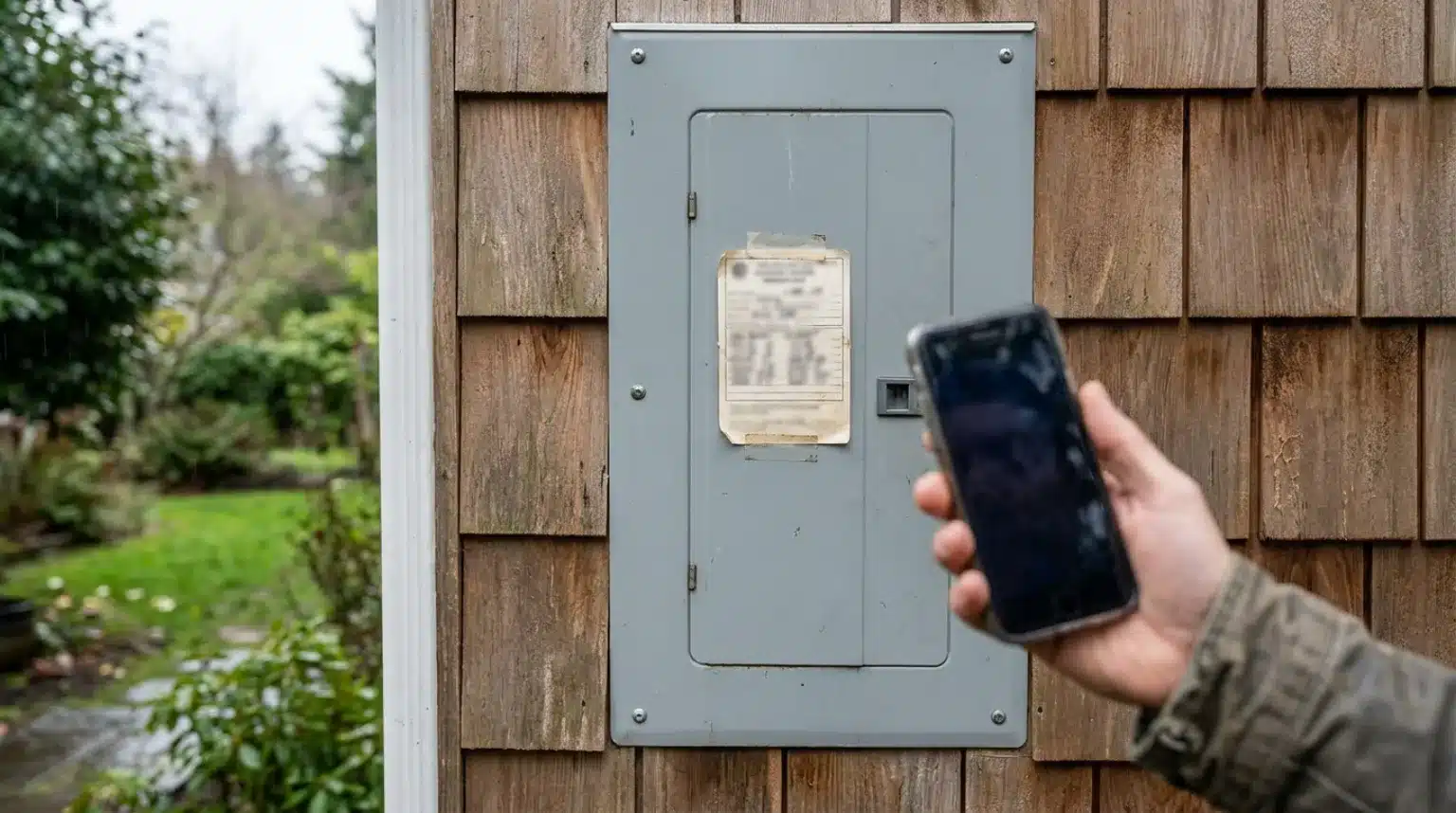
A significant portion of Greater Seattle’s homes, including classic Craftsman bungalows, condos, and ADUs, were built before modern HVAC loads were even a consideration. Many run on 100-amp electrical panels that simply cannot support today’s heat pumps or multi-zone systems without a full panel upgrade. Planning AC installation in older homes requires careful evaluation of existing wiring, breaker capacity, and service entrance infrastructure before a single piece of HVAC equipment is ordered.
A Growing Replacement Wave and Local Regulatory Hurdles
Nationally, approximately 3 million heating and cooling systems are replaced every year, and Carrier’s 2026 research found that roughly 19% of U.S. homeowners, representing around 3.5 million households, were actively planning a new system purchase, largely because mid-2000s equipment is reaching end of life. The Pacific Northwest is seeing this replacement trend accelerate, driven by electrification goals and stacked incentives including Seattle City Light rebates and the federal 30% IRA tax credit. Layered on top of all this is Seattle’s permitting environment. The Department of Construction and Inspections requires mechanical permits, Manual J load calculations, duct leakage documentation, and full compliance with the 2021 Seattle Energy Code. Out-of-state contractors and generic online guides routinely underestimate these requirements, turning straightforward replacements into costly compliance problems.
5 Types of HVAC Systems Worth Considering for Your Seattle Home
Not every Seattle home needs the same solution, and understanding your options upfront saves you from costly mistakes. Here are the five most relevant HVAC system types for Greater Seattle homeowners.
1. Air-Source Heat Pumps
Air-source heat pumps are the fastest-growing HVAC choice in the Pacific Northwest, and for good reason. Modern cold-climate inverter models maintain strong performance even when outdoor temperatures drop, making them well-suited for Seattle’s mild but occasionally chilly winters. These systems carry high SEER2 and HSPF2 ratings, meaning they deliver efficient cooling in summer and efficient heating all winter long. Most importantly, they qualify for the largest available rebate stacks in the region. Seattle City Light rebates range from $300 to $600 or more for qualifying units, while PSE offers $500 to $1,500 depending on efficiency tier. Income-qualified households can stack those with state HEEHRA rebates up to $8,000, making this the most financially compelling upgrade available to Seattle homeowners right now. Installations have reportedly soared citywide, and Washington-specific heat pump incentive programs continue to expand options for nearly every budget.
2. Ductless Mini-Split Systems
If your home lacks existing ductwork, a ductless mini-split system is often the most practical path forward. These systems are ideal for older Craftsman homes, single-room additions, condos, garages, and accessory dwelling units where running new ducts would be disruptive, expensive, or simply impossible. Mini-splits operate quietly, take up minimal space, and deliver precise zone-by-zone temperature control without the energy losses that plague traditional ducted systems. They are inverter-driven heat pumps, meaning they provide both heating and cooling from one compact installation.
3. Hybrid or Dual-Fuel Systems
A hybrid system pairs an electric heat pump with an existing gas furnace as a backup. This setup is a practical transition strategy for homeowners who want the efficiency benefits of a heat pump without fully abandoning their gas infrastructure. The heat pump handles most heating and cooling loads throughout the mild PNW year, while the furnace kicks in during rare extreme cold snaps or when additional capacity is needed.
4. Traditional Central AC with Gas Furnace
For homes already equipped with ductwork, a traditional central AC and gas furnace combination remains a straightforward retrofit option. However, new refrigerant transition regulations phasing out R-410A and updated efficiency minimums (often 13.4 SEER2 or higher in the Northwest region) are actively reshaping what equipment is available on the market. Homeowners replacing aging systems in 2025 or 2026 should work with a licensed contractor to navigate these changes and confirm what qualifies under current standards.
5. Variable Refrigerant Flow (VRF) Systems
VRF systems are gaining serious traction in larger Seattle homes and multi-unit ADU projects. A single outdoor unit connects to multiple indoor air handlers, delivering precise simultaneous heating and cooling across different zones. The result is exceptional comfort, strong energy efficiency, and a smaller physical footprint than traditional multi-system setups. That said, VRF installations are technically complex. They require detailed electrical load calculations, and older Seattle homes with undersized electrical panels often need a service upgrade before installation can proceed, which is exactly where having a licensed electrician involved from day one makes a meaningful difference.
What the HVAC Installation Process Actually Looks Like, Step by Step
Most homeowners are surprised by how involved a professional HVAC installation actually is. This is not a one-day swap where a technician arrives, unplugs the old unit, and drops in a new one. Understanding each phase helps you set realistic expectations and ask the right questions before work begins.
Step 1: In-Home Assessment and Manual J Load Calculation
Every professional installation starts with a thorough on-site assessment. A qualified technician measures your home’s square footage, ceiling heights, insulation levels, window area and orientation, and cross-references all of that against local climate data for the Greater Seattle region. This information feeds into a Manual J load calculation, the ANSI-recognized national standard required by most building codes, which determines precisely how much heating and cooling capacity your home actually needs. Skipping this step is one of the most common mistakes in the industry. An ACCA Manual J load calculation ensures your system is neither undersized nor oversized; both conditions lead to premature equipment failure, higher energy bills, and poor comfort.
Step 2: System Selection and Proposal
Once your load calculation is complete, your contractor presents a detailed proposal covering equipment specifications including brand, capacity in tons or BTUs, and SEER2 efficiency rating. The proposal also outlines ductwork scope, whether existing ducts need sealing, modification, or full replacement, as well as thermostat and smart control options. Indoor air quality add-ons such as MERV 13+ filtration or UV purification systems are increasingly common in the Pacific Northwest, where wildfire smoke is a seasonal concern. This is also when current HVAC industry trends like variable-speed heat pumps and app-connected thermostats come into play, giving you options for long-term efficiency and comfort.
Step 3: Permit Application
Before any work begins, your contractor applies for the required permits with your local jurisdiction. In Greater Seattle, this typically means the City of Seattle, King County, or Snohomish County depending on your address. What surprises many homeowners is that this step often involves two separate trade permits: one for the mechanical scope covering the HVAC equipment and ductwork, and a second for the electrical scope covering wiring and circuits. Skipping permits creates serious liability during resale and can void manufacturer warranties entirely.
Step 4: Electrical Preparation
Before any HVAC equipment is connected to your home, the electrical foundation must be verified and upgraded if necessary. This includes installing dedicated circuits sized correctly for the new equipment, confirming that your electrical panel has sufficient capacity, and completing load verification calculations. Older Seattle homes, particularly Craftsman-era properties, frequently require a panel upgrade at this stage. At Mauro Electric Inc., this phase is handled in-house by our licensed electricians, which eliminates the coordination delays that occur when HVAC companies subcontract this critical electrical work.
Step 5: Equipment Installation, Commissioning, and Inspection
The physical installation covers placement of indoor and outdoor units, ductwork modifications, refrigerant line set connections, low-voltage control wiring, and condensate drain lines. After installation, the system goes through formal commissioning: refrigerant charge verification, airflow balancing, thermostat programming, and performance testing. This ensures the system operates at rated efficiency from day one. A required city or county inspection follows, confirming that both the mechanical and electrical scopes meet current code. Once the inspection is passed, your technician walks you through operation and maintenance, and your manufacturer warranty is registered and active.
The Electrical Work Most HVAC Installers Won’t Tell You About
There is a critical layer of HVAC installation that most homeowners never hear about until something goes wrong, and it lives entirely in the electrical system. Understanding these five realities before your installation begins can save you from failed inspections, unexpected costs, and genuine safety hazards.
1. Your New System Legally Requires Its Own Dedicated Circuit
Modern heat pumps and central air conditioning systems must be wired to a dedicated 240V circuit sized specifically to the unit’s amperage draw. Residential systems typically require between 20 and 60 amps depending on the equipment’s nameplate ratings. Connecting a new system to an existing shared circuit is not just inadvisable; it is a direct violation of National Electrical Code Article 440, which governs air-conditioning and refrigerating equipment. The practical risks include chronic breaker trips, voltage drops that shorten equipment life, and the very real possibility of an electrical fire. Any licensed inspector will catch this immediately during the permit review process, and the installation will fail.
2. Older Seattle Homes Often Have Panels That Cannot Handle the Load
A large share of homes in Greater Seattle built before the 1980s were wired with 100-amp service panels. That capacity was designed for an era of gas appliances and modest electrical loads. Today, a new heat pump running alongside a Level 2 EV charger, an electric dryer, and an electric water heater can push a 100-amp panel well beyond its safe operating limits. Nationally, roughly 29 to 30 percent of single-family homes still have 100-amp or smaller panels, and pre-1980 Seattle homes are disproportionately represented in that group. A panel upgrade to 200-amp service is frequently required before any new heat pump installation can proceed safely and legally, and that upgrade typically costs between $1,500 and $3,000 or more depending on scope.
3. A Load Calculation Must Happen Before You Buy Anything
Per NEC Article 220, a licensed electrician must perform a formal load calculation to determine whether your existing service can support a new HVAC system before equipment is purchased or permits are pulled. This calculation accounts for every major load in the home, including general lighting, large appliances, the largest motor at 125 percent of its rated amperage, and the heating or cooling load. Skipping this step leads to one of two outcomes: either you discover mid-project that a panel upgrade is required (adding cost and delay), or the installation proceeds on an overloaded panel and fails inspection. Understanding your heat pump’s electrical requirements before installation day is the responsible starting point for any project.
4. Subcontracting Creates Coordination Problems You Will Pay For
Most pure HVAC contractors are licensed for mechanical work only. When dedicated circuit installation, panel upgrades, or service entrance work is required, they subcontract that scope to a separate licensed electrician. This arrangement creates a chain of coordination problems: two separate crews must be scheduled, responsibility for permit compliance gets divided between trades, and you may face two separate mobilization charges for work that should be completed in one visit. Heat pump electrical requirements are specific enough that miscommunication between a subcontracted electrician and an HVAC crew can result in sizing errors that cause problems long after installation day.
5. Mauro Electric Handles All of It Under One Coordinated Project
Mauro Electric’s integrated approach eliminates the coordination problem entirely. The same licensed team that performs your load calculation also installs the dedicated circuit, handles any panel upgrade required, and completes the mechanical installation of your heat pump or AC system. Permits are pulled under one project, inspections are coordinated by one team, and there is a single point of accountability from start to finish. For older Seattle homes navigating both aging electrical infrastructure and strict permitting requirements, this matters enormously. It keeps the project on schedule and ensures that the electrical and mechanical work are sized and installed to work together correctly from day one.
How Much Does HVAC Installation Cost in Greater Seattle?
Residential HVAC installation costs in Greater Seattle typically range from $5,000 to $12,500 or more, and that range reflects a wide variety of real-world scenarios. A straightforward furnace or AC replacement in a well-maintained home with existing ductwork and an adequate electrical panel sits toward the lower end. A full system installation in an older Craftsman home requiring new ductwork, a panel upgrade, and a high-efficiency heat pump can easily push $15,000 to $20,000 or beyond. Home size matters significantly as well, since most Greater Seattle homes in the 1,500 to 2,000 square foot range require 2 to 3 ton systems, and labor rates in the region run $90 to $160 per hour, pushing costs above national averages by a meaningful margin. Washington construction costs run roughly 28 percent above the national average, so budget estimates pulled from national sources will almost always underrepresent what you will actually pay locally.
Heat Pumps, Rebates, and What You Can Actually Save
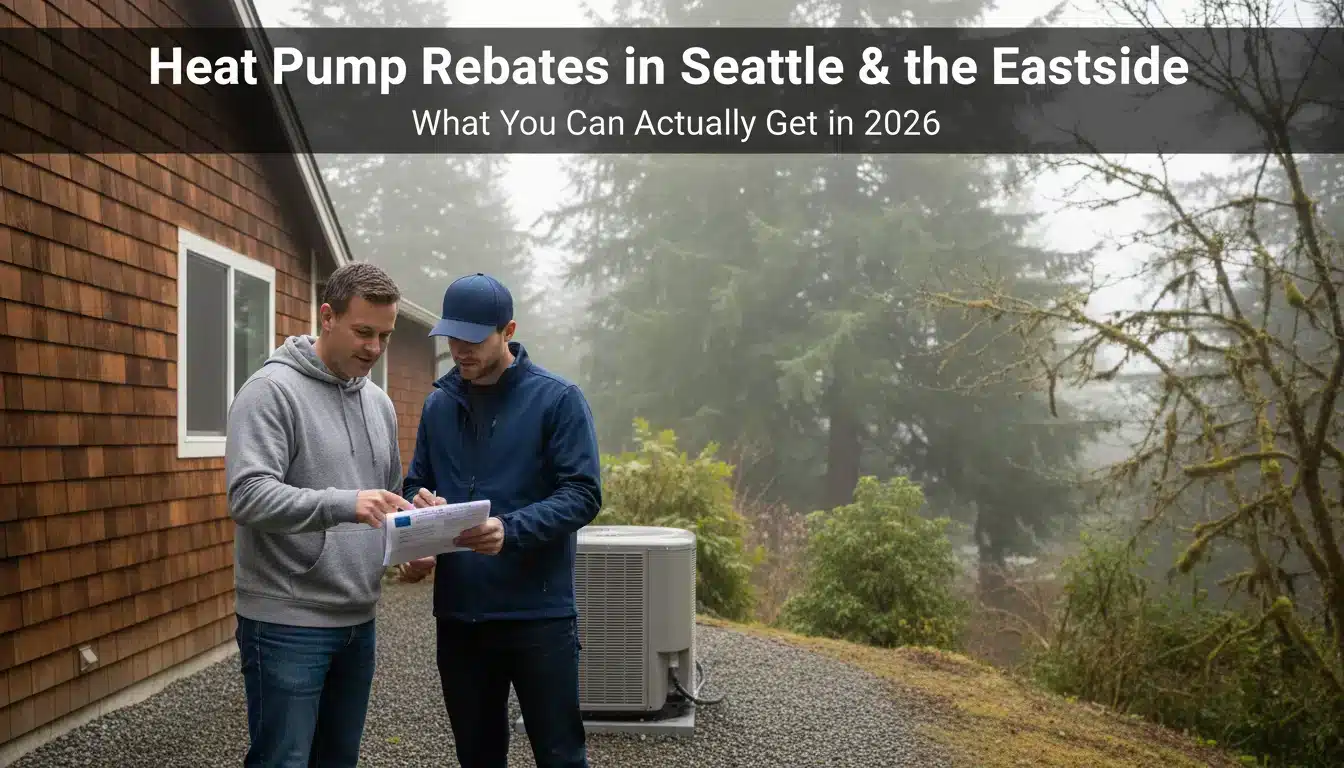
Heat pump installations trend toward the higher end of the cost range because the equipment itself costs more than a standard furnace or air conditioner. However, the rebate landscape in Washington State in 2026 is genuinely strong, and stacking available incentives can reduce your out-of-pocket cost by $3,000 to $8,000 or more depending on your situation. Seattle’s Clean Heat Program offers an instant $2,000 rebate for oil-to-heat-pump conversions, with an additional $4,000 bonus available for moderate-income households, bringing the potential total to $6,000 through that program alone. Washington HEAR rebates can reach up to $8,000 for qualifying heat pump installations, and utility rebates from Seattle City Light or Puget Sound Energy add another $300 to $1,500 or more on top of that. For a detailed breakdown of Seattle-area costs by system type, Angi’s Seattle HVAC pricing guide provides useful local benchmarks. Similarly, Angi’s AC installation cost guide for Seattle can help you understand what to expect for cooling-specific work.
What Drives Costs Higher
Several variables consistently push projects above the baseline range, and being aware of them helps you budget accurately from the start.
- Ductwork replacement or new installation: Partial duct sealing and repairs typically run $500 to $2,500. Full ductwork replacement can cost $2,000 to $9,000 or more, particularly in older Seattle homes with complex layouts or inadequate existing infrastructure.
- Electrical panel upgrades: When handled as a separate project, panel upgrades in Greater Seattle typically cost $2,000 to $4,000, sometimes higher in urban areas where access and utility coordination add complexity.
- Permit fees: Mechanical and electrical permits vary by jurisdiction across King and Snohomish counties. Fees commonly range from $150 to $500 per trade permit, and King County fees increased approximately 14 percent in 2026, so budget accordingly.
- Access and crane requirements: Rooftop units, tight crawlspace clearances, or attic installations in Seattle’s varied housing stock add meaningful labor and equipment costs that are easy to overlook in early estimates.
Bundling Saves More Than You Might Expect
One of the most practical cost-saving strategies available to Greater Seattle homeowners is bundling electrical work with the HVAC installation in a single coordinated project. When electrical upgrades, dedicated circuits, and the HVAC install are scoped together, you avoid duplicated mobilization costs, reduce total labor hours, and typically pull fewer separate permits. At Mauro Electric, this integrated approach is built into how we work, since handling both the electrical and HVAC scope in one project consistently delivers better value than coordinating two separate contractors on independent timelines.
How to Compare Bids Accurately
Always request fully itemized proposals from any contractor you are evaluating. A single lump-sum number tells you almost nothing useful. Ask for line items that separately identify equipment costs, labor, electrical scope, permit fees, and any ductwork work included in the bid. This structure allows you to make genuine apples-to-apples comparisons and immediately spot bids that omit electrical work or permits that will surface later as additional charges.
2026 Seattle Rebates and Federal Tax Credits: How to Stack Your Savings
One of the most compelling reasons to install a heat pump in Greater Seattle right now is the remarkable layering of financial incentives available to homeowners. Understanding how these programs work together can dramatically reduce your out-of-pocket costs, sometimes by thousands of dollars on a single project.
Seattle City Light Rebates
If Seattle City Light (SCL) is your utility provider, you may qualify for instant rebates on qualifying air-source heat pump installations. The rebate tiers are structured by efficiency rating: systems meeting SEER2 15.2 and HSPF2 8.1 or higher qualify for $300, while higher-efficiency units hitting SEER2 16.0 and HSPF2 9.5 or above can earn $600. Homeowners converting from oil heat to an electric heat pump through Seattle’s Clean Heat Program may qualify for a $2,000 instant rebate, and moderate-income households meeting specific AMI thresholds could receive an additional $4,000 bonus, bringing the total to $6,000 for eligible oil-to-electric conversions completed before September 30, 2026. These rebates are typically passed directly through participating contractors as instant discounts on your invoice, so choosing a contractor enrolled in the program matters significantly.
Puget Sound Energy (PSE) Rebates
PSE customers operate under a separate but equally competitive rebate structure. Standard rebates for switching from electric resistance heating to an air-source heat pump start around $1,500, with income-qualified households potentially receiving up to $2,400. Fuel-switching conversions from natural gas or oil can push total PSE incentives well above $2,000 in boosted scenarios, depending on system efficiency and program availability. Because SCL and PSE serve different geographic territories, most Greater Seattle homeowners fall under one or the other, not both simultaneously. However, both utility programs can be stacked with state-level incentives and, until recently, federal credits as well.
Federal IRA Tax Credits: What Changed in 2026
The Inflation Reduction Act Section 25C tax credit previously offered a 30% credit up to $2,000 annually for qualifying heat pump installations. That credit expired for installations completed after December 31, 2025. Homeowners who installed qualifying systems in 2025 can still claim the credit on their 2025 federal tax return using Form 5695, but projects starting in 2026 will not have access to this particular federal benefit. Washington State’s HEAR program, funded through the Climate Commitment Act, continues to provide point-of-sale rebates for income-qualified households at or below 150% of the Area Median Income, and that program is expanding through 2026.
How to Maximize Your Stacked Savings
To capture every available dollar, follow these four steps before purchasing any equipment. First, confirm whether your home is served by SCL or PSE, then visit that utility’s current rebate portal to review the approved equipment list and active program terms. Second, verify that your contractor is a participating installer enrolled in the relevant rebate program, since instant discounts require purchases through approved channels. Third, confirm your system’s AHRI-certified SEER2 and HSPF2 ratings match the efficiency tier required for your target rebate level. Fourth, retain every document tied to the project, including your itemized invoice, AHRI certificate, equipment specification sheets, and any income verification documents if applying for enhanced rebates.
All rebate programs, including Clean Heat bonuses and HEAR income assistance, are subject to funding availability and can close or change without notice. Confirming current terms directly with your utility provider and a licensed contractor before committing to any equipment purchase is the single most important step you can take to protect your savings strategy.
Heat Pumps vs. Traditional Systems: Which Makes Sense for Your Home?
Choosing between a heat pump and a traditional heating and cooling system is one of the most consequential decisions you will make during an HVAC installation. The good news is that for most Greater Seattle homeowners, the answer has become significantly clearer in recent years.
1. For Most Greater Seattle Homes, a Cold-Climate Heat Pump Is the Smartest Long-Term Investment
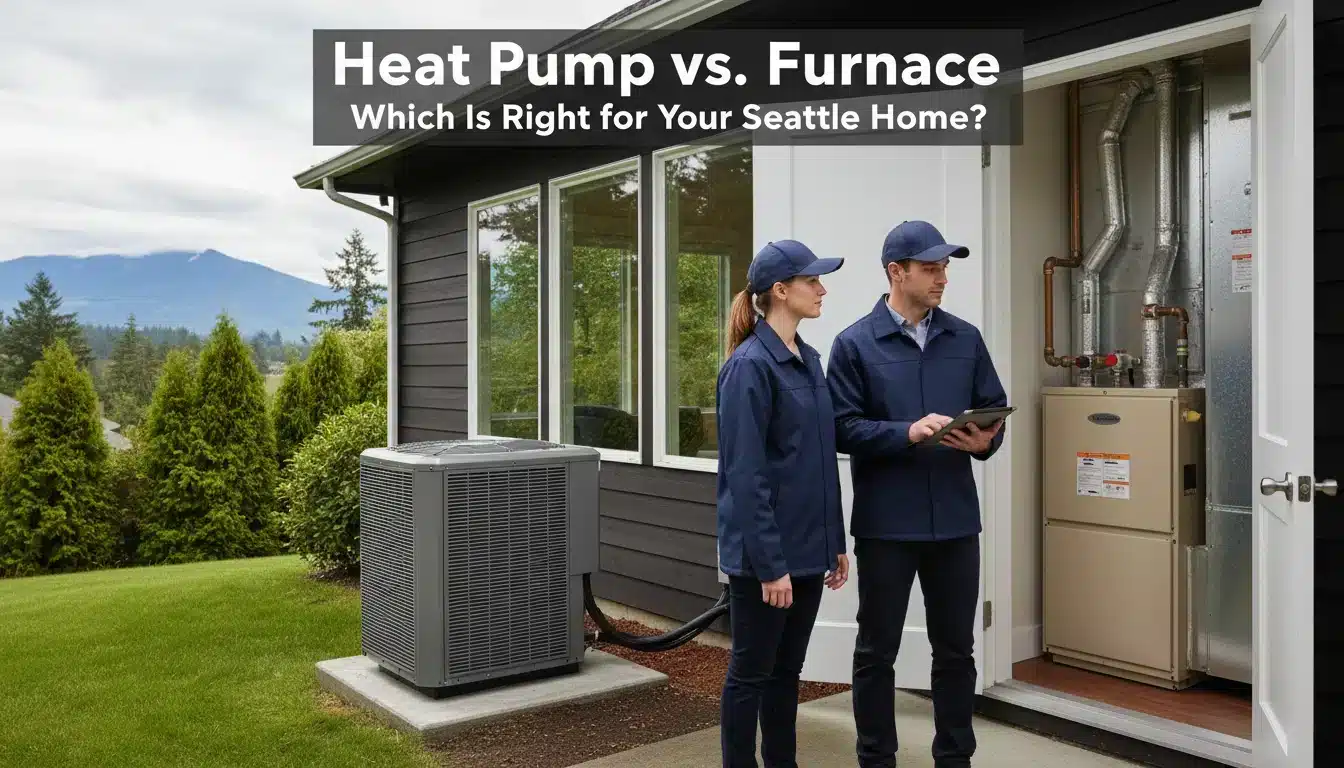
If your home has adequate electrical service, a cold-climate air-source heat pump delivers the strongest combination of long-term operating savings, rebate eligibility, and policy alignment. Seattle’s marine climate rarely drops below 20°F, and modern cold-climate models maintain strong efficiency at temperatures as low as negative 13°F, making performance concerns in this region largely a non-issue. These systems operate at a coefficient of performance between 2.5 and 4.0 during typical Seattle winters, meaning you get two to four units of heat for every unit of electricity consumed. Stack that efficiency against available rebates through Seattle’s Clean Heat Program, Puget Sound Energy incentives, and Washington’s Home Electrification and Appliance Rebates program, and the financial case becomes compelling. Washington State now requires electric heating in new residential construction, and that policy direction reflects where the broader market is heading.
2. Older Craftsman Homes Without Ductwork Are Ideal Candidates for Ductless Mini-Splits
Seattle’s pre-1950 housing stock, including the beloved Craftsman bungalows throughout Bothell, Kirkland, and Seattle proper, was never designed with central duct systems in mind. Retrofitting ductwork into these homes is expensive, disruptive, and often structurally impractical. A ductless mini-split heat pump sidesteps all of that. Wall-mounted indoor air handlers connect to an outdoor compressor through a small conduit, requiring only a three-inch hole in the wall. You gain zoned heating and cooling, meaning you heat only the rooms you are using rather than the entire house. Installation is typically completed in one to two days, and most ductless systems qualify for the same rebate programs available to ducted systems.
3. Condos and ADUs Should Prioritize Quiet, Variable-Speed Systems
Seattle’s noise code limits mechanical equipment to 45 decibels at the property line during nighttime hours. Many traditional single-speed compressor units struggle to meet that threshold on small urban lots. Variable-speed, inverter-driven heat pump systems run at lower speeds the majority of the time, producing substantially less noise than older compressor-based units. For HOA-governed condos or attached accessory dwelling units where neighbor proximity is a real concern, quieter operation is not a preference; it is a practical requirement.
4. Heat Pumps Provide a Whole-Home Answer to Wildfire Smoke
Pacific Northwest wildfire seasons have made indoor air quality a genuine health concern for Seattle-area homeowners. A heat pump system running continuously through the year enables whole-home filtration using MERV-13 or higher filters, which can remove the majority of fine particulate matter associated with wildfire smoke. Paired with an energy recovery ventilator, the system brings in fresh air without sacrificing efficiency. A traditional gas furnace running only in winter simply cannot deliver that same year-round filtration and ventilation capability.
5. Gas Furnace and AC Combinations Still Work, but Their Long-Term Case Is Narrowing
Homes with intact ductwork and active natural gas service do not need to abandon conventional systems immediately. A hybrid setup pairing a heat pump with a gas furnace backup remains a practical transition step, capturing efficiency gains and rebate eligibility while retaining gas as a backup during extreme cold or outages. However, the AIM Act is phasing out R-410A refrigerant used in most traditional AC systems, pushing new equipment toward alternatives that carry higher upfront costs. Combined with tightening efficiency standards and growing state incentives favoring electrification, the long-term financial and regulatory environment increasingly favors heat pump solutions. If your existing gas system still has several years of useful life, a hybrid approach buys time while capturing real savings today.
What to Look for When Hiring an HVAC Installer in Greater Seattle
Choosing the right HVAC installer is just as important as choosing the right system. Even the best equipment will underperform or fail prematurely if the installation is handled by someone who cuts corners on licensing, permits, or engineering fundamentals. Here are four essential checks every Greater Seattle homeowner should make before signing a contract.
1. Verify Licensing Before Anything Else
Washington State requires all contractors performing HVAC work for compensation to hold an active L&I contractor registration, which includes proof of general liability insurance and a surety bond. That registration is the baseline. However, because virtually every modern HVAC system, including heat pumps, forced-air systems, and ductless mini-splits, involves electrical connections, the contractor must also hold a valid Washington electrical contractor license under RCW 19.28 if any electrical work is part of the scope. Unlicensed electrical work on HVAC systems creates direct liability exposure for you as the homeowner and can void manufacturer equipment warranties entirely. You can verify any contractor’s active status, workers’ compensation coverage, bond, and violation history using the L&I online Verify tool at no cost. This single step takes five minutes and can save you from significant legal and financial risk.
2. Ask Who Handles the Electrical Work
Once licensing is confirmed, ask directly whether the contractor handles electrical work in-house or subcontracts it to a separate trade. Subcontracting creates coordination gaps that commonly delay permit timelines, complicate scheduling, and split accountability when problems arise after installation. If the electrical subcontractor and the HVAC installer disagree about what caused a wiring issue or a tripped breaker, you are left managing a dispute between two separate companies. Firms that handle both trades under one roof eliminate that risk entirely, keeping one point of contact responsible for the complete installation from start to finish.
3. Confirm Full Permit Compliance in Writing
Request written confirmation that your contractor will pull all required permits, both mechanical and electrical, and coordinate all city or county inspections through to final sign-off. In Seattle, the SDCI issues mechanical permits for HVAC equipment, while separate electrical permits govern dedicated circuits and system connections. Any installer who suggests skipping permits to save time or reduce cost is a serious red flag. Permits are not bureaucratic formalities; they are third-party verifications that your system was installed to code, which protects your insurance coverage, your home’s resale value, and your family’s safety.
4. Insist on a Manual J Load Calculation
Before any equipment is specified, your contractor should perform a Manual J load calculation, the ACCA-recognized ANSI standard that accounts for your home’s insulation, window area, orientation, occupancy, and local climate data to determine precise heating and cooling loads. Rule-of-thumb sizing, such as one ton per 500 square feet or simply matching the previous system’s tonnage, routinely produces oversized equipment. Oversized systems short-cycle, meaning they switch on and off too frequently, which degrades humidity control, accelerates mechanical wear, and leaves rooms uncomfortable despite running equipment. A proper Manual J protects your investment by ensuring the system you pay for is sized to actually perform.
Why Mauro Electric Inc. Meets Every One of These Standards
Mauro Electric Inc. has served Greater Seattle homeowners since 1998 as a licensed electrician offering fully integrated HVAC services. Their team handles Manual J load calculations, dedicated circuit installations, panel upgrades, and complete system installs under one coordinated project with full permit compliance from mechanical through electrical sign-off. Because electrical work is handled in-house rather than subcontracted, there is a single accountable team managing your project from the first assessment to the final inspection. That integrated approach is particularly valuable in Greater Seattle, where older homes frequently require panel work alongside HVAC installation, and where permit requirements from SDCI are strict and detailed. When your installer handles every layer of the job, the result is a faster timeline, cleaner documentation, and a system that performs exactly as designed.
Ready to Plan Your HVAC Installation? Here Is Where to Start
Planning a successful HVAC installation comes down to taking the right steps before any equipment is purchased or contractor is hired. Follow these five starting points to protect your budget and your project timeline.
- Schedule a comprehensive in-home assessment first. This evaluation should cover both the mechanical scope (equipment type, ductwork, airflow) and the electrical scope (panel capacity, dedicated circuits, wiring needs). Understanding the full project cost upfront prevents costly surprises mid-installation and gives you a realistic picture before committing to any system or contractor.
- Verify rebate eligibility before you buy. Check your utility provider’s current programs and confirm that your chosen equipment qualifies. Selecting a non-qualifying system can forfeit thousands of dollars in available incentives, including Seattle City Light rebates and federal tax credits currently stacking for heat pump installations.
- Choose contractors who handle electrical integration in-house, pull all permits, and provide a written Manual J load calculation as part of their formal proposal. This combination ensures proper sizing, code compliance, and seamless project execution.
- Mauro Electric Inc. serves homeowners throughout Greater Seattle, including Bothell, Kirkland, Everett, and surrounding communities, delivering integrated HVAC and electrical installations handled efficiently and on schedule from first assessment through final inspection.
- Contact Mauro Electric today to request a free HVAC installation estimate and learn which 2026 rebate programs your project may qualify for.
Conclusion
Seattle’s climate is unique, and your HVAC system should reflect that. As you move forward with your installation, keep these key points in mind: size your system correctly for the Pacific Northwest’s humidity levels, work only with licensed contractors who understand local building codes, and prioritize energy efficiency to keep long-term costs manageable. The right system, properly installed, will protect your home’s comfort and value for decades.
You don’t have to navigate this process alone. Take what you’ve learned here and use it as your foundation when speaking with HVAC professionals. Ask the hard questions, compare multiple quotes, and never rush a decision this significant.
Your home deserves a system built for Seattle. Start reaching out to qualified local contractors today, and take the first step toward year-round comfort and energy savings you can actually feel.