319 169th St. SW., Bothell, WA. 98012

Service Panel vs Distribution Panel Key Differences

Ever flipped a breaker only to plunge your home into darkness, wondering why the chaos starts at that mysterious metal box in your garage or basement? Electrical mishaps like these reveal the backbone of your home’s power system, where confusion often reigns for beginners. Today, we dive into the service panel vs distribution panel debate, clarifying these essential components that keep your lights on and appliances humming.

As an authoritative guide for newcomers, this comparison breaks down the key differences between a service panel and a distribution panel. The service panel, your home’s main power gateway from the utility company, handles incoming electricity and provides primary protection. In contrast, the distribution panel steps in downstream, splitting that power to specific circuits throughout your house. You will learn their distinct roles, typical locations, capacity limits, safety features, and upgrade considerations.

By the end, you will confidently distinguish one from the other, spot when maintenance is needed, and make informed decisions for your electrical setup. Whether troubleshooting outages or planning renovations, mastering service panel vs distribution panel fundamentals empowers you as a homeowner. Let’s illuminate the facts.

What Is a Service Panel?

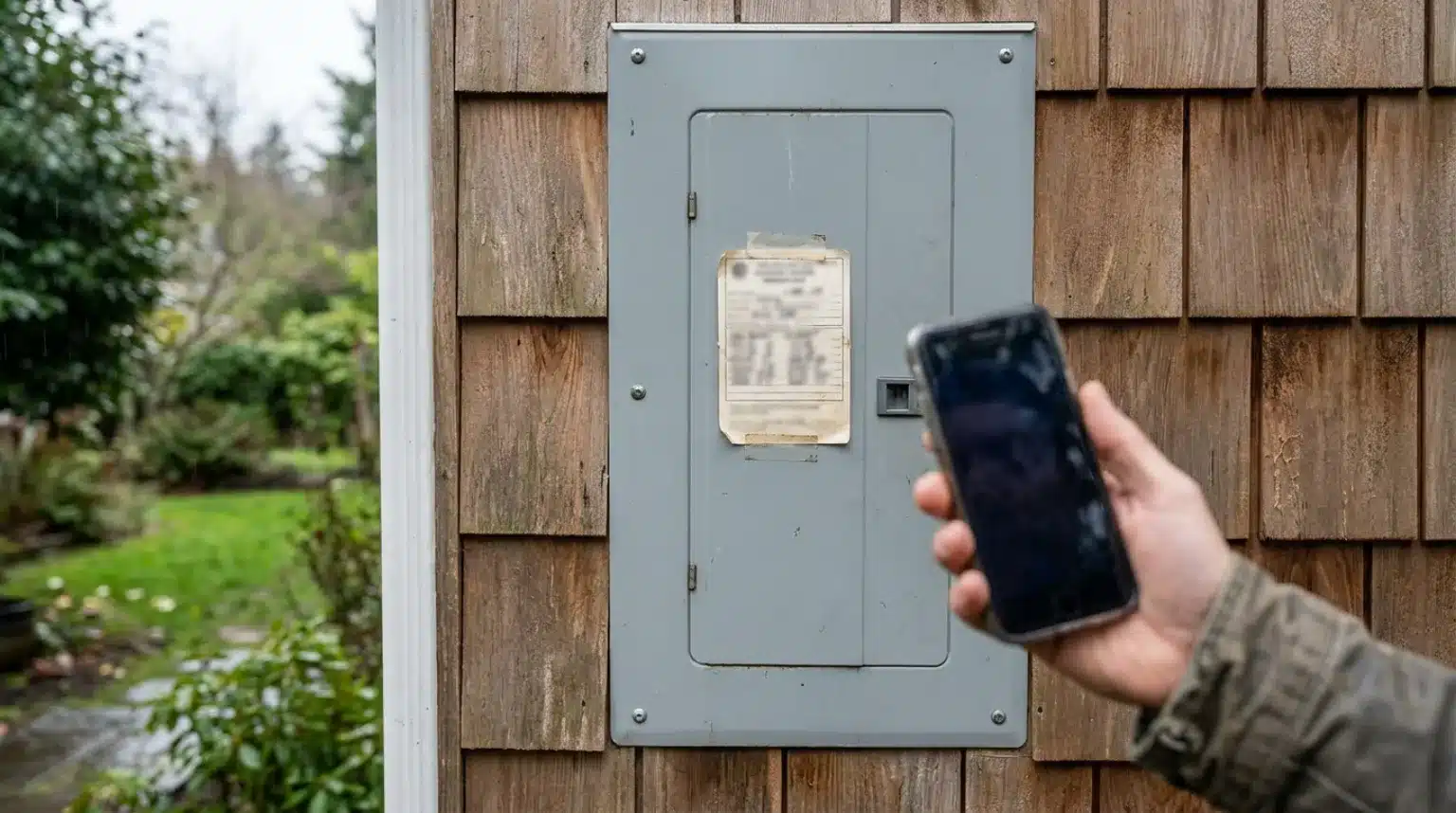
The service panel, also known as the main breaker box or load center, serves as the primary entry point for electricity from your utility company into your home. It typically handles 100 to 400 amps for residential use, making it the central hub that meters incoming power after the utility meter and distributes it to branch circuits or subpanels throughout the house. This panel includes the main disconnect breaker, a requirement under the National Electrical Code (NEC) Article 230, which allows for complete isolation of the electrical system during emergencies or maintenance. Common locations include garages, basements, or exterior walls near the service drop to minimize voltage loss and ensure easy utility access.

Compliance with the upcoming 2026 NEC is crucial; it mandates arc-flash labeling on all service equipment to warn of explosion risks from arcing faults, along with expanded GFCI protection for outdoor outlets and HVAC gear. For beginners, understanding these rules helps prioritize safety in older homes.

Watch for warning signs like frequent breaker trips, buzzing sounds, or burning odors, which often indicate overloads, loose connections, or corrosion. NFPA data from 2015-2019 reveals about 46,700 annual U.S. home fires from electrical panel malfunctions, underscoring the urgency of inspections. Learn more about service panel basics.

At Mauro Electric Inc., we’ve upgraded countless fuse boxes to modern 200A panels since 1998, perfectly suited for EV charging stations and HVAC loads in Greater Seattle homes. Our licensed team in Bothell, WA, delivers efficient, on-time service with full NEC compliance, preventing fires and supporting electrification trends. Contact us for a free evaluation to ensure your system is safe and future-proof. NEC 2026 changes overview.

What Is a Distribution Panel?

A distribution panel, often called a subpanel, is a secondary electrical box fed directly from your home’s service panel. It provides targeted power distribution to specific areas, such as garages, home additions, workshops, or detached structures like ADUs. Unlike the service panel, it lacks a main utility disconnect, relying instead on the feeder breaker in the main panel for protection. This design excels at load balancing for expansions, such as installing EV chargers or heat pumps, without requiring a full service panel upgrade. For example, a 100-amp subpanel can handle a Level 2 EV charger drawing 40-80 amps, preventing overloads on your primary system.

Subpanels support remote installations, often 50 feet or more from the service panel, following NEC rules for separate grounding. Per NEC 250.32, they require a four-wire feeder (two hots, neutral, ground) with neutral and ground bars isolated—no bonding screw—and a local grounding electrode system, like two eight-foot ground rods. This setup is typically 30-50% cheaper than service upgrades, costing $1,000-$5,000 in Seattle versus $8,000-$15,000 for mains. See how to wire subpanel per NEC for details.

Seattle City Light requires load calculations for homes over 100A service adding EVs or heat pumps, often favoring subpanels to meet RESC guidelines and avoid utility meter changes. At Mauro Electric Inc., we’ve installed these since 1998 for Greater Seattle homeowners, ensuring code compliance, safety, and efficiency. Our Bothell-based team handles EV stations and additions cost-effectively, with full SCL coordination. Contact us for a quote to expand safely. For remote grounding insights, check grounding of remote panel discussions.

Key Differences Side by Side

Service panels and distribution panels differ fundamentally in function, installation, and compliance, making a side-by-side comparison essential for homeowners deciding on upgrades. The service panel receives power directly from the utility, while the distribution panel draws from the service panel for targeted distribution. These distinctions ensure safe, efficient power management, especially with rising demands from EV chargers and HVAC systems in Greater Seattle homes.

For quick reference, consider this comparison table (ideal for infographics with blue for service panels, green for distribution panels, icons for power and safety):

FeatureService PanelDistribution Panel
Power SourceUtility grid directFrom service panel feeder
Main DisconnectYes, NEC-requiredNo
Location/CapacityNear meter, 100-400A whole-homeRemote, branch loads 60-125A
Seattle Cost (Angi 2026 est.)$2,000-$15,000$1,000-$5,000
Safety CodesFull grounding/bondingSeparate neutral/ground

Power Source

Service panels connect straight to utility lines, like overhead drops into your meter base. Distribution panels use four-wire feeders from the main panel, simplifying expansions without utility involvement. This setup prevents overloads; for example, adding an EV charger often requires a distribution panel to balance loads.

Main Disconnect and NEC Compliance

NEC Article 230 mandates a main disconnect in service panels for instant whole-home shutoff, critical during emergencies. Distribution panels lack this, relying on upstream protection. Licensed electricians like those at Mauro Electric Inc. ensure compliance during Bothell installations.

Location and Capacity

Service panels sit near the meter, often in garages, handling 100-400 amps for entire homes. Distribution panels go remote, like attics for HVAC or garages for outlets, managing specific 60-125 amp loads. This flexibility suits Seattle additions without full rewiring.

Costs in Seattle

Angi 2026 estimates show service upgrades at $2,000-$15,000 due to permits and utility coordination. Distribution installs cost $1,000-$5,000, ideal for efficient, on-time jobs. Factors include labor at $50-$150/hour and wiring distances.

Safety Codes: Grounding vs. Bonding

Service panels bond neutral to ground (NEC 250.24) for fault clearing, with full electrode systems. Subpanels keep them separate to avoid shocks (why bond at service, not subpanel). Wrong setups contribute to 47,000+ annual fires; always use pros (main vs. distribution panel guide).

Visualize safety with a fault-flow diagram. Mauro Electric delivers these upgrades safely since 1998, preventing risks like the 51,000 yearly electrical fires. Consult experts for your needs.

(248 words)

Pros and Cons of Each Panel Type

Service Panels: Pros and Cons

Service panels offer centralized control, allowing a single main breaker to shut off power to the entire home during emergencies or maintenance. They fully comply with NEC service rules, including grounding bonds and utility disconnects, ensuring top safety standards. These panels support high-demand setups like 2026 EV chargers and solar integrations, handling 200A+ loads for heat pumps and electrification. However, they come at a higher cost, often $8,000 to $15,000 in Seattle for upgrades from 100A systems. Installation requires major utility coordination, permits, and potential meter work, extending timelines.

Distribution Panels: Pros and Cons

Distribution panels enable easier, cheaper expansions at $1,000 to $5,000, perfect for adding circuits without touching the main panel. They excel in targeted load balancing, ideal for garages with EV stations, HVAC units, or workshops, reducing main panel clutter and voltage drop. For example, a 100A subpanel can dedicate power to an addition. Drawbacks include dependency on the main panel’s capacity; overloads there affect everything. They also need additional 4-wire feeders, increasing wiring labor.

Panel upgrades speed home sales by 30 percent, per USA Today, with median lifespans of 30 to 60 years. In Seattle’s rainy climate, both types demand NEMA 3R moisture-proof enclosures and GFCI per local codes to combat condensation and surges, as outlined in Seattle electrical code changes.

For the best fit, schedule an assessment with pros like Mauro Electric Inc. They evaluate your load calculations and recommend service or distribution panels efficiently, ensuring code-compliant, on-time service for Greater Seattle homes. Learn more on panel differences.

Installation Costs in Greater Seattle

Service Panel Replacement Costs

Replacing a service panel in Greater Seattle averages $2,022 for basic swaps (same amperage), with ranges from $870 to $3,202 including labor and permits. Upgrading from 100A to 200A, essential for modern demands like EV chargers or HVAC, costs $8,000 to $15,000. This covers the panel, breakers, utility coordination with Seattle City Light, meter upgrades, grounding, and SDCI permits starting at $146 to $292. These projects take longer due to inspections and potential delays.

Distribution Panel Installation Costs

A distribution panel is far more affordable at $1,000 to $5,000, ideal for targeted additions like EV stations in garages. Installation is quicker, often 1-2 days, avoiding utility involvement and focusing on local feeders from your main service panel. This makes it a smarter choice for expansions without overhauling your entire system.

Incentives, Savings, and ROI

Factor in the 2026 IRA 30% tax credit up to $600 for qualifying panel upgrades enabling energy-efficient tech. Seattle City Light fees apply for service changes, but rebates may offset costs. Mauro Electric Inc. delivers efficient, on-time service with transparent local pricing, minimizing downtime for Bothell and Greater Seattle homeowners. Upgrading avoids the ROI nightmare of 51,000 annual U.S. home electrical fires causing $1.3 billion in damage (ESFI data), preventing costly claims and ensuring safety. Choose based on your needs: full service for capacity boosts, distribution for quick wins.

Safety Risks and Upgrade Signs

Safety Risks in Service Panels vs. Distribution Panels

Home electrical fires pose serious dangers, with approximately 51,000 incidents yearly in the US, leading to 500 deaths, 1,400 injuries, and over $1.3 billion in damage, according to ESFI data. Loose connections in panels contribute to 8% of these fires, per Gitnux electrical fires statistics. Panel failures alone spark 46,700 fires annually, as reported by the NFPA, often from arcing in service panels handling full-home loads or overloaded distribution panels in garages.

Service panels face higher risks from utility surges and corrosion near meters, while distribution panels suffer from improper grounding or moisture in remote spots. Watch for buzzing sounds, burning smells, hot surfaces, or flickering lights; these signal loose lugs or overloads needing immediate attention.

Key Signs You Need an Upgrade

Frequent breaker trips or blown fuses under EV charger or HVAC loads point to an undersized service panel, common in older Bothell homes. Old fuse boxes amplify risks. For expansions like workshops, add a distribution panel to balance loads without main upgrades.

2026 NEC Changes and Recommendations

Upcoming NEC rules expand GFCI protection, add bi-directional solar provisions, and cut lighting loads to 2 VA per square foot, easing panel demands but requiring compliance.

Mauro Electric Inc. specializes in safe service panel rewiring and distribution additions for Greater Seattle homes, ensuring efficient, on-time upgrades since 1998. Schedule an inspection today for peace of mind.

2026 Trends Smart Panels and NEC

Smart Panels Revolutionizing Service and Distribution Panels

The intelligent electrical panel market is exploding, valued at $5.47 billion in 2026 and projected to reach $8.09 billion by 2030 with a 10.3% CAGR, according to ResearchAndMarkets. These smart panels upgrade both service panels and distribution panels with real-time circuit-level monitoring, ideal for managing EV chargers and solar integrations. Homeowners gain app-based insights into energy use, preventing overloads during peak hours. For beginners, this means dynamic load balancing that prioritizes essentials like heat pumps over less critical circuits.

UL 3141 Certification and Key Partnerships

UL 3141 certified panels ensure safe load management for distributed energy resources like batteries and EVs. SPAN’s panels earned this first-in-class certification in 2025, while Eaton’s $75 million investment in SPAN launches joint products in Q2 2026. These integrate Eaton’s breakers with SPAN’s software for cybersecurity and predictive maintenance, reducing upgrade needs for service or subpanels.

NEC 2026 and Washington Adoption

NEC 2026 mandates arc-flash labeling on service equipment and EVSE-ready disconnects for all chargers. Washington adopts it by mid-2026 via WAC 296-46B, expanding GFCI and outdoor disconnect rules. This future-proofs panels against electrification demands.

In rainy Seattle, moisture-proof NEMA 3R smart subpanels handle heat pump loads efficiently, qualifying for rebates. Mauro Electric Inc. installs these future-proof systems, preparing Greater Seattle homes since 1998 for seamless EV, solar, and HVAC growth. Contact them for efficient, on-time upgrades.

Choose the Right Panel Upgrade

Inspect and Assess Your Needs First

If your service panel or distribution panel is over 30 years old, or shows frequent breaker trips and buzzing sounds, inspect it immediately. These signs signal overloads, loose connections, or failing components that cause nearly 47,000 annual residential electrical malfunctions leading to fires. Panels typically last 30 to 60 years, but older ones struggle with modern demands like EVs and HVAC. Contact a licensed electrician for a professional evaluation to avoid hazards; DIY checks risk shocks or insurance voids. In Greater Seattle, early detection prevents costly emergencies and ensures code compliance.

Upgrade Strategically for Safety and Efficiency

Opt for a service panel upgrade if facing whole-home overloads or outdated fuses, boosting capacity to 200A+ for reliable power. Add a distribution panel for targeted expansions, like garage EV chargers or additions, saving time and money without utility upgrades. Leverage Seattle City Light rebates and federal incentives covering up to 70% of costs, while meeting 2026 NEC standards slashes fire risks by 47 percent from malfunctions. Mauro Electric Inc. in Bothell delivers efficient, on-time service for EV and HVAC panels since 1998; schedule your free assessment today.

Upgrading the right panel maximizes safety ROI, future-proofs your home, and supports informed decisions amid rising electrification trends.

Conclusion

In summary, the service panel acts as your home’s main gateway for utility power, delivering primary protection and high-capacity handling. The distribution panel, positioned downstream, splits electricity to specific circuits for targeted distribution. These components differ in location, with service panels often near the meter and distribution panels deeper inside; capacity limits, as service panels manage heavier loads; and safety features, including distinct breaker types. Upgrade paths also vary based on their roles.

This guide demystifies these essentials, empowering you to troubleshoot mishaps and prioritize safety. Take action now: inspect your panels, label circuits clearly, or schedule a professional review for peace of mind. With this knowledge, confidently manage your home’s power backbone and keep everything running smoothly.

Author
Ricky Mauro

Ricky Mauro is a licensed Washington master electrician and owner of Mauro Electric Inc. He has been serving the north Seattle and Snohomish community for over 20 years, and specializes in Generac generators and breaker box upgrades.

SHARE THIS POST: