Seattle’s rain and windstorms are beautiful until they knock out your power for hours or even days at a time. If you’ve ever sat in a dark house wondering how to keep your refrigerator running, your heating system working, or your medical equipment powered, you already understand why investing in a generator for house use is one of the smartest decisions a Pacific Northwest homeowner can make.
But with so many options on the market, the process can feel overwhelming, especially if you’re new to home backup power systems. What size do you need? Should you go portable or standby? How much will installation cost in the Seattle area? These are exactly the questions this guide is designed to answer.
In this complete breakdown, we’ll walk you through everything beginners need to know, from choosing the right type and size of generator to understanding local permits, fuel options, and safety best practices. By the end, you’ll have the confidence and knowledge to make the best choice for your home and family. Let’s get started.
Standby vs. Portable Generators: Which One Does Your Home Actually Need?
When the power goes out, the generator you choose determines whether your household keeps running smoothly or scrambles in the dark. For beginners, understanding the core difference between portable and standby generators is the essential first step toward making the right investment for your home.
Portable Generators: Limited Coverage, Manual Operation
Portable generators are gasoline or propane-powered units that typically produce between 3 and 10 kW of power. That output is enough to run a refrigerator, a few lights, and some outlets, but nowhere near enough to power an entire home. More importantly, they require significant manual effort every time you use them. You must move the unit outside, fuel it, connect appliances via heavy-duty extension cords, and monitor it continuously. According to Consumer Reports’ portable generator testing, these units are best suited for short-term, partial coverage during minor or infrequent outages, not as a long-term whole-home solution.
Standby Generators: Automatic, Whole-Home Power
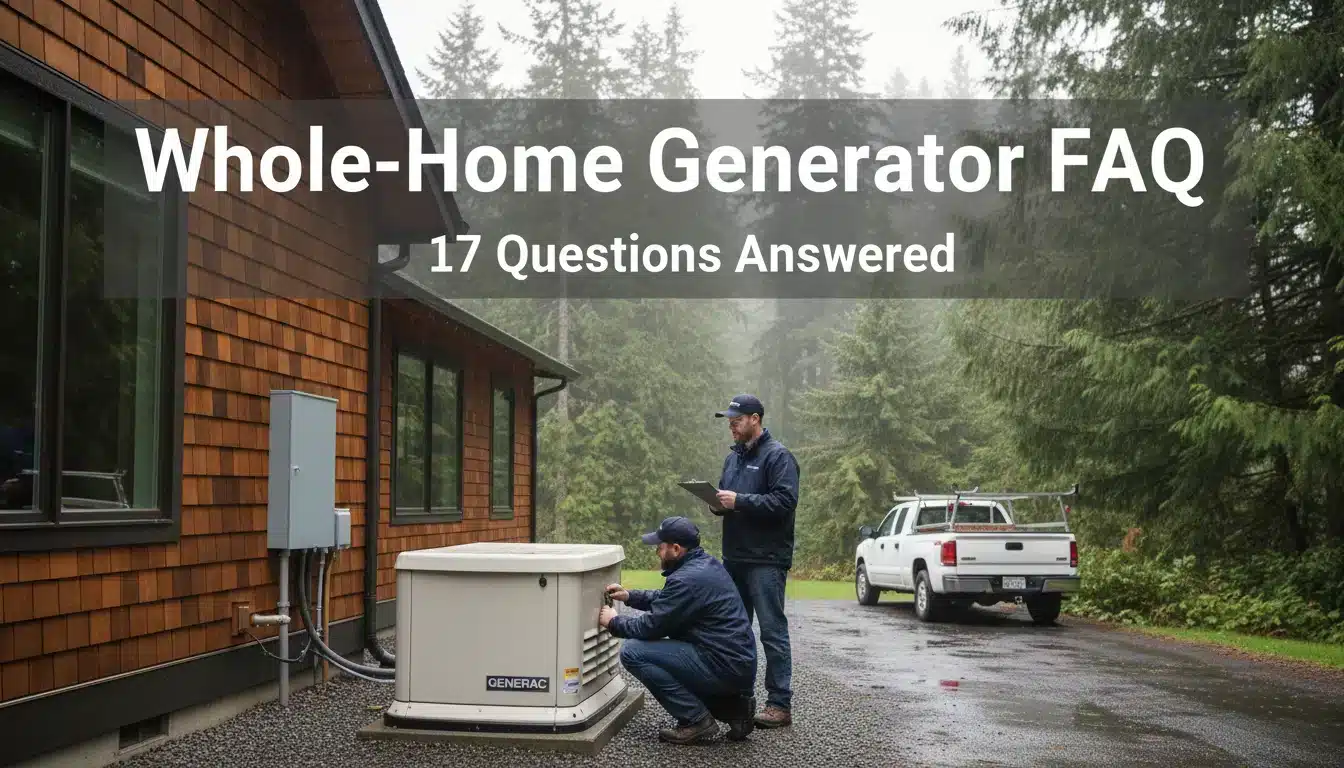
Standby generators are permanently installed units connected directly to your home’s electrical system through an automatic transfer switch. The moment an outage is detected, they start within seconds, with zero manual intervention required. Whole-house standby units in the 15 to 30+ kW range can simultaneously power your HVAC system, refrigerators, sump pumps, medical equipment, and even EV chargers. For Greater Seattle homeowners who work remotely, rely on medical devices, or face multi-day winter storm outages, a standby system is the only genuinely reliable solution. Consumer Reports’ standby generator research confirms that standbys deliver superior convenience and capacity for extended outage scenarios.
A Critical Safety Warning for Washington Homeowners
Portable generators carry serious risks when misused. Carbon monoxide poisoning is a leading danger, as these units must always operate at least 20 feet from your home. Equally important, connecting a portable generator directly to your home’s wiring without a proper transfer switch is illegal under the National Electrical Code and Washington state regulations. Backfeeding electricity can fatally injure utility workers. Standby generators are professionally installed with all required safety protections already built in, eliminating these hazards entirely and keeping your household code-compliant.
How to Size a Generator for Your House
Picking the right kilowatt rating for your home generator is one of the most consequential decisions you will make during the buying process. Get it wrong in either direction and you will pay for it, either through wasted fuel or through damaged appliances. Here is a straightforward breakdown of how sizing works.
Essential-Circuit Coverage (7–12 kW)
A generator in the 7 to 12 kW range is designed to power only your most critical loads during an outage. Think of it as a survival tier: lights stay on, your refrigerator keeps running, a few select outlets stay live, and your furnace fan continues circulating heat. This range works well for homeowners who experience occasional short outages and simply want basic comfort without a major investment. The trade-off is that you cannot run central air conditioning, an electric range, and a home office simultaneously without carefully managing what is active at any given time.
Whole-House Coverage (15–30+ kW)
Whole-house generators eliminate the guesswork entirely. Units in the 15 to 30+ kW range power every circuit in your home at the same time, including central air conditioning, electric ranges, EV charging stations, and home office equipment, with no load-shedding required. This tier has grown significantly in popularity as Pacific Northwest outages have stretched longer due to winter storms and aging grid infrastructure. For most Greater Seattle homeowners, a 20 to 22 kW unit represents the practical sweet spot between cost and full-home capability.
Load Calculation: The Foundation of Proper Sizing
Start by listing every appliance and system you need running at the same time. Write down each item’s running wattage, then add surge wattage for any motor-driven equipment such as your AC compressor or well pump, since motors can draw two to three times their running load at startup. Add a 20 percent safety buffer, then divide by 1,000 to convert to kilowatts. You can use a generator sizing calculator from Cummins or review a generator sizing buying guide for additional reference, but these tools provide estimates, not final answers.
Sizing for Larger Homes in King and Snohomish County
Homes throughout King and Snohomish County with larger square footage, multiple HVAC zones, electric water heaters, and EV charging demands regularly require 22 to 26 kW units to maintain full comfort through extended winter outages. A formal load audit performed by a licensed electrician accounts for your home’s specific service panel capacity, simultaneous usage patterns, and local code requirements, giving you a precise, defensible number rather than a rough estimate.
Why Professional Sizing Is Non-Negotiable
Oversizing wastes fuel, accelerates component wear, and costs more upfront than necessary. Undersizing causes voltage drops that can permanently damage computers, televisions, medical devices, and other sensitive electronics. Neither outcome is acceptable when your home’s safety and comfort are on the line. The team at Mauro Electric Inc. has been performing load audits and generator installations for Greater Seattle homeowners since 1998, ensuring every system is matched precisely to the home it serves.
Natural Gas vs. Propane: Choosing the Right Fuel for Your Generator
Once you have determined the right generator size for your house, the next critical decision is fuel type. For Greater Seattle and Snohomish County homeowners, the choice essentially comes down to natural gas or propane, and each option carries distinct advantages depending on your property and priorities.
Natural gas is the straightforward choice for homes with existing utility gas service. Your generator connects directly to the same gas line that feeds your furnace or water heater, drawing fuel continuously from the utility infrastructure. This means you never need to schedule a delivery, monitor a tank level, or worry about running dry during a prolonged outage. For suburban homes in areas like Bothell, Redmond, or Marysville with established Puget Sound Energy or Cascade Natural Gas service, this “set-it-and-forget-it” reliability is a significant practical advantage. As long as the underground pipeline remains intact, your generator can run indefinitely.
Propane is the right answer when natural gas lines simply do not reach your property. Rural and semi-rural Snohomish County homeowners frequently rely on propane stored in above-ground or underground tanks, typically ranging from 250 to 1,000 gallons. Because propane stores on-site without degrading, you maintain complete independence from utility infrastructure, which matters during major regional emergencies like earthquakes that can rupture gas mains. The trade-off is that you must manage delivery schedules proactively, especially before winter storm season, when demand spikes and Washington propane prices can climb above the national average.
Running costs favor natural gas in the Pacific Northwest, where per-hour operating expenses tend to run noticeably lower compared to propane. According to natural gas generator data from Batten Emergency, natural gas can generate power at roughly $0.03 to $0.08 per kWh, while propane often runs $0.10 to $0.20 or more per kWh depending on load and seasonal pricing. That gap adds up quickly during multi-day outages.
For the highest level of resilience, dual-fuel capable standby units allow homeowners to operate on either natural gas or propane, switching between sources depending on availability. This flexibility is increasingly recommended for Pacific Northwest homes, where windstorms, flooding, or seismic events could disrupt any single fuel source.
Finally, both fuel types require proper permitting in Washington State. Fuel line sizing, regulator installation, setback compliance, and transfer switch integration all fall under state and county code requirements. As detailed in the generator installation guide for Washington homeowners, King and Snohomish County jurisdictions each add specific local requirements on top of state standards. Working with a licensed local electrician who understands these regulations protects you from failed inspections, voided warranties, and potential safety hazards.
Top Generator Brands for Homes: Generac, Kohler, and Cummins Compared
With generator sizing and fuel type covered, the next step is understanding which brand best fits your home and why that choice matters more than most buyers realize.
1. Generac: The Market Leader with the Widest Reach
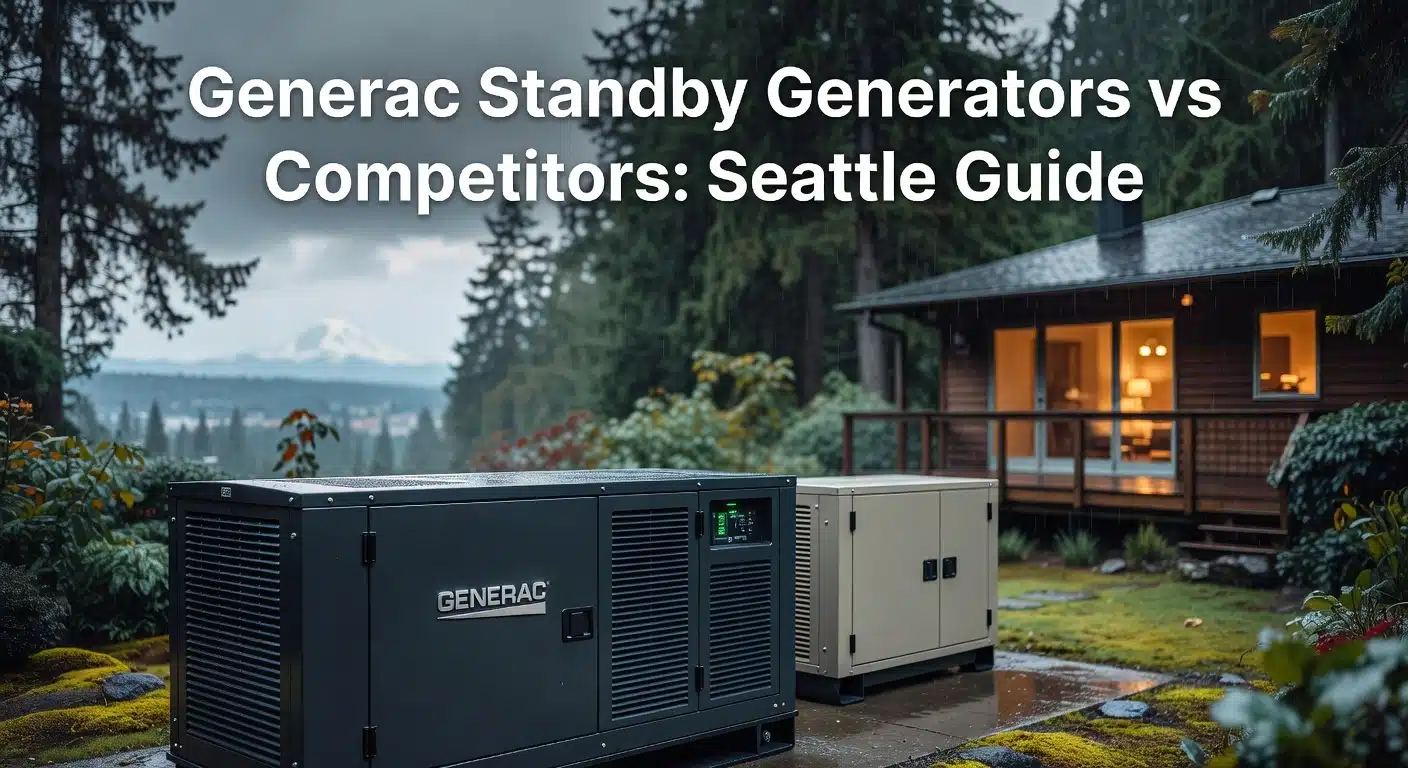
Generac holds the largest share of the North American residential standby generator market — commonly cited in the 65 to 75% range depending on the source — and that dominance is not accidental. The brand offers home standby units ranging from 7 kW all the way to 24+ kW, giving beginners a clear path from essential-circuit coverage to full whole-house power. What sets Generac apart beyond sheer range is its Mobile Link Wi-Fi monitoring ecosystem, which lets homeowners check generator status, receive maintenance alerts, and schedule service directly from a smartphone app. For Greater Seattle and Snohomish County residents, Generac’s broad authorized dealer network means faster installations, readily available OEM parts, and local technicians who know these units inside and out. The North American home standby genset market continues growing rapidly, and Generac’s infrastructure is built to meet that demand at the regional level.
2. Kohler: Premium Quietness and Build Quality
Kohler standby generators appeal strongly to homeowners who place a high value on noise reduction and long-term durability. Many Kohler units operate at sound levels around 65 to 70 dB or lower, making them noticeably quieter than comparable models during extended outage events. The engines feature hydraulic valve lifters that reduce routine maintenance requirements, which translates to lower service costs over time. Kohler’s warranty terms are competitive, offering a 5-year base with extension options reaching 7 to 10 years through promotions. The tradeoff is a somewhat less expansive smart-feature ecosystem compared to Generac, though connected monitoring is still available.
3. Cummins: Commercial Reliability in a Residential Package
Cummins, formerly marketed under the Onan name, brings a heavy-duty commercial and industrial pedigree to its residential QuietConnect line. Units in the 13 to 20+ kW range deliver strong cold-weather performance and commercial-grade component durability. However, in Greater Seattle, Cummins maintains a smaller residential dealer footprint compared to Generac, which can affect service response times during widespread outages.
4. Why Warranty Terms Directly Affect Your Total Cost
All three brands offer a standard 5-year limited warranty on most residential standby units, but the details matter significantly over a 15 to 20 year generator lifespan. Generac’s warranty requires authorized dealer installation to remain valid, covering parts, labor, and travel in the initial years. Skipping an authorized installer to save upfront costs can void coverage entirely, leaving homeowners responsible for repair bills that easily reach thousands of dollars. Kohler and Cummins follow similar authorization requirements, reinforcing a consistent industry standard.
5. Authorized Dealers vs. Independent Installers: A Critical Distinction
Choosing an authorized dealer over an independent installer is arguably the single most important decision in the purchasing process. Authorized dealers provide factory-trained technicians, genuine OEM parts, proper startup activation, and direct access to manufacturer support. When a major storm knocks out power across Greater Seattle, an authorized dealer network determines how quickly your generator gets serviced. Mauro Electric Inc. operates as a Generac authorized dealer serving the Greater Seattle area since 1998, ensuring that every installation meets factory standards, warranty requirements, and local permitting codes. That combination of manufacturer authorization and decades of local expertise is precisely what beginners need when navigating a long-term investment like a whole-house generator.
Smart Generator Features Worth Having in 2026
Now that you have compared top brands and understand what Generac, Kohler, and Cummins each bring to the table, the next step is knowing which features actually make a difference in daily ownership. Modern home standby generators have evolved far beyond simple on-and-off machines, and the 2026 lineup reflects that shift clearly.
1. Wi-Fi-Enabled Monitoring and Mobile App Control
Remote connectivity has become a standard feature on new home standby generators, and it changes the ownership experience significantly. Through a dedicated smartphone app, homeowners can check generator status, review fuel levels, track runtime hours, and receive maintenance alerts from anywhere in the world. For Greater Seattle homeowners who travel frequently or own vacation properties, this real-time visibility provides genuine peace of mind. Setup typically takes just minutes, and newer controllers make the connection process straightforward even for beginners.
2. Automatic Self-Testing with Quiet-Test Mode
Standby generators perform automatic exercise cycles weekly or bi-weekly, running under light load to confirm starting reliability, battery charge, and overall readiness. Without these cycles, fuel degrades, batteries drain, and components can seize. What makes 2026 models particularly neighbor-friendly is the quiet-test mode, which reduces engine RPMs and brings operational noise down to approximately 57 dBA, a level comparable to a normal conversation. Homeowners can schedule these tests via the app or onboard controller to run at convenient times, minimizing disruption in residential neighborhoods.
3. Predictive Maintenance Alerts
Rather than waiting for a breakdown, smart generators now monitor runtime hours and system data to send proactive alerts when oil changes, filter replacements, or other scheduled service is approaching. These notifications reach both the homeowner and their service technician directly, ensuring nothing is overlooked. Reducing maintenance gaps is critical because generator failures most often occur during the first hours of a major outage, precisely when the system is needed most.
4. Smart Load Management Technology
Smart Management Modules allow higher-kW systems to intelligently cycle large electrical loads, such as air conditioning compressors or well pumps, to prevent generator overload. This technology effectively lets a moderately sized unit perform like a larger one for most households, reducing upfront hardware costs while maintaining whole-home coverage. The system monitors available capacity in real time and sequences loads automatically, requiring no manual intervention from the homeowner.
5. Smart Home Integration and Utility Demand-Response
Emerging in 2026 models is the ability to integrate with broader smart home platforms and participate in utility demand-response programs. In Washington State, utilities are actively developing demand-response initiatives that reward homeowners for flexible energy use. Generators capable of responding to grid signals may qualify for rebates or incentive programs, adding long-term financial value on top of backup protection. As the U.S. home standby generator market continues expanding, these smart integrations are quickly moving from optional extras to expected standards.
Choosing a generator with these capabilities ensures your investment stays relevant and functional well beyond the date of installation.
What Does a House Generator Cost to Install in Seattle?
Understanding the full cost picture before committing to a generator for your house will save you from budget surprises down the road. Here is a practical breakdown of what Greater Seattle homeowners should expect to pay in 2026.
1. Generator Hardware Costs
Standby generator units typically range from $3,400 to $7,000+ depending on brand, output capacity, and included features. Smaller air-cooled units in the 10 to 14 kW range sit at the lower end of that spectrum, while larger whole-house models in the 22 to 26 kW range push toward the top or beyond. Many units also come bundled with an automatic transfer switch, which adds to the upfront price but is a necessary component of any complete installation. According to HomeGuide’s generator cost breakdown, these figures reflect current retail pricing and can shift based on emissions compliance requirements and feature packages.
2. Labor, Installation, and Total Project Costs
Based on what we actually see in the field across King and Snohomish County, a fully installed standby generator — unit, automatic transfer switch, electrical work, gas line, concrete pad, and permitting all included — typically runs $12,000 to $25,000, depending on generator size and what your home’s specific electrical panel and site conditions require. Homes that already have adequate panel capacity and an accessible gas line land toward the lower end; homes needing a panel upgrade, longer gas line runs, or more complex site prep land toward the higher end. A free on-site assessment is the only reliable way to know where your home falls in that range.
3. Daily Running Costs
For a 15 to 20 kW standby generator, daily operating costs range from $30 to $150, depending on fuel type, current utility rates, and the load your home is drawing. Natural gas units generally run toward the lower end of this range in the Pacific Northwest, thanks to existing utility infrastructure and relatively competitive gas pricing. Extended multi-day outages will increase cumulative fuel costs, so natural gas is often the most economical continuous option where service is available.
4. Electrical Upgrades to Budget From the Start
Generator installations frequently require simultaneous electrical work that many homeowners do not anticipate. Panel capacity increases to support 200-amp service, updated grounding and bonding systems, and in some cases partial home rewiring are all common requirements. These upgrades can add several thousand dollars to your total budget and should be factored in from the very beginning of your planning process. A licensed electrician can assess your current panel condition during an initial consultation, preventing costly mid-project discoveries.
5. Permitting, Utility Coordination, and Site Preparation
King County and Snohomish County both require electrical, mechanical, and gas permits for generator installations, along with inspections at various project stages. Utility coordination for natural gas line extensions through providers like Puget Sound Energy introduces additional lead times and costs that vary significantly by property. Site preparation, including grading and a poured concrete pad, typically adds $400 to $2,000 depending on your yard conditions. As noted in the Michael Andson whole-home generator cost guide, online estimates are useful for general budgeting but should never replace a professional on-site evaluation. Every property is different, and a thorough walk-through with a qualified electrician is the only reliable way to get accurate line-item costs for your specific home.
The Generator Installation Process: What Seattle Homeowners Should Expect
Knowing what to expect during installation removes uncertainty and helps you prepare your home and schedule accordingly. The process follows a clear, four-step sequence managed entirely by a licensed contractor, so your involvement is minimal but your understanding matters.
Step 1: Site Assessment
Every professional installation begins with a thorough site assessment conducted by a licensed electrician. During this visit, the electrician evaluates your electrical panel’s current capacity, performs a professional load calculation to determine which circuits require backup power, and identifies whether a panel upgrade is necessary before proceeding. Generator placement is mapped out according to local setback codes in King and Snohomish Counties, factoring in required clearances from windows, doors, and vents to prevent carbon monoxide from entering living spaces. Fuel source availability is also confirmed at this stage, whether your home connects to a natural gas line or requires a propane tank installation. Getting this assessment right means your system is sized and positioned correctly from day one.
Step 2: Permitting
Generator installations in King and Snohomish Counties require both electrical and mechanical permits before any work begins. Electrical permits cover the wiring, transfer switch connections, and panel work, while mechanical permits address fuel line installations. Skipping permits creates serious consequences, including fines, voided warranties, failed inspections, and potential insurance claim denials following an outage. An experienced local contractor like Mauro Electric handles every aspect of this process, including applications, required documentation, utility notifications, and inspection coordination. You do not need to navigate municipal permit offices on your own.
Step 3: Physical Installation
Once permits are approved, the generator unit is set on a prepared concrete pad positioned according to code requirements, typically maintaining at least 18 inches of clearance from the structure. The unit connects to your fuel supply through licensed plumbing work and then wires directly to an automatic transfer switch installed near your main electrical panel. The automatic transfer switch, or ATS, is the most critical component of the entire system. It continuously monitors incoming utility power and, when an outage occurs, signals the generator to start, verifies stable voltage output, and transfers your home’s circuits to generator power within 10 to 30 seconds. When utility power returns and stabilizes, the ATS switches everything back seamlessly and triggers a cool-down period before shutting the generator off. This hands-free operation requires zero input from you during an actual outage.
Step 4: Commissioning and Testing
The final step transforms an installed unit into a fully operational backup system. The installer performs a complete load test that simulates a real outage and verifies every connected circuit functions correctly under actual demand. Weekly exercise schedules are programmed directly into the unit so it self-tests automatically and maintains readiness without reminders. Remote monitoring apps, standard on most modern units, are configured so you receive alerts and diagnostics directly to your phone. Before the job is signed off as complete, your contractor walks you through operating procedures, basic maintenance responsibilities such as oil and filter checks, and emergency protocols. At Mauro Electric, no installation is considered finished until the homeowner feels fully confident in how their system works.
Generator Maintenance: Protecting Your Investment Year After Year
A standby generator is a long-term investment, and like any major home system, it only delivers reliable performance when it receives consistent, structured care. Following a proven maintenance schedule is the most effective way to ensure your generator for house applications starts instantly when the power goes out and continues performing for 15 to 30 years or more.
1. Prioritize Oil and Filter Changes Above Everything Else
Oil and filter changes are the single most important maintenance task you can perform on a standby generator. Most manufacturers recommend service every 100 to 200 hours of runtime or annually, whichever comes first. During extended outages where the unit runs continuously for multiple days, more frequent changes are necessary because heat, contaminants, and sustained load accelerate oil degradation. Skipping this step puts internal engine components at serious risk of premature wear.
2. Complete All Annual Service Items in One Structured Visit
A complete annual service visit covers several components that are easy to overlook without a checklist. Spark plug inspection and replacement ensure reliable ignition. Coolant level and condition checks on liquid-cooled units prevent overheating during heavy loads. Air filter cleaning or replacement maintains proper airflow and combustion efficiency. Addressing all of these items together during one scheduled visit eliminates the risk of any single component being missed.
3. Schedule Spring Service in the Pacific Northwest
Spring is the ideal time to service your generator in the Greater Seattle area. Scheduling maintenance before fall and winter storm season ensures the unit is fully tested and operational before outage risk peaks. Post-winter inspections catch any issues that developed during cold weather, giving your technician time to order parts and complete repairs well ahead of high-demand months.
4. Replace the Starting Battery Every Three Years
Battery failure is one of the most common causes of standby generator failure during actual power outages, and it is entirely preventable. Starting batteries typically need replacement every three years. Lead-acid batteries degrade through a process called sulfation when they sit idle, weakening their ability to crank the engine under load. Annual battery testing during service visits catches early decline before it becomes a real-world failure.
5. Use Professional Service to Protect Your Warranty
Annual visits from an authorized service technician preserve warranty coverage, which most manufacturers require through documented service records. These visits also give a trained professional the opportunity to identify aging belts, hoses, fuel system contamination, or transfer switch wear before those issues become costly emergency repairs. Mauro Electric Inc. provides authorized maintenance for Greater Seattle homeowners, ensuring every service visit meets manufacturer standards and keeps your investment fully protected.
Generator vs. Battery Backup: Which Makes More Sense for Your Home?
Choosing between a battery backup system and a standby generator is one of the most important decisions Greater Seattle homeowners face when planning for power resilience. Both technologies protect your household during outages, but they serve different needs, budgets, and outage scenarios in meaningful ways.
Battery backup systems store electricity from the grid or paired solar panels and deliver it silently during outages, with no fuel costs, no emissions, and no startup delay. A single residential battery unit typically provides between 8 and 24 hours of runtime for essential loads such as lights, refrigerators, and Wi-Fi. However, that window shrinks considerably when central HVAC or other high-draw appliances are running. For short, routine outages, battery systems perform exceptionally well and require minimal day-to-day maintenance.
Standby generators, by contrast, carry no practical runtime ceiling. As long as natural gas or propane remains available through your utility line or tank, the generator continues running. This distinction matters enormously in the Pacific Northwest, where major wind events, ice storms, and bomb cyclones routinely leave neighborhoods without power for multiple days. The November 2024 bomb cyclone affected over 600,000 customers across Washington and Oregon, with some outages stretching well beyond 24 hours. A battery system simply cannot bridge that gap on its own without solar recharging.
Cost structure is another key difference. Battery systems currently run approximately $850 to $1,200 or more per usable kilowatt-hour installed, making whole-home coverage expensive. Adding solar panels to extend runtime increases both cost and system complexity. Standby generators offer lower upfront cost per unit of backup capacity, though fuel and maintenance add $300 to $800 or more annually over the system’s lifespan.
A growing number of Greater Seattle homeowners are exploring hybrid configurations that pair a battery system with a smaller standby generator. This approach delivers silent, instant short-term coverage through the battery while the generator handles extended outages or recharges the battery as needed. Total system costs are higher, but the resilience benefit is substantial for storm-prone areas like Snohomish and King counties.
Washington State’s utility incentive landscape for battery storage is also evolving, with legislation aimed at requiring large utilities to offer residential battery incentive programs. The specifics — eligibility, payment structure, and timing — are still being finalized and vary by utility, so it’s worth checking directly with your utility provider or a licensed installer for the current, accurate details rather than relying on a number that may already be outdated. A licensed local electrician can review your current load requirements, evaluate available incentives, and help you determine whether a standalone generator, a battery system, or a hybrid setup delivers the best value for your specific property.
How a Generator Connects to Your Home’s Electrical Systems
Understanding how a generator physically connects to your home is just as important as choosing the right model. Many first-time buyers assume a standby generator simply plugs into a standard outlet, but that is not how it works.
The Transfer Switch: Your Home’s Electrical Gatekeeper
A standby generator must be wired into your home’s main electrical panel through either an automatic transfer switch (ATS) or a manual transfer switch. The ATS is the smarter and more convenient option; it continuously monitors incoming utility power and, when it detects an outage, signals the generator to start and routes power to your home’s circuits automatically. Just as importantly, the transfer switch physically isolates your home from the utility grid during generator operation. Without this isolation, electricity can backfeed onto utility lines, creating a lethal electrocution hazard for line workers restoring power in your neighborhood. Professional ATS installation near the main panel typically runs $2,000 or more, depending on the scope of work involved.
Panel Capacity: A Common Obstacle in Older Seattle Homes
Panel capacity is one of the most overlooked bottlenecks in generator projects throughout the Greater Seattle area. Many homes built before the 1980s still operate on 100-amp service panels, which are insufficient to support a modern 15 to 26 kW whole-home generator. A panel upgrade to 200-amp service is the most common prerequisite before generator integration can proceed safely. Electrical panels also have a typical lifespan of 25 to 40 years, so older fuse boxes or corroded equipment often require full replacement before any new generator work begins.
High-Load Homes Require Extra Planning
Homes equipped with EV chargers, heat pumps, or high-efficiency HVAC systems carry significantly higher baseline electrical loads. A Level 2 EV charger alone can draw 7 to 19 kilowatts, and heat pumps with auxiliary heating strips add even more demand. If these loads are not factored into generator sizing and transfer switch specifications, the generator can trip under combined load, leaving you without power during an outage. A proper load calculation, completed by a licensed electrician, accounts for running watts, motor starting surges, and peak demand across all circuits simultaneously. Smart electrical panel upgrades add another layer of control by enabling circuit-level load management, automatically shedding non-essential loads to extend generator runtime and improve fuel efficiency during prolonged outages.
Washington State Requires Licensed, Permitted Work
In Washington State, all generator-related electrical work must be performed by a licensed electrician and inspected by the local authority having jurisdiction. Operating under RCW 19.28, unpermitted generator connections violate state law, void equipment warranties, and are a frequent reason home insurance claims get denied after storm damage. The risks extend beyond paperwork; improper connections are a direct cause of backfeeding incidents, electrical fires, and carbon monoxide hazards. Mauro Electric Inc. handles every phase of generator installation with full permitting and inspection compliance, ensuring your system is safe, legal, and covered from day one.
Choosing the Right Generator for Your House: Key Takeaways
Making the right choice for a whole-home generator comes down to three core decisions: generator type, proper sizing, and fuel selection. Standby generators consistently outperform portable units for whole-home reliability, starting automatically and running on a permanent fuel supply. Correct sizing requires a professional load calculation, not a rough estimate. Fuel type should reflect your existing utility infrastructure, whether natural gas lines are available or propane storage makes more sense for your property.
Professional, permitted installation is non-negotiable in King and Snohomish County. Local code requirements, transfer switch specifications, and utility interconnection rules are not beginner territory. A licensed electrician familiar with Greater Seattle jurisdictions protects your investment and ensures your system passes inspection.
Scheduling your generator assessment in spring is a smart move. Demand surges before Pacific Northwest storm season, and wait times grow accordingly. Getting ahead of the rush means faster installation and better availability.
Since 1998, Mauro Electric Inc. has served Greater Seattle homeowners as a licensed, bonded, and Generac-authorized dealer providing end-to-end generator sales, installation, and maintenance. Contact Mauro Electric today to schedule your free on-site generator assessment and get your home storm-ready before the next outage strikes.
Conclusion
Seattle’s unpredictable weather makes home backup power less of a luxury and more of a necessity. As you’ve learned throughout this guide, choosing the right generator comes down to four key decisions: selecting the correct type (portable vs. standby), sizing it properly for your home’s needs, understanding local permit requirements, and following safe installation and fuel practices.
A well-chosen generator protects your food, your comfort, and potentially your health during the outages that Pacific Northwest winters routinely deliver. The investment pays for itself the first time the lights go out on your block and yours stay on.
Ready to take the next step? Contact a licensed Seattle electrician for a personalized assessment, or use the sizing guide in this post to start narrowing your options today. Your future self, sitting warm and powered through the next big storm, will thank you.
Frequently Asked Questions
How much does it cost to install a home standby generator?
A fully installed standby generator in our service area typically runs $12,000 to $25,000, depending on generator size, your home’s electrical panel condition, and site-specific factors. A free on-site assessment gives you an accurate number for your specific home.
Do I need a permit for a home generator installation?
Yes. Generator installation involves both electrical and gas work, so a permit and inspection are typically required regardless of size or brand.
Can I install a generator myself?
No. Between gas line work, transfer switch wiring, and code compliance, this is licensed-electrician work — doing it yourself carries real safety and legal risk.