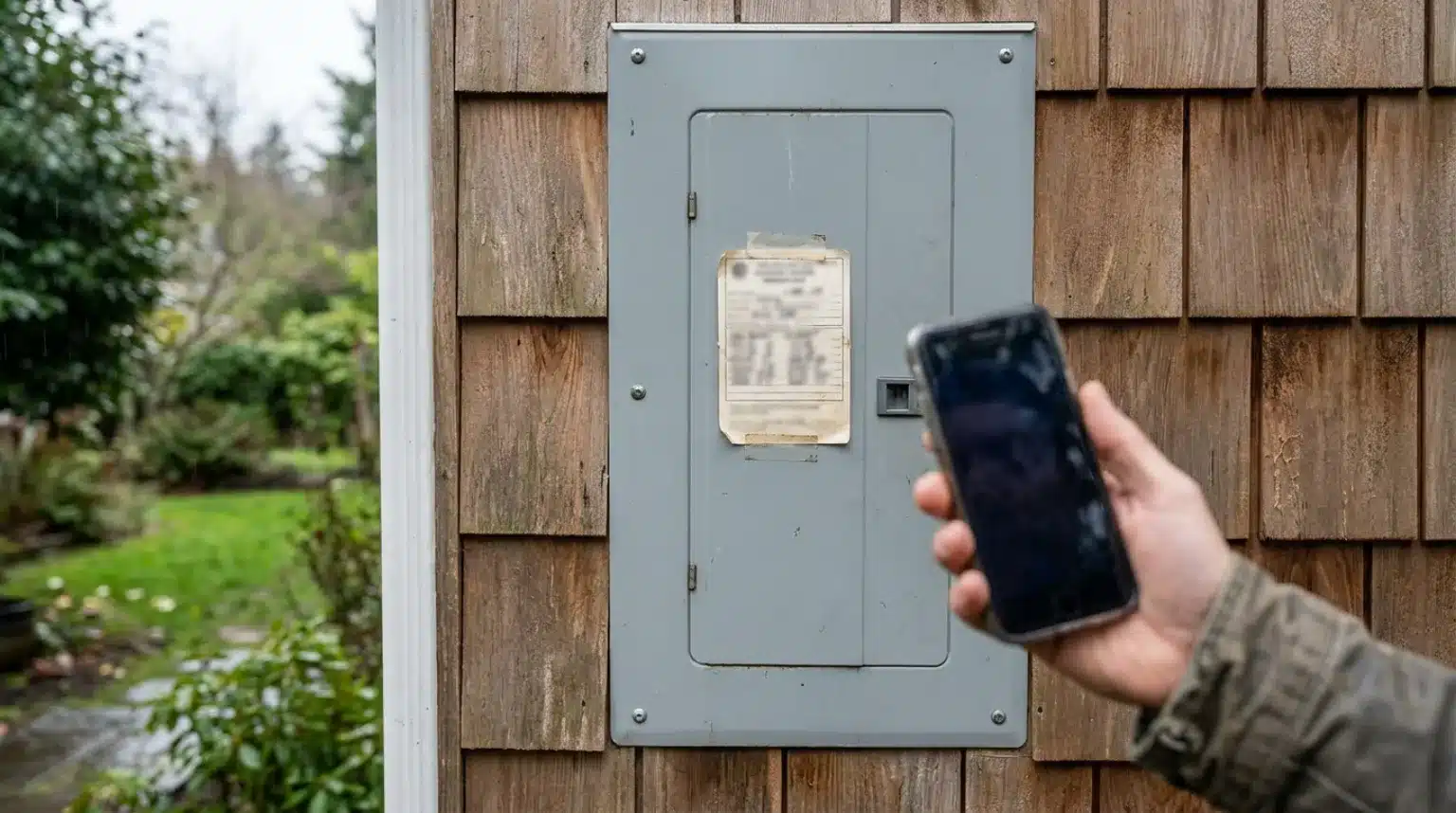
Flickering lights during dinner. Breakers that trip every time you run the microwave and the vacuum at once. A faint buzzing from the panel that you’ve started to just tune out. None of these are things to ignore — they’re usually the early warning signs of an electrical panel that’s no longer keeping up with your home.
Replacing a circuit breaker panel is one of the more involved jobs a licensed electrician does, and it’s not something we’d ever recommend as a do-it-yourself project. It requires coordinating a full power shutdown with your utility, working inside a live service panel, pulling permits, and passing inspection — all governed by the National Electrical Code and Washington State licensing law. This guide covers what actually causes a panel to need replacing, and what the professional process looks like, so you know what to expect and why it’s worth doing right.
Signs Your Panel May Need Replacing
Frequent tripping under normal loads. If breakers trip during routine, everyday use — not because something’s actively malfunctioning, but just from running a couple of appliances at once — that’s usually a sign the panel doesn’t have the capacity your home actually needs. This is especially common in older homes still running on a 100-amp service that was fine decades ago but isn’t sized for a modern household.
Flickering or dimming lights when appliances kick on. If your lights dim noticeably when the AC, microwave, or a space heater starts up, your panel may be struggling to distribute power evenly. This tends to show up more as homes add higher-draw equipment like EV chargers or heat pumps.
Buzzing, popping, or a burning smell from the panel. This is not a “wait and see” situation. Unusual sounds or smells from your panel can mean corroded connections, arcing, or a breaker that’s failing. Shut off the main breaker if it’s safe to do so and call a licensed electrician right away.
Hot or discolored outlets and panels. A panel or outlet that feels warm to the touch, or shows scorch marks, rust, or discoloration, is showing real signs of overheating. This is worth an inspection even if nothing else seems wrong.
Outdated brands like Federal Pacific, Zinsco, or Challenger. These panel brands were common in the mid-20th century and have a well-documented history of reliability problems — breakers that don’t trip properly during an overload, bus bars prone to overheating, and mechanical issues that prevent a clean disconnect. Many insurers are cautious about covering homes with these panels still in service. If you have one of these brands, it’s worth having it evaluated regardless of whether you’ve noticed any other symptoms.
Why This Isn’t a DIY Project
Panel replacement means working with your home’s main electrical service — the point where utility power enters your house. Mistakes here carry real consequences: electrical shock, fire risk, and in Washington, working on your own panel without the proper license (for anyone other than the homeowner performing very limited work under strict rules) can also mean failed inspections and code violations that complicate insurance or a future home sale.
A licensed electrician starts with a load calculation to determine what size panel your home actually needs, coordinates the utility shutoff, safely disconnects and removes the old panel, installs and grounds the new one to code, and has the work inspected before it’s energized. That’s not a weekend project — it’s a few hours of focused, code-driven work by someone trained to do it safely.
What to Expect From a Professional Panel Replacement
Most residential panel upgrades are completed in a single day. Your electrician will typically:
- Inspect your existing panel and perform a load calculation to size the new one correctly
- Coordinate with your utility for a temporary power shutoff
- Remove the old panel and safely dispose of any hazardous materials
- Install and ground the new panel to current code
- Label every circuit clearly
- Test the system and schedule the required inspection before final sign-off
If you’re planning to add an EV charger, a heat pump, or other higher-demand equipment, it’s worth mentioning that during your evaluation — it can affect what size panel makes sense.
Ready for an Evaluation?
If your panel is showing any of the signs above, or if it’s simply original to a home built before the 1990s, it’s worth having a licensed electrician take a look. Mauro Electric Inc. has been serving Bothell and the greater Seattle area since 1998 — contact us for an evaluation, or call 360-653-5300.