If you’ve started shopping for a ductless mini-split system in the Seattle area, you’ve probably noticed how much quotes can swing from one estimate to the next. That’s not a sign someone’s overcharging you — mini-split pricing genuinely depends on a handful of specific factors, and once you know what they are, the range starts to make a lot more sense.
What Actually Drives the Cost
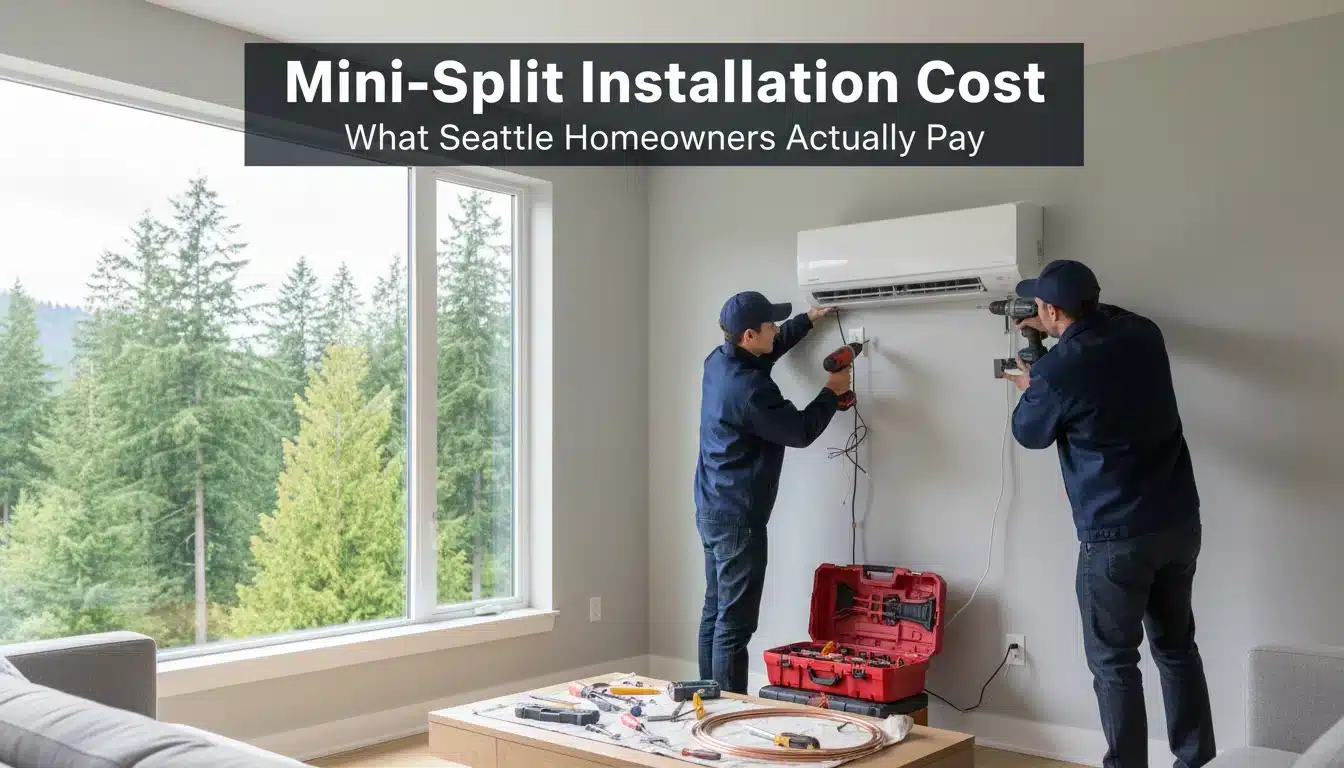
- Number of zones. This is the biggest factor by far. Each indoor head (the wall-mounted or ceiling-mounted unit in a room) adds equipment, refrigerant line, and labor. Cost climbs with how many rooms you’re conditioning, not with your home’s overall square footage.
- Home layout and accessibility. Running line sets between the outdoor condenser and each indoor head is easier in some homes than others. A single-story home with an accessible crawl space is a simpler job than a multi-story home where lines have to route through finished walls and ceilings.
- Equipment tier and brand. Like most HVAC equipment, mini-splits span a real range in efficiency and features. Higher-efficiency units cost more upfront but can be worth it depending on how much you’ll run the system.
- Head style. Standard wall-mounted heads are the most common and least expensive to install. Ceiling cassettes and fully ducted mini-split configurations look cleaner but require more labor, typically adding several hundred dollars per zone.
- Electrical work. The outdoor condenser needs its own dedicated circuit. If your panel doesn’t have room for it, that’s an added cost — more on this below.
- Permits. Local jurisdictions in the Seattle area require a permit for mini-split installation, which adds a modest fee on top of the installation itself.
Typical Installation Costs in the Seattle Area
While every home is different, here’s roughly what homeowners in this area tend to see for a fully installed system:
- Single-zone (1 indoor head): typically in the $4,000–$9,000 range
- 2-zone system: typically $7,500–$11,000
- 3-zone system: typically $10,000–$15,000
- Whole-home systems (4+ zones): typically $14,000–$25,000 or more
Notice these ranges don’t scale in a straight line — a 3-zone system isn’t simply three times the cost of a single zone. Each additional zone shares the same outdoor condenser (up to its capacity), so there’s some efficiency built in as you add zones, even though the total cost still goes up.
Single-Zone vs. Multi-Zone: Which Makes Sense?
A single-zone system makes the most sense when you have one specific problem: a bonus room over the garage that’s never comfortable, a finished basement with no ductwork, a home office addition, or a bedroom that runs hot in the summer. It’s the lowest-cost way to solve a localized comfort problem.
Multi-zone systems make more sense when you’re trying to condition most or all of a home — especially a home that was never built with ductwork in the first place, which describes a lot of older housing stock in this region. The appeal of zoning is real: you can heat or cool only the rooms you’re actually using, rather than paying to condition an entire house at once.
Why Mini-Splits Are Such a Good Fit for a Lot of Seattle-Area Homes
Plenty of homes in this region, especially older ones, were built without central air ductwork at all. Retrofitting a home for traditional ducted HVAC means opening up walls and ceilings — expensive, disruptive, and sometimes not even possible depending on how the home is built. Mini-splits sidestep that problem entirely. The line sets connecting the outdoor unit to each indoor head are small enough to route without the kind of demolition full ductwork requires, which is a big part of why they’ve become such a common choice for adding cooling — and efficient heating — to homes that were never designed for it.
The Electrical Side of a Mini-Split Install (Why It’s Not Just an HVAC Job)
A mini-split’s outdoor condenser needs its own dedicated electrical circuit, sized correctly for the equipment. In a newer home with an up-to-date panel, that’s usually straightforward. In an older home — particularly one that hasn’t had an electrical panel upgrade in a few decades — there may not be available capacity, which means panel work has to happen before the mini-split itself can go in.
This is one of the reasons it helps to work with a contractor licensed for both trades. Mauro Electric holds both an electrical contractor license (MAUROEI971BA) and an HVAC contractor license (MAUROEH750JW) in Washington State, so the same team that installs the mini-split can also evaluate and handle any panel or circuit work it needs — instead of you coordinating between a separate electrician and HVAC installer and hoping their timelines line up.
Rebates and Incentives
Depending on your utility and household income, there may be rebates available that reduce the cost of a heat-pump-based mini-split installation. Programs and eligibility change fairly often, so it’s worth asking directly what you may currently qualify for rather than assuming based on something you read online.