If your home was built between 1965 and 1975, there’s a real chance its branch circuits — the wiring running to your outlets, switches, and light fixtures — is aluminum instead of copper. A copper shortage in the mid-1960s pushed a lot of builders toward aluminum wire during that decade, and it’s a different issue from the knob-and-tube wiring we cover elsewhere on this site. Different era, different housing stock, different failure mechanism — and it’s worth understanding on its own terms.
How Do You Know If You Have Aluminum Wiring?
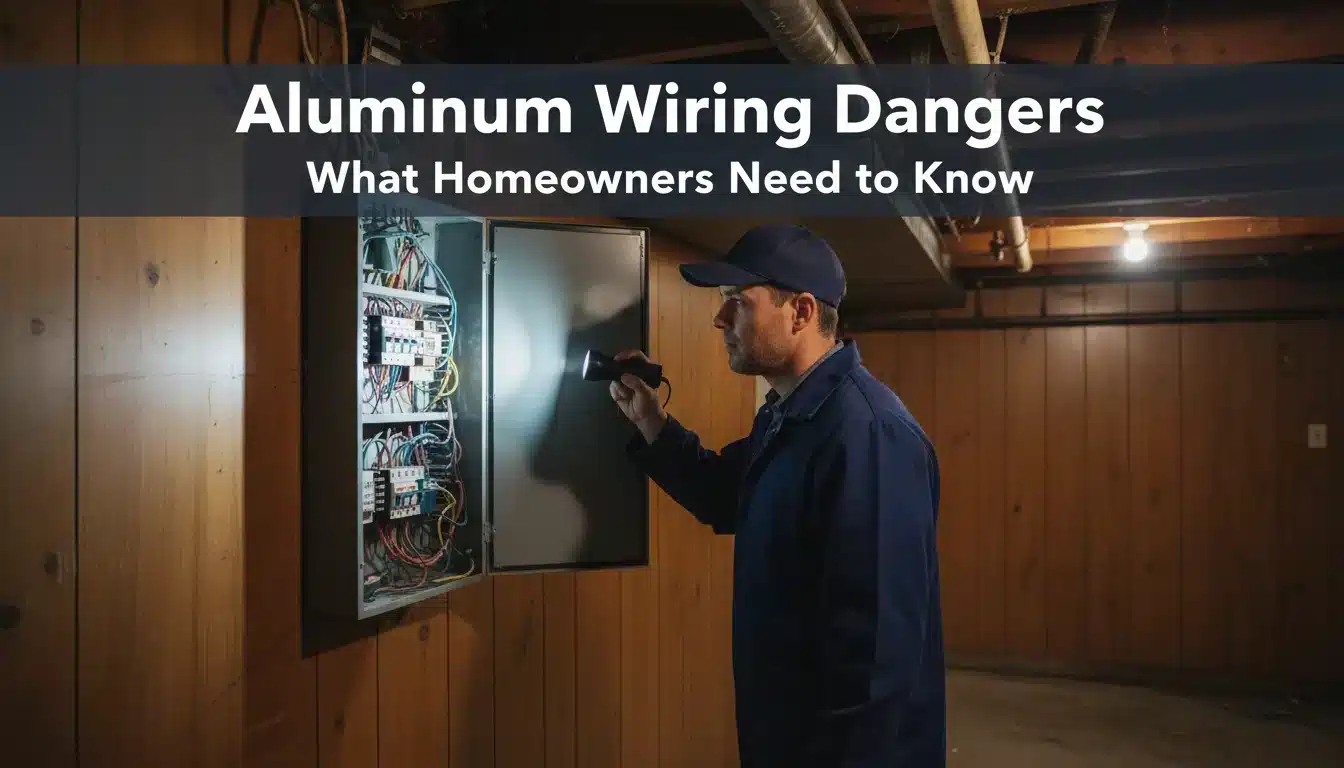
The most reliable way is to have a licensed electrician check your panel and a sample of your outlets, but there are a few things you can look for yourself. Check the sheathing on any exposed wire in your panel, attic, or basement — it’s often stamped with “AL” or “ALUMINUM.” Outlets and switches rated for aluminum wiring are usually marked “CO/ALR.” If your home falls in that 1965–1975 build window and you haven’t had an electrical inspection since, it’s worth finding out for certain rather than guessing.
Why Aluminum Wiring Is a Real Fire Risk — Not Just “Old Wiring Being Old”
The concern with aluminum branch wiring isn’t really about the wire itself failing in the wall. It’s about what happens at the connection points — outlets, switches, and junction boxes — where aluminum wire terminates. Aluminum expands and contracts with temperature changes more than copper does, and it oxidizes differently. Over years of that expansion and contraction, connections that were tight when installed can work themselves loose. A loose connection carrying current means resistance, and resistance means heat.
This isn’t a fringe concern. The U.S. Consumer Product Safety Commission has found that homes built before 1972 with aluminum wiring are 55 times more likely to have a wire connection at an outlet reach fire-hazard conditions than a comparable home wired with copper. That’s a real number from a real federal safety agency, not a scare tactic.
Warning signs worth taking seriously:
- Outlet or switch faceplates that feel warm to the touch
- Flickering lights that aren’t tied to a dimmer
- Outlets or circuits that stop working intermittently for no clear reason
- A faint smell of burning plastic near an outlet or switch, especially under load
If you notice any of these, that’s not a “get to it eventually” situation — it’s worth having looked at promptly.
Does This Mean Your Whole House Needs to Be Rewired?
Not necessarily, and this is the part that gets overstated a lot. Since the actual failure point is almost always the connection, not the wire run itself, a full rewire is one option but not the only one. What matters is getting every connection point on the aluminum circuits addressed by someone who knows what they’re looking at — that’s the part that shouldn’t be skipped or half-done.
How It’s Actually Fixed
There are two accepted approaches, and which one makes sense depends on the scope of aluminum wiring in your home and what an electrician finds during inspection:
- Pigtailing with approved connectors. A licensed electrician splices a short length of copper wire onto the existing aluminum wire at each connection point, using connectors specifically rated and approved for aluminum-to-copper connections — the two most recognized methods are AlumiConn connectors and COPALUM crimps. The copper pigtail then connects to the outlet, switch, or fixture instead of the aluminum wire connecting directly.
- Full rewire. In some cases — especially if a home has other electrical issues on top of the aluminum wiring, or an owner wants to eliminate the question entirely — replacing the aluminum branch circuits with copper is the more thorough option.
Either way, this is licensed-electrician work, not a DIY outlet swap. Standard outlets and switches aren’t rated for direct aluminum connections, and using the wrong connector or technique at a splice can recreate the exact problem you’re trying to fix.
What This Means for Your Homeowners Insurance
This is where aluminum wiring becomes more than just a safety question — it can directly affect whether you can get or keep coverage. Many insurance companies treat aluminum branch wiring as a real underwriting concern: some require an inspection before issuing or renewing a policy, some will decline to write a new policy on a home with unremediated aluminum wiring, and some will drop coverage at renewal if an inspection turns up connections in poor condition.
The upside is that remediation generally resolves the insurance problem. Once a licensed electrician has properly pigtailed the connections with approved connectors (or completed a full rewire), inspected and documented the work, most insurers that previously balked will write or continue a policy. If you’re buying or selling a home built in that 1965–1975 window, or you’re coming up on a renewal and haven’t had your wiring looked at, it’s worth getting ahead of it rather than finding out at the worst possible time.
Should You Get It Checked?
If your home in Snohomish or King County was built between 1965 and 1975 and you’re not certain what’s behind your walls, an electrical assessment is a reasonable, low-effort way to find out. Mauro Electric can inspect your panel and wiring, tell you plainly whether you’re dealing with aluminum branch circuits, and walk you through what remediation would actually involve for your specific home — no pressure toward a full rewire if pigtailing is the right call.